Midnight Madness

When we don’t yet know where we’re going, we don’t wait. We move forward in the dark.

Rick Ruben, The Creative Act

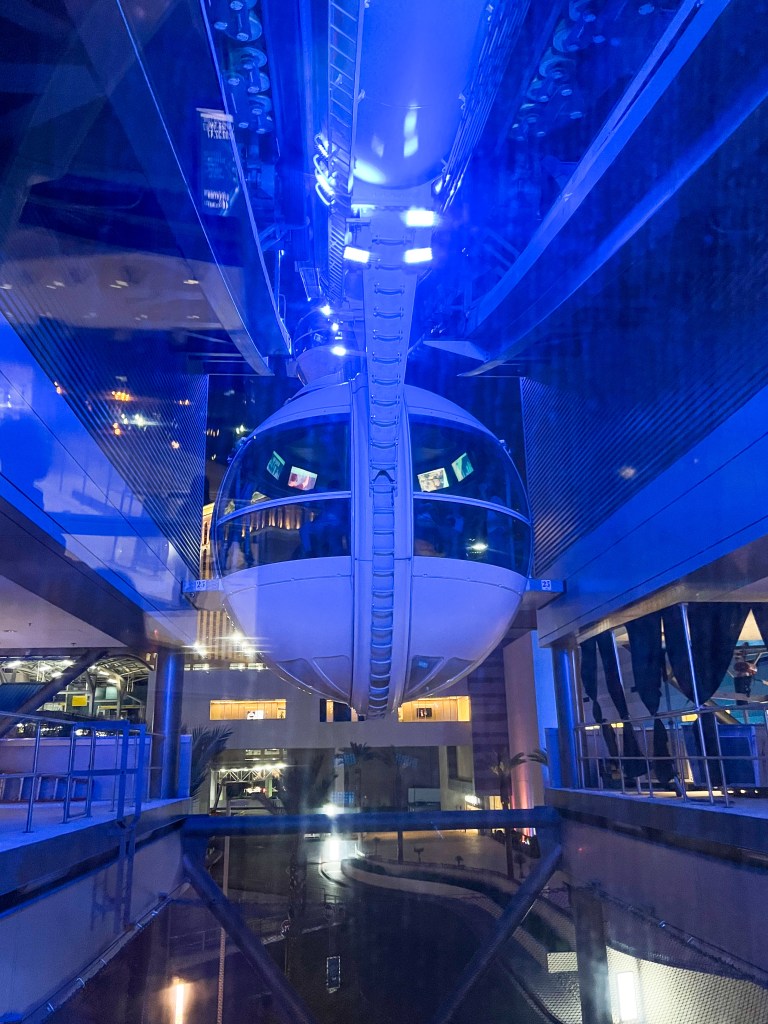
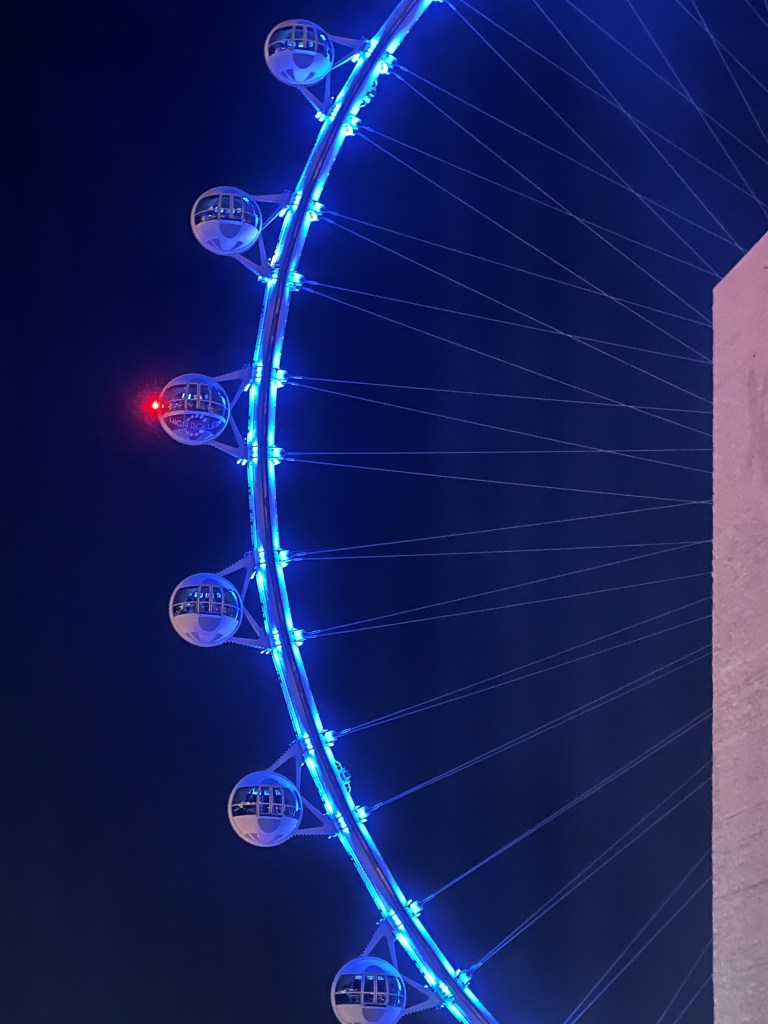
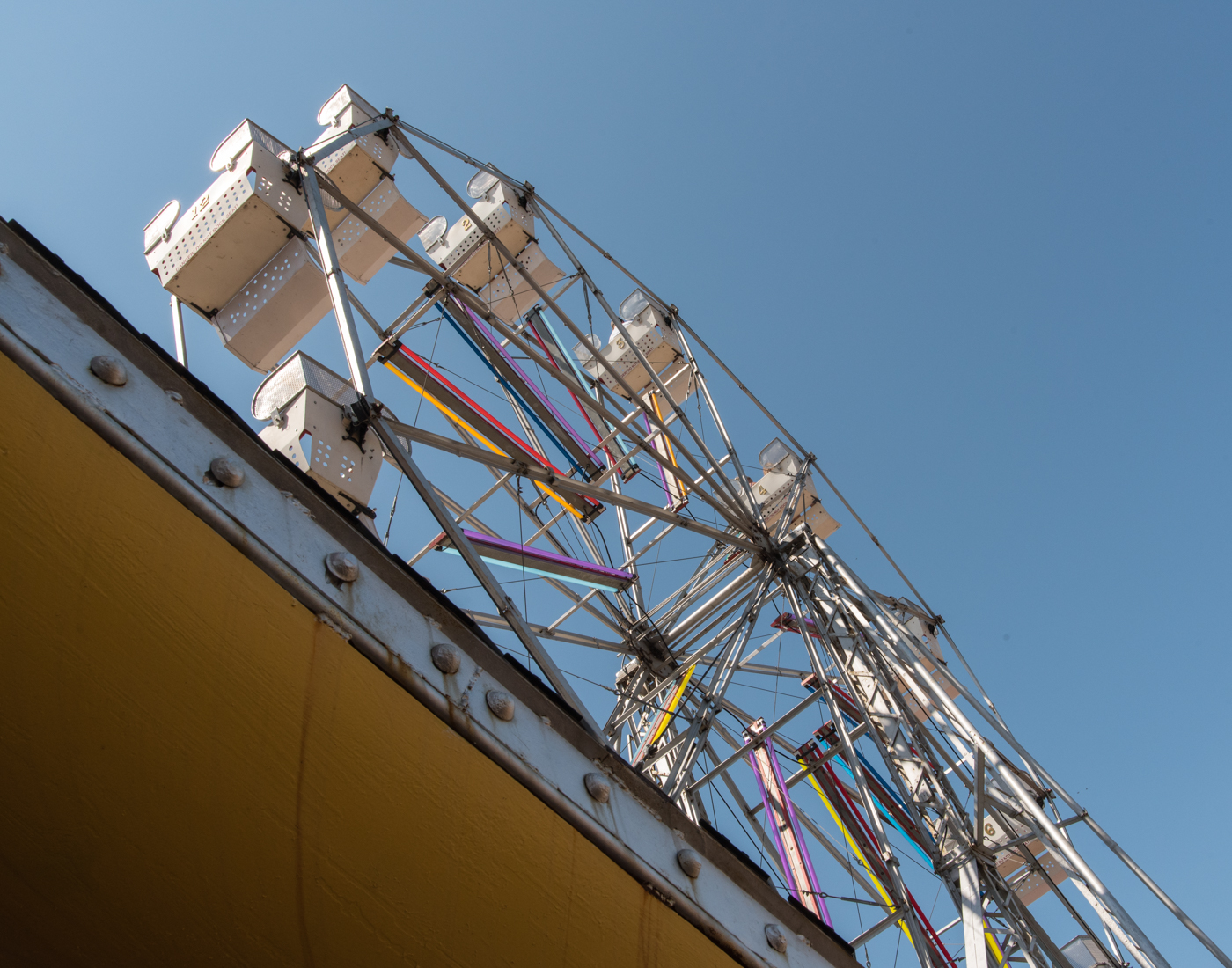
Here I sit, once again, staring at the computer in the wee hours of the morning from medication-induced insomnia. It’s the start of a New Year, 2024, and I have high hopes. Last year was fun and also challenging. In the spring, I flew into Las Vegas to visit friends, then drove to California to photograph Death Valley. Las Vegas has grown immensely since I lived there in my 30s. Old haunts were barely recognizable. The University of Las Vegas Nevada is now a sprawling campus with nary a visitor parking place. Areas of Henderson that were once hilly or bare with desert texture are now dotted with businesses and housing. I was washed with a wave of nostalgia, and even of adventurousness, going up over 500 feet in a ferris wheel.

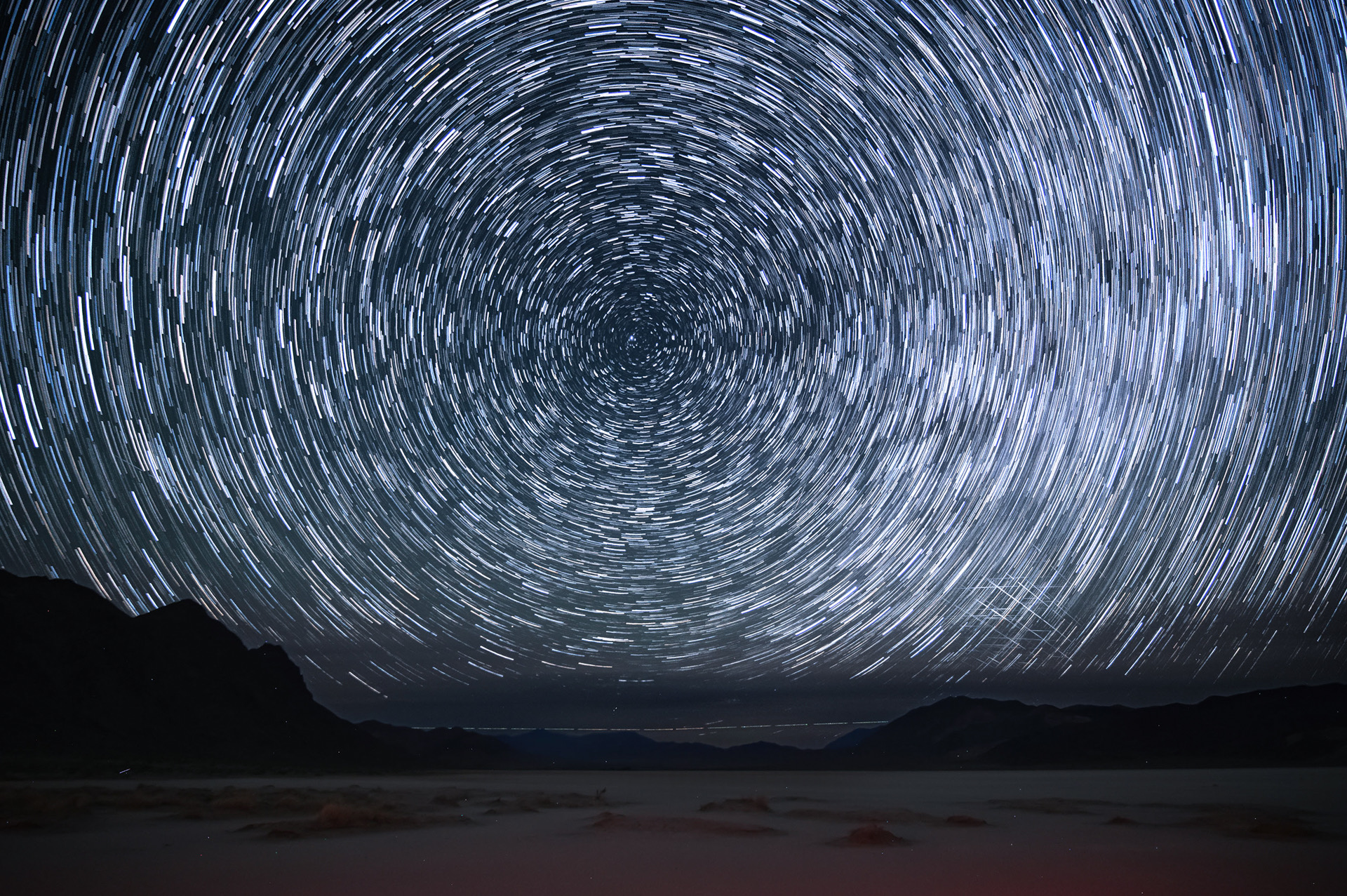
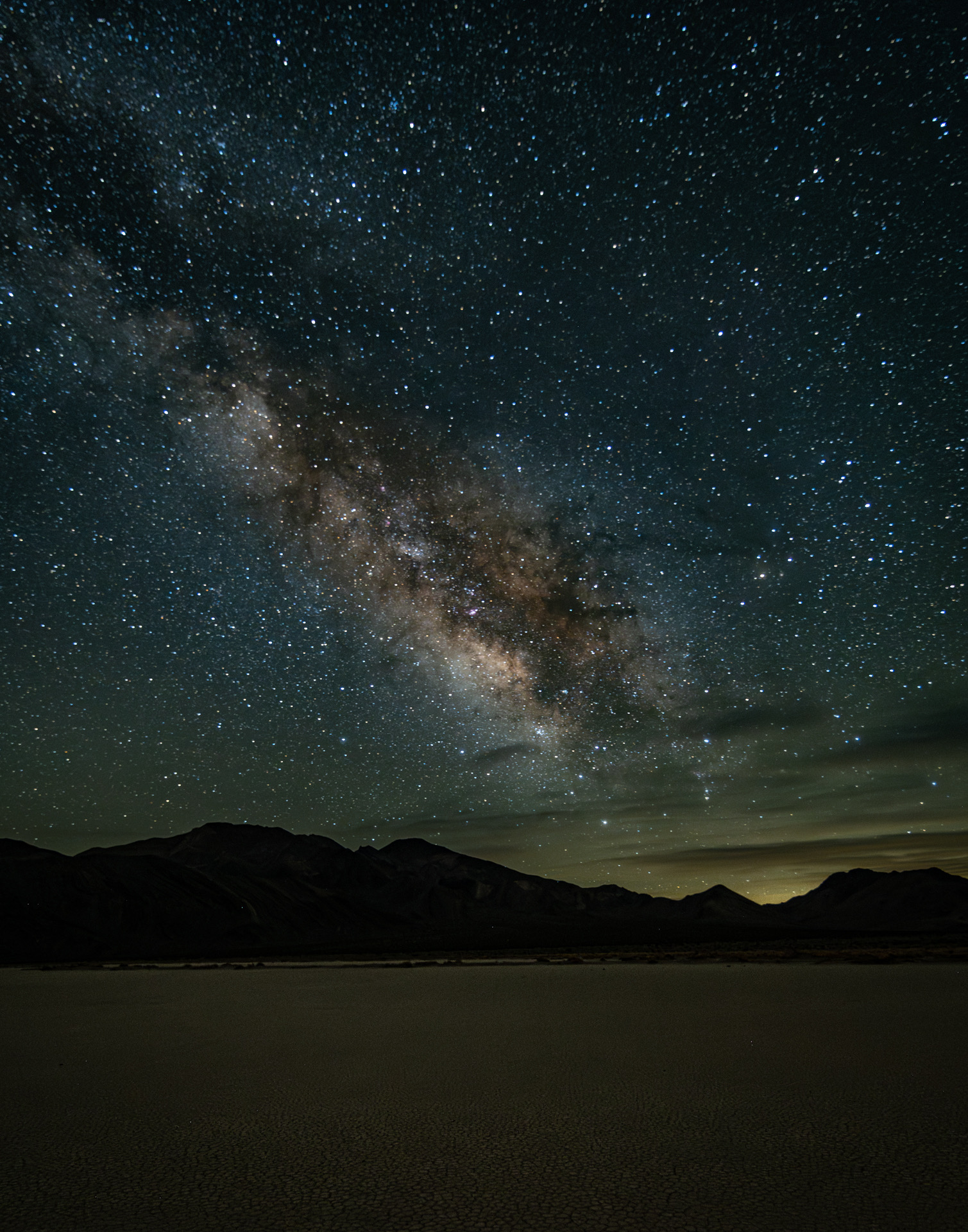
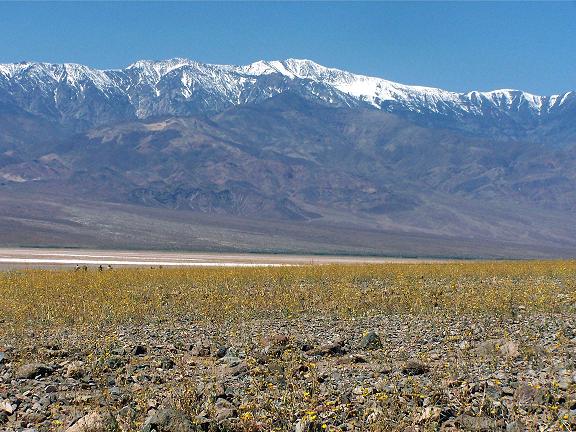
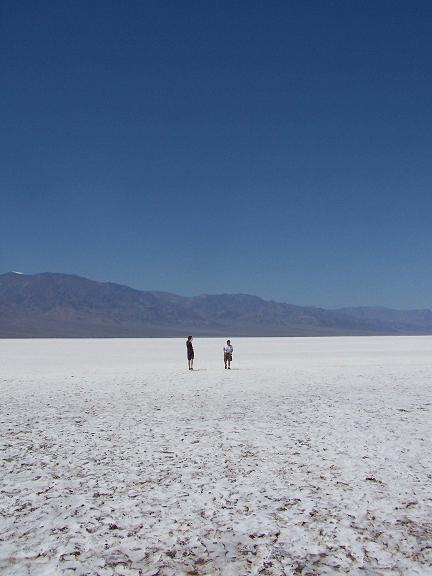
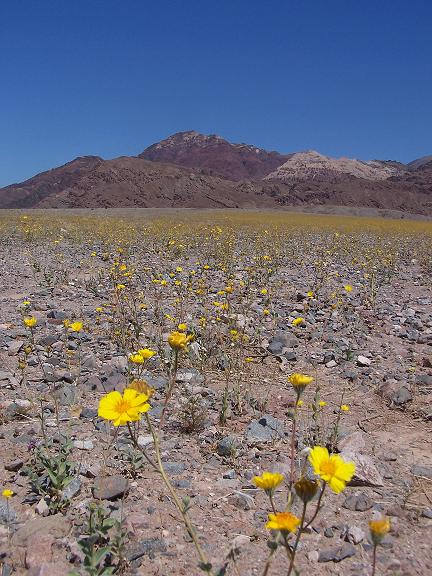
The next day, I drove two hours to Death Valley, where Casey Kiernan (Joshua Tree Workshops) was hosting a workshop along with three participants including me. He took us up to Racetrack Playa to photograph the Milky Way and star trails, as well as to several other locations including Zabriskie Point and Mesquite Flat Sand Dunes. The road to Racetrack is extremely hazardous; while we were there, we saw a camper with a broken axle blocking the path. I met the driver and his dog later the next day. Friendly guy. Unfortunate tow bill.

Nothing beats the wonder of looking at the heavens and pondering the expanse of the Universe. When I look at the sky, I see infinite possibilities, ancient history, and the realization that we are just a small speck in a vast cosmic playground of mystery.

Star Trail over Racetrack Playa. Notice the diagonal streaks in the corner? They were coming from Area 51.
Milky Way rising over Racetrack Playa. The bright lights are from Las Vegas.

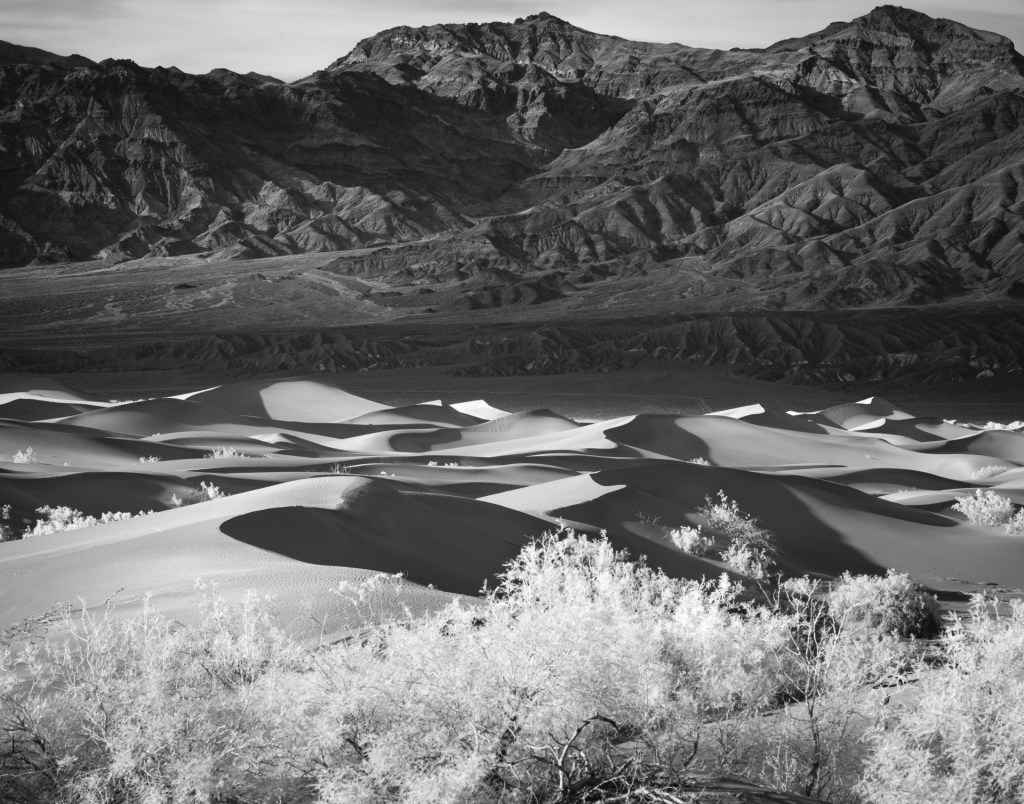
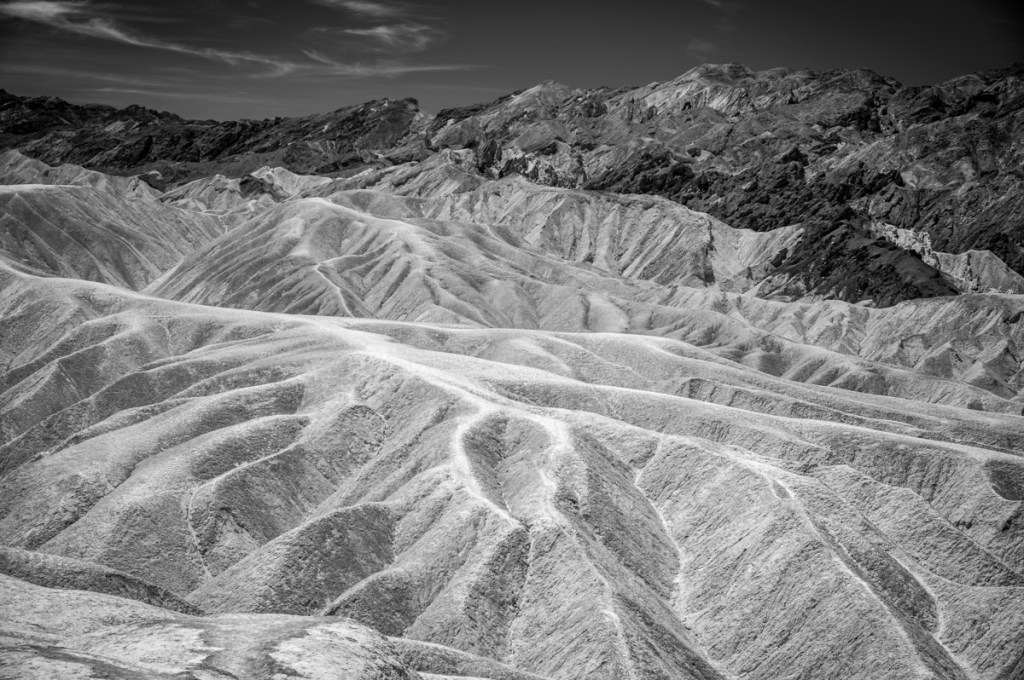
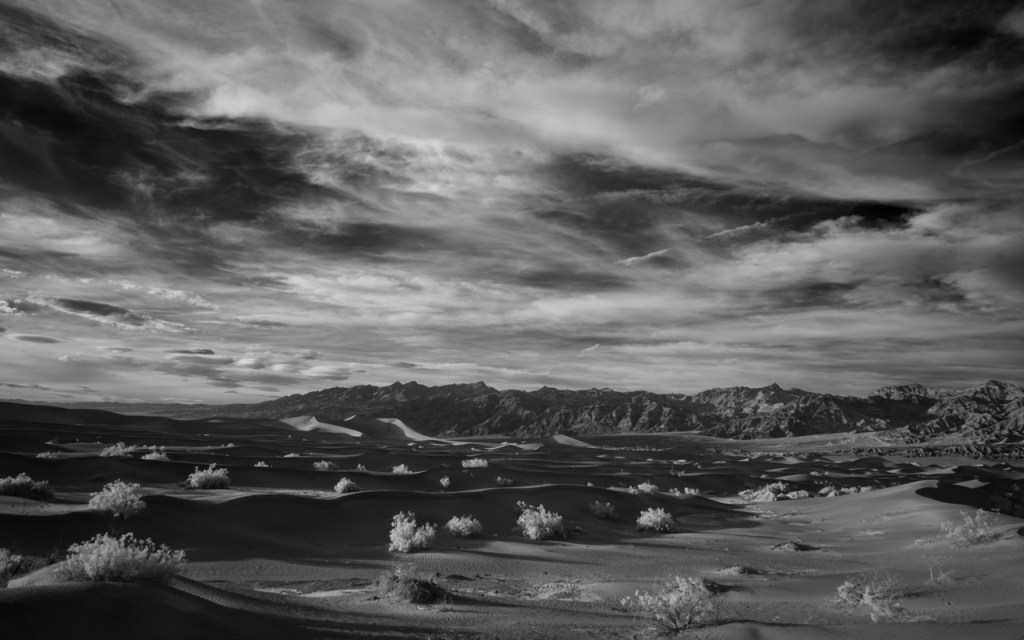
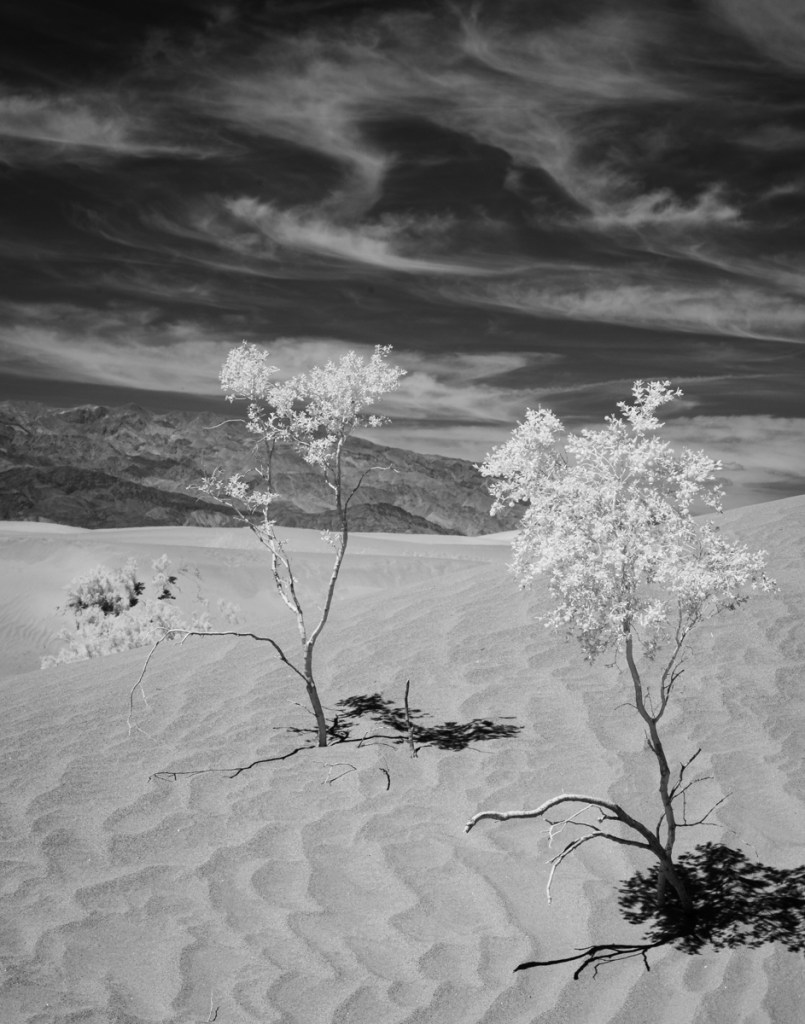
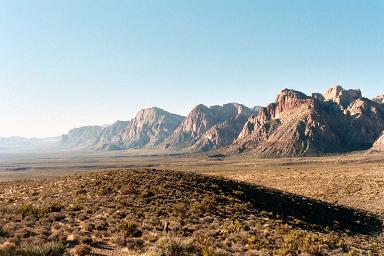
Being an avid infrared photographer, I brought my modified Nikon Z6 to Death Valley to do some landscape work in black and white. I was attracted to the sinuous slopes of Zabriskie Point and the Mesquite Sand Dunes, as well as to the contrast of the desert and sky, and the moody atmosphere of sunset. Unfortunately, I was unable to photograph the ghost town of Rhyolite, as the road was washed out from a flood. Someday soon, I will go back to photograph Death Valley again.

This year promises more adventures in the desert. Dallas Camera Club will be visiting White Sands National Park in New Mexico in April, and I will be there with cameras in tow!

End of Part One

Of this ordinary world

When I last wrote this blog (2018!), the world was a different place. People went on about their usual business. Stores were open, people packed concerts, and a simple flu shot was a yearly thing. Now, as you are well-aware, the Covid-19 pandemic has changed everything. Group interactions are at a minimum. Remote working and sheltering in place are commonplace. Those who have mild to moderate disease are quarantined at home. When anyone coughs, everyone worries.

It is in this context that I am currently stuck at home. The conundrum is, what is a photographer to do when home-bound? One answer is to do still life photography. I could carefully construct some sets, take a multitude of images, and choose which ones to display. Indeed, I have ideas for just that. However, a different sort of challenge called to me. How about photographing the mundane?

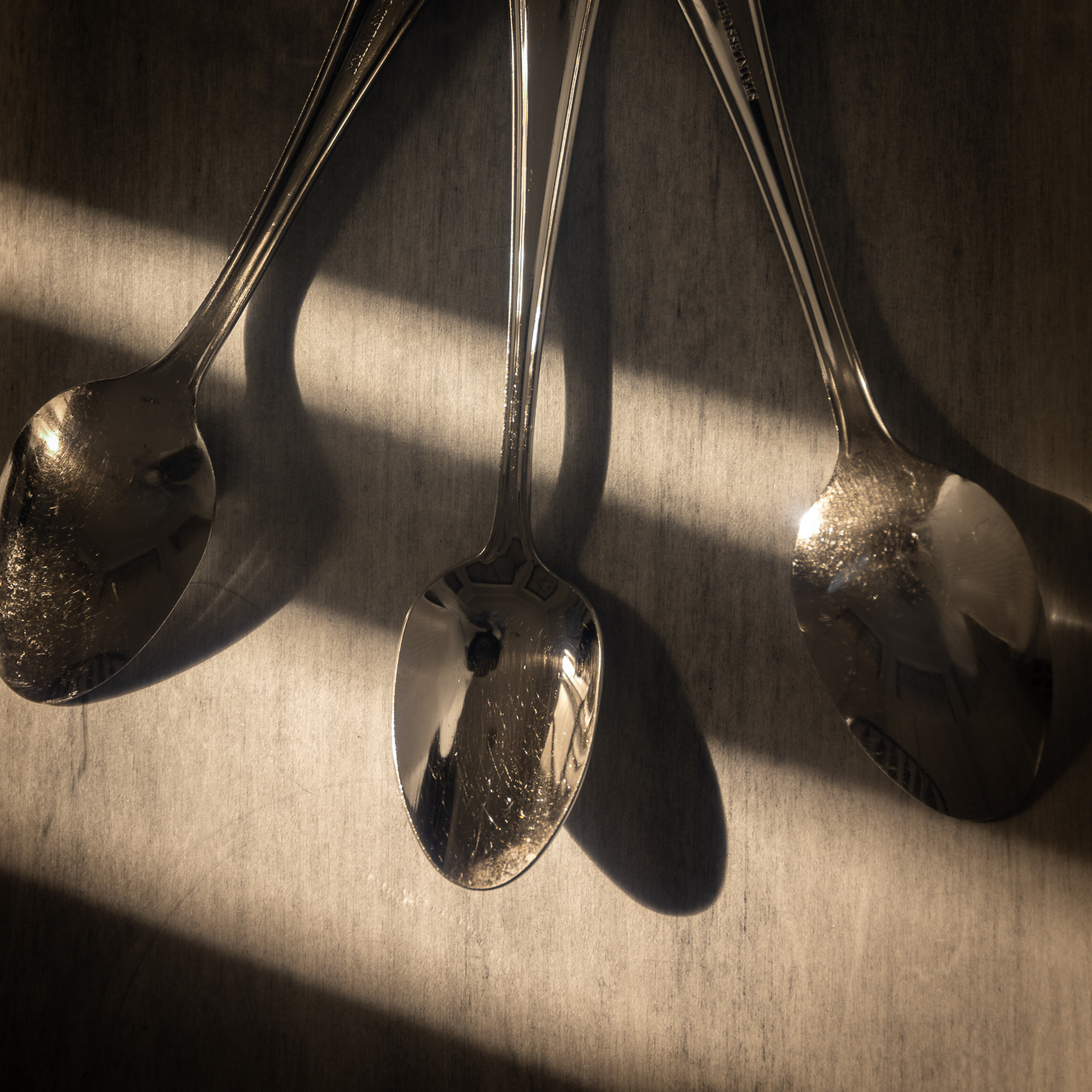
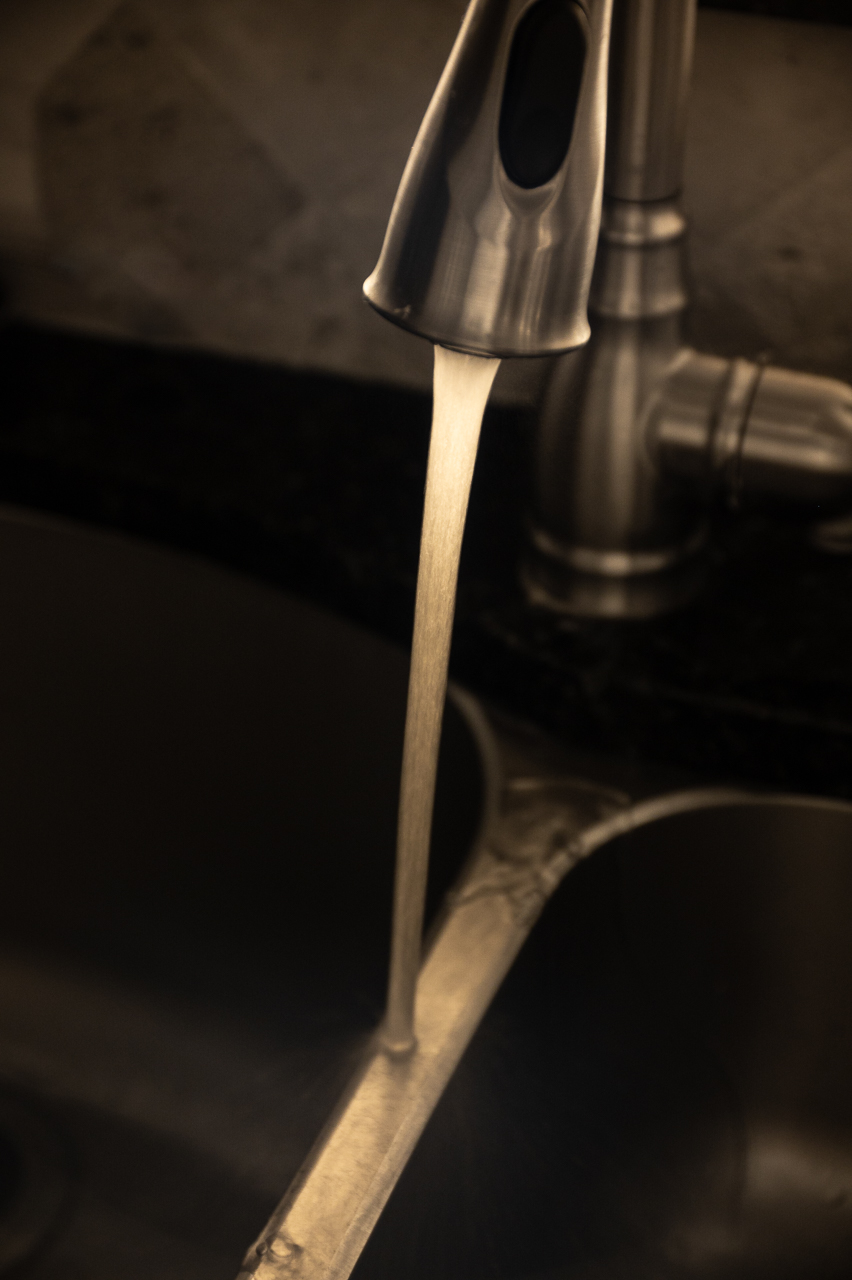
Part of the inspiration for this idea is a Spark Creativity paper match set. You draw a match and on it is a creative idea to execute. Mine said, “Randomly choose three words and use them as the basis for your next project.” I knew then that I wanted to use ordinary objects to convey the beauty you can find in your own home.

I have been reading “21 Days to Mindful Photography,” by Alexandria Searls. In it, she gives an exercise where you photograph out of every window in your house. So, I started there:

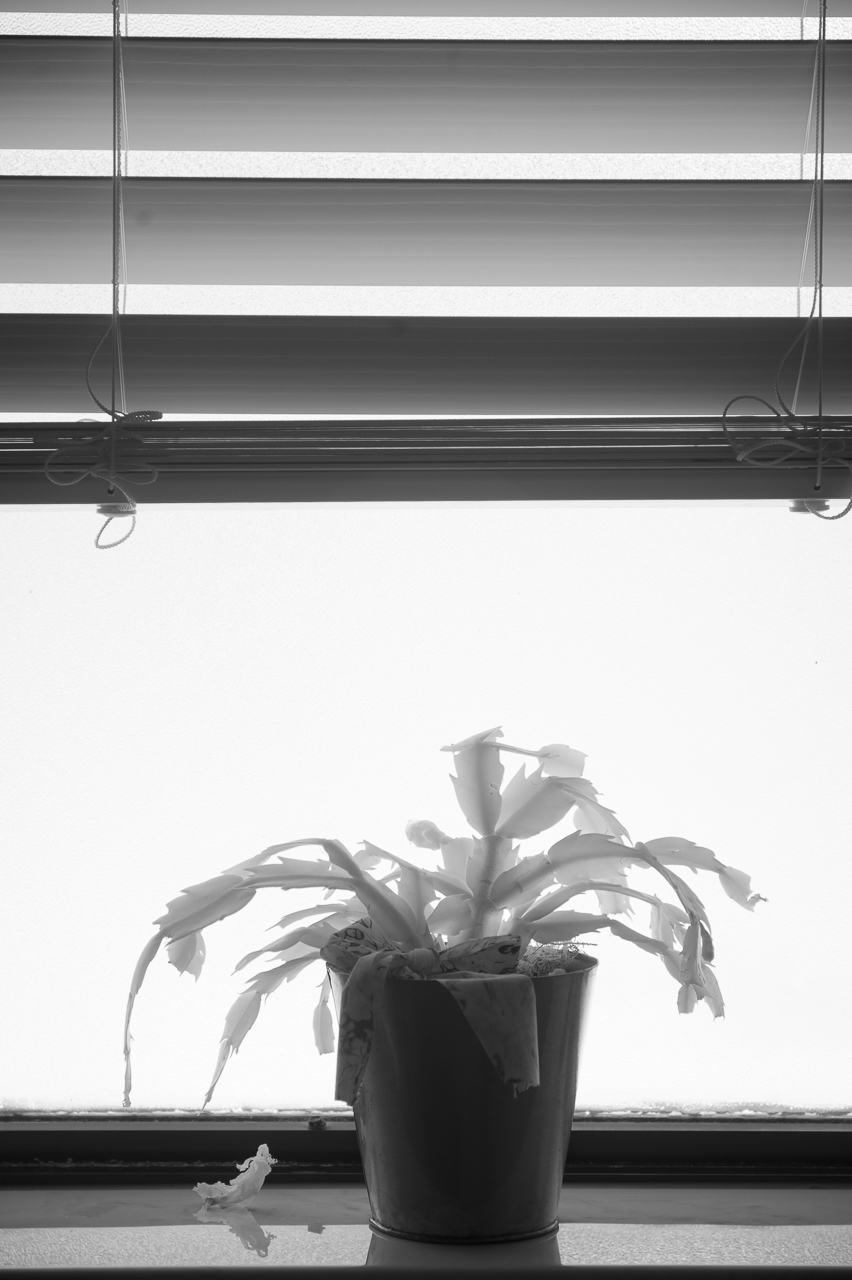
One of the things I enjoy the most about the house is my potted plant garden on the patio. Right now, the plants are over-wintering in the garage with a plant light. Nevertheless, I can catch the rays of my “sunshine” through the bedroom window.

Think about a place in your home where you find peace and pleasure. That is what my container garden is to me. I nurture these little plants, which I eagerly add to my collection each spring. Funny thing is, I don’t have a green thumb like my parents. It has been learning and growth in progress.

My cat Mary, exploring a space behind the shutter of the kitchen window.

To keep my husband and myself company, we have dear “fur babies.” They have been a source of joy, entertainment and love…even a challenge sometimes (Martha, I’m looking at you). Most of our cats and dog are between 11 and 12 years old. Our new addition is Tilly, a two year old min pin.

Most of these scenes were photographed in the middle of the day using a near-infrared converted camera. Early evening has its own charm. As the sun casts long rays across the landscape, the oblique light peers into the windows and gives objects an eerie glow.

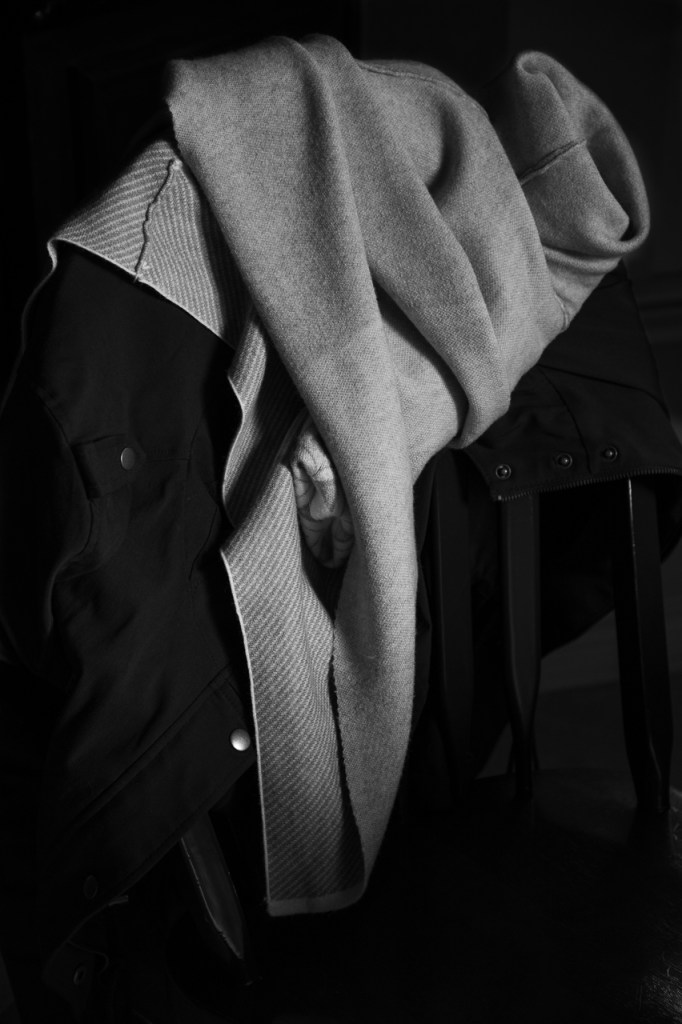
Here, a sweater rests on a jacket on a chair after a long day at work. A sense of solitude comes with the encroaching darkness.

And there, light peaks through the slats of the shutter, catching a glimpse of the world beyond our own protective cocoon.

But what of your other objects and still lifes? you ask. I continued on:

And what about those three words I chose for the project? Actually my husband chose them, to eliminate bias. See if you can guess what they are:

They were “apples,” “spoon,” and “river.” Okay, so I took a lot of liberty with the last one! I wonder what the next match stick will suggest. I haven’t drawn it yet…

What gives you a sense of peace, of pleasure or of solitude? Can you find them surrounding you in your space? What would happen if you found they connected you in some small way to the world around you, in the sense that you could share them with others or meditate in the safety of the familiar or be in the here and now, touching base with reality?

I wish you good health and happiness for the new year!

Namaste

Drop!

*A project for the photographic storytelling group*

(Incidentally, you can find that group at https://www.facebook.com/groups/photographicstorytelling/ )

DSC_6218

Today’s little story is about trial and error, and how it’s helpful to have a firm grip on the technical aspects of photography so that you can get to the artistic execution. The subject of my story is water drop photography. I’m sure there are folks out there who look at it and say, “Oh, you just connect a drip machine, press a button and presto!” but actually it takes a lot of time and planning. This is what I will cover in this blog-in-two-parts.

So after working on waterdrop photography using drops from a plastic pipette, I bought a MIOPS splash. This system allows you to time your drops, adjust the water drop size, and sync everything with your flashes (leave camera on bulb, pop flash) or camera. I prefer to control the flashes from my camera and open the shutter briefly. Pictured here is my setup:

L16_00246

As you can see, my table is quite a mess! But it’s all necessary, I swear! Let’s go over a few of the things I’m using to make water drop images:

  1. A camera with a tripod. Also, I use a macro lens which allows me the distance between lens and pan that I sorely need. It is set @f/14.
  2. Radio controllers for the flashes. You can get a cheap kit on Amazon made by Neewer.
  3. Flashes set on manual mode, 1/32 s. I use one for the background lighting (pictured far right). The screen in front of it is a piece of glass with a sheet of contact paper used for protecting the bottoms of drawers. I like the gold hue. The other two flashes have a piece of rogue gel applied with painter’s tape. They are pointed at the area of the splash, to color the edges of the water drop.
  4. A drip kit/eyedropper/pipette etc. The trick here is height.
  5. A method of controlling the shutter. If you use an eye dropper to deploy your drops, I recommend the Trigger Trap. I think they are going out of business, but you can still find some camera-to-cell phone cables on the net. Trigger Trap is an app that allows you to open your shutter from your cell phone using a verbal command like, “Bang!” which is kind of fun….and could possibly annoy your roommates….The MIOPS, on the other hand,  comes with a flash sync cable and a cell phone app that lets you control the dropper via bluetooth. In my case, I (read, my husband) rigged the Trigger Trap cable to a few other connectors and cables so that it could connect to my camera long-distance. This way, I could just hit a button on the app to deploy the drop and time the shutter.
  6. A word about shutter speed – you will need to use your camera’s optimum shutter speed for deploying flash. My Nikon’s is 1/200 s (and some cameras have 1/160 s, check the manual). Anything faster and  you will see your shutter curtain in your image!
  7. Towels. It gets wet.
  8. And of course, a container for water. I found that a black plastic tray worked better than glass for the camera angle I was using. Also, filling it up worked better than part-way or I would have a black, unreflective line in my images.

I’m going to additionally point out that tethering your camera to Lightroom on a laptop is very useful. It allows you to see your images in real-time in a larger format than the back of your camera, which is good for checking focus and other important things.

L16_00250

I connect my camera via its USB cable plus a TrippLite extender to the computer. Open Lightroom and go to File -> Tethered capture -> start tethered capture. Turn on your camera and let LR acknowledge that it is seen. As you work, the files will be saved on the computer.

Okay, so now that everything’s in order, let’s proceed to the set up for the shot(s). You need to figure out exactly where the water drop is going to hit and be consistent about it. So, if you are using a dropper, having a clamp to hold it in place is a good idea. The MIOPS drip kit comes with an arm you can attach to a small tripod. (In all honesty, I’m not a fan of this arm). Once your drop-maker is secure, focus on the water using a ruler or some other object. I use a sake cup (my husband’s suggestion).

Test Tether Waterdrop-053

Pictured above is the test for focus. As you can see, my drop is a little soft. It took me a while to figure out why. Basically, all of your flashes have to be 1/32 s or below, or you get something like this:

Test Tether Waterdrop-124

Motion blur.

So I powered down the background flash and moved it closer to my subject (to compensate for less power). The next problem (among many I had throughout the session) was that, by moving the background light source lower and closer, I got some serious vignetting in the upper corners.

Test Tether Waterdrop-259

And finally, I observed that the contrast and colors in the image just weren’t quite right,

Test Tether Waterdrop-238

which is partly a post-processing dilemma.

I’m telling  you about all the mistakes I’ve made, because I notice that in other blogs everyone shows the picture-perfect results. To get there, however, takes quite a bit of patience and effort. I took over 300 pictures just trying to get results to post in this blog. In that time, the flashes stopped communicating, the camera sync cable stopped functioning, and other issues came up that I have already addressed.

The replacement cable just came in the mail, and I will continue experimenting. So this blog is To Be Continued

Happy image-making folks!


Japanese Gardens, in Infrared

*A photographic storytelling blog*

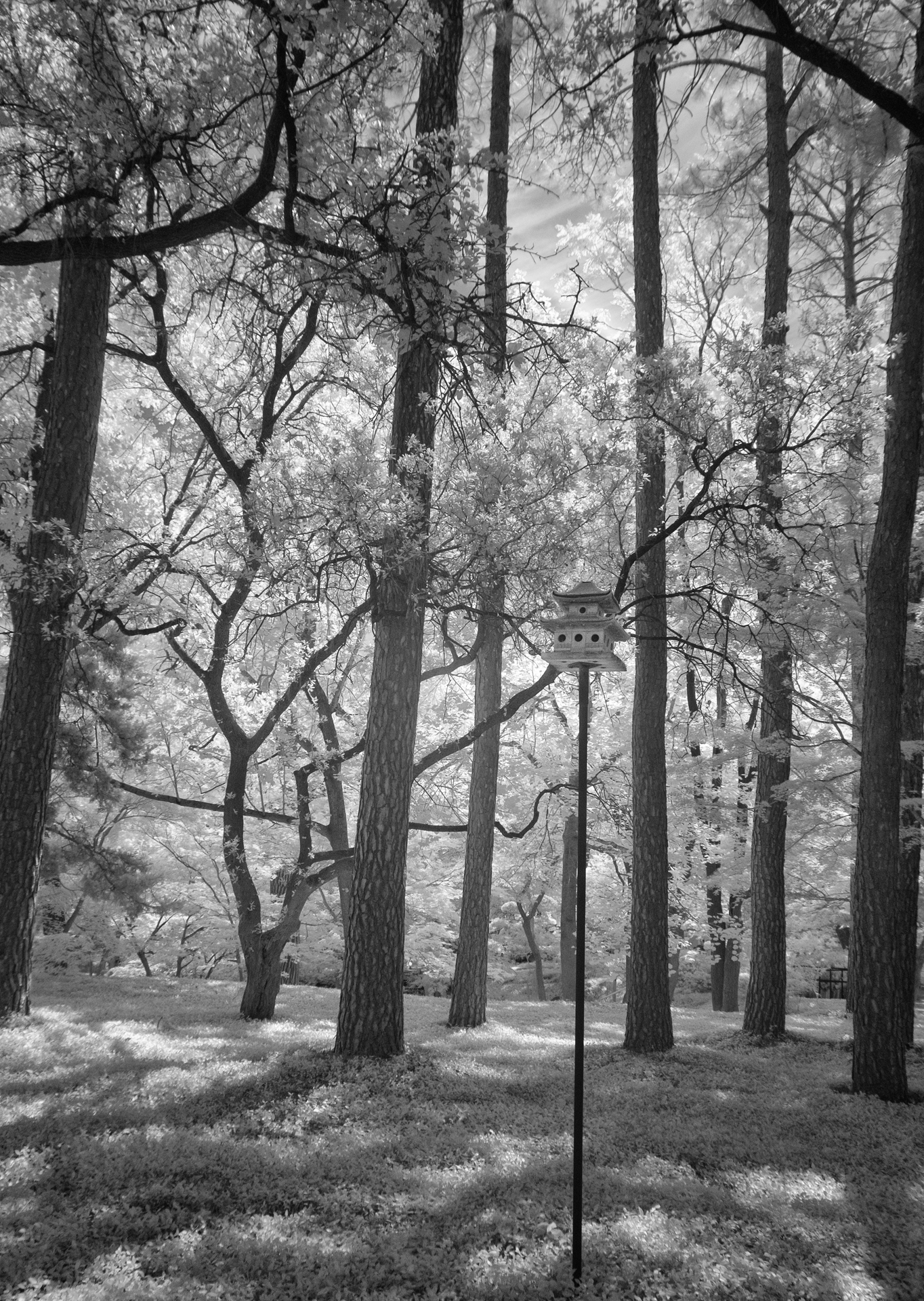
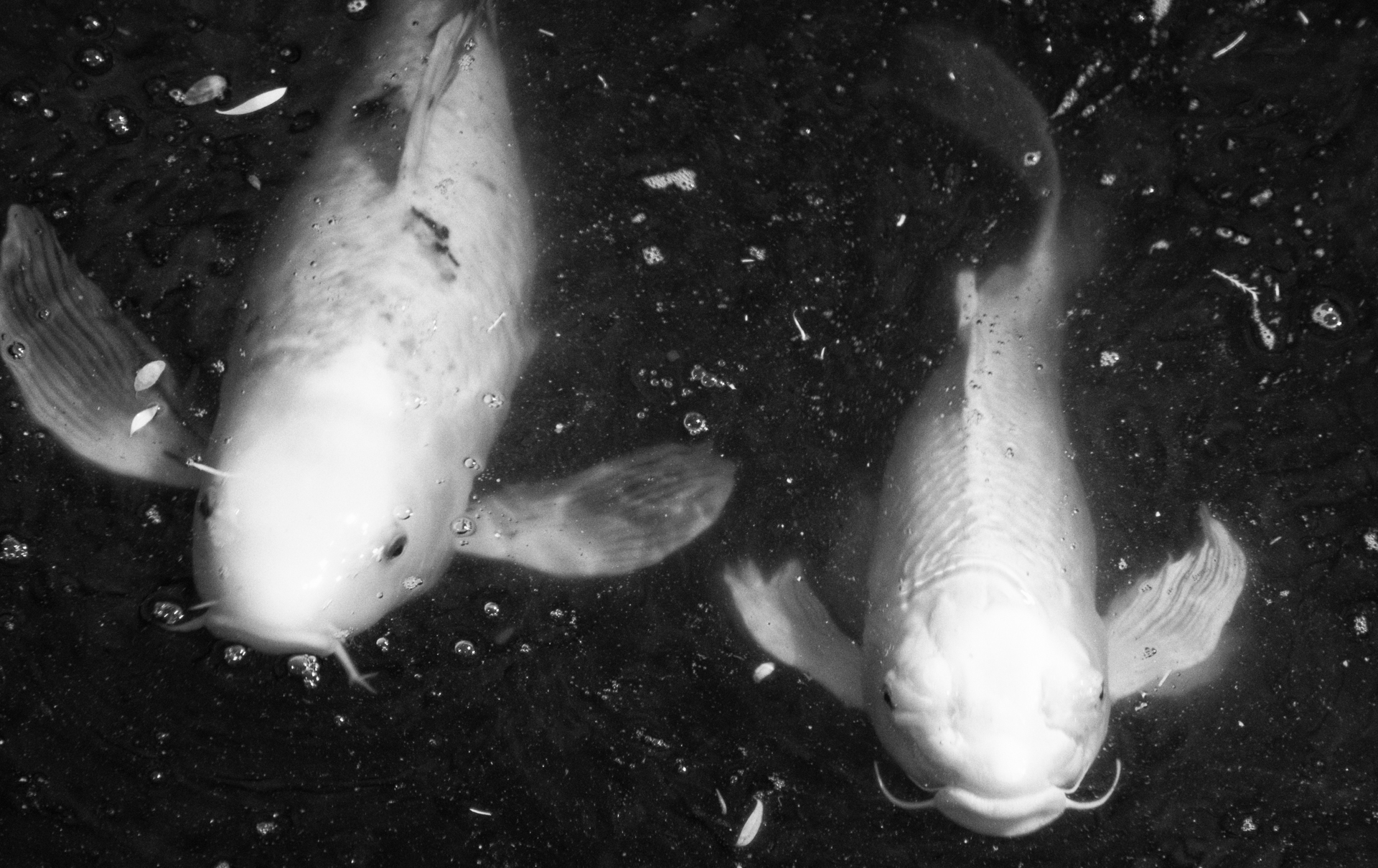
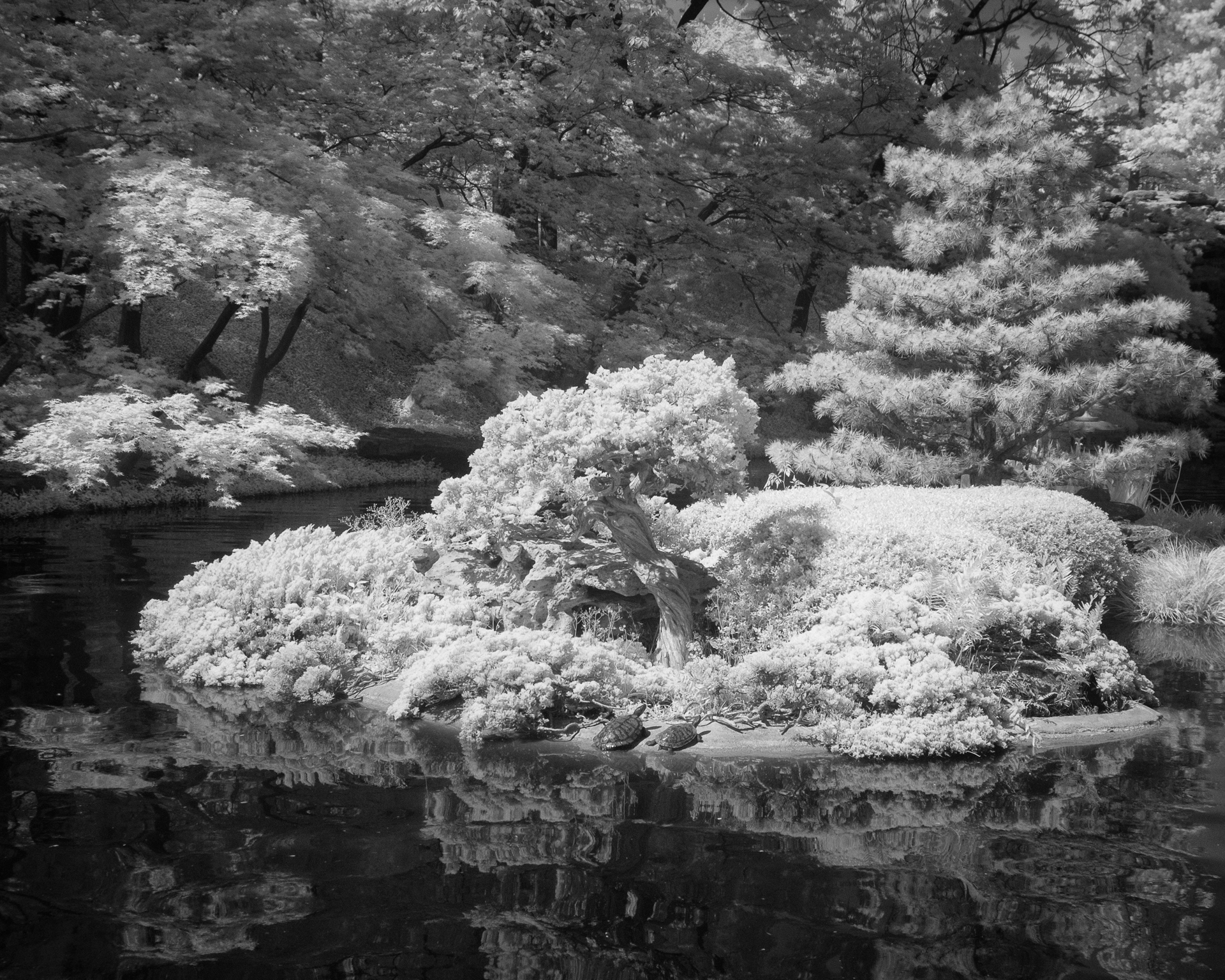
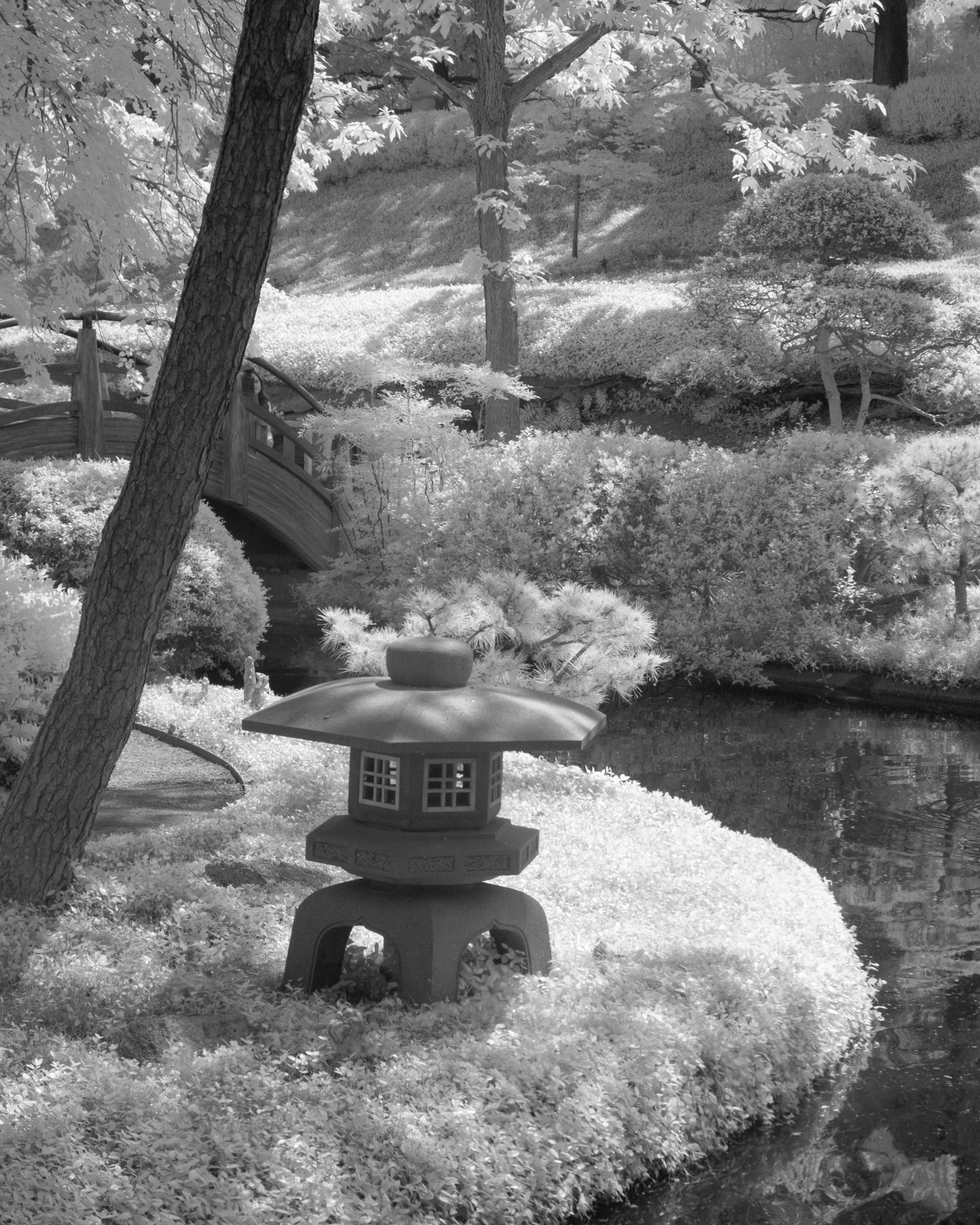
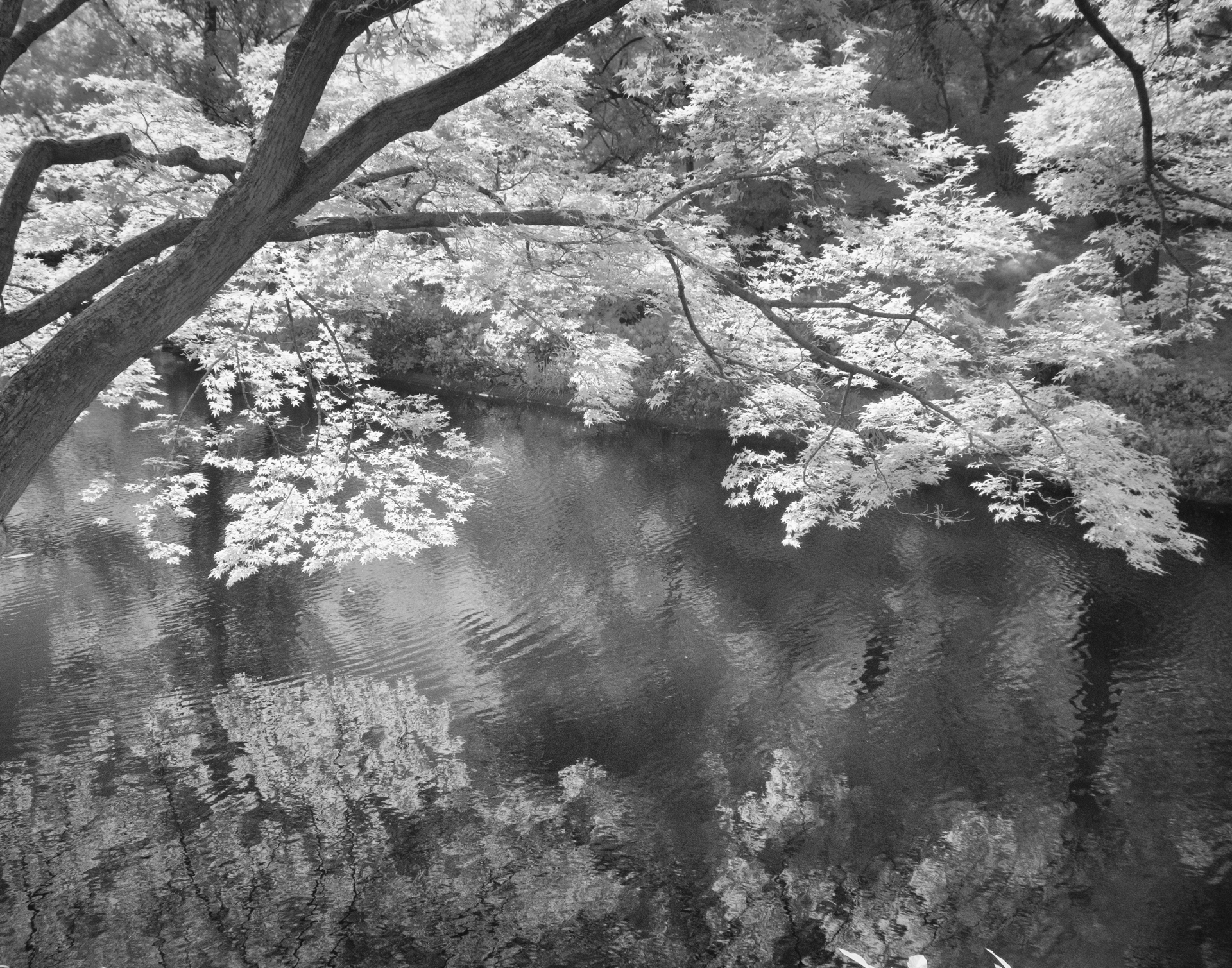
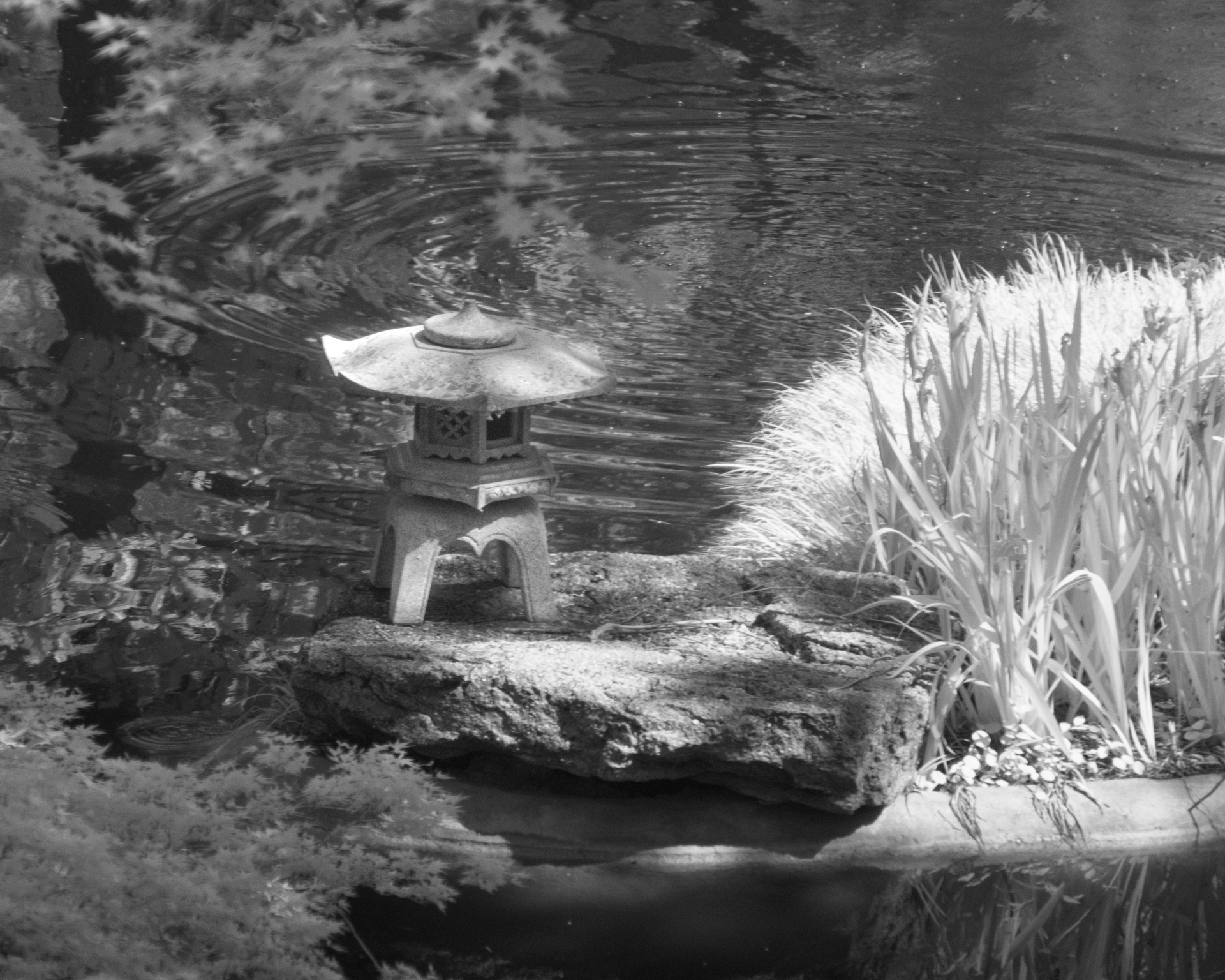
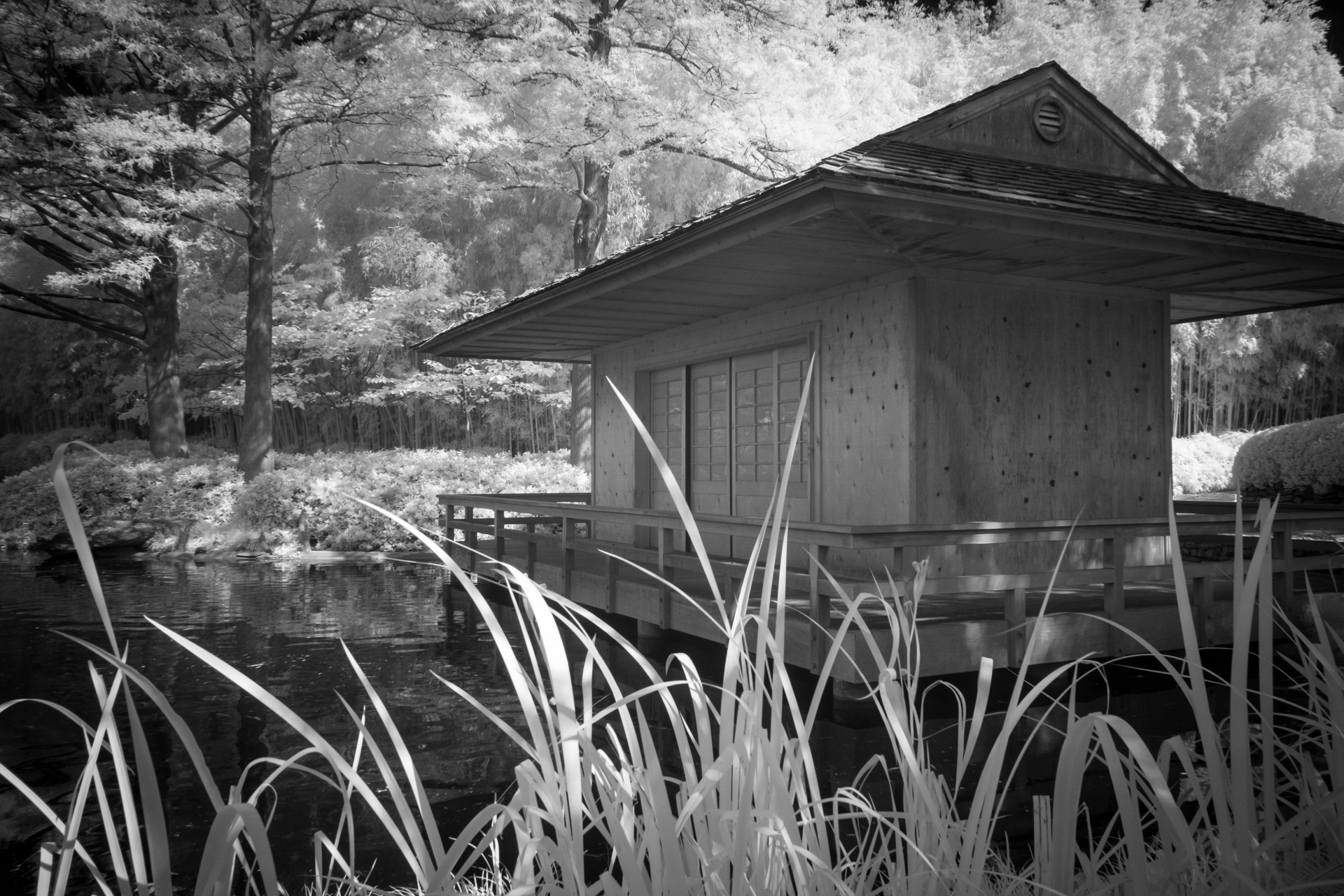
When I was a child, my family lived in Fort Worth. As a treat, we would visit the cultural area of the city around the stockyards, the Amon Carter museum, Casa Manana (a theater under a dome), and the zoo. The Fort Worth botanic gardens lies in that area, and inside of it is a Japanese garden, finished in the early 1970’s. It is home to many stroll paths, koi fish, a meditative rock garden, and a tea house. There is something very relaxing about this garden. Unlike other displays in the botanic garden, there are few flowers but many maple trees, a tall magnolia, ponds and bamboo. Even with the crowds of the annual spring festival, the garden seems very peaceful and contemplative.

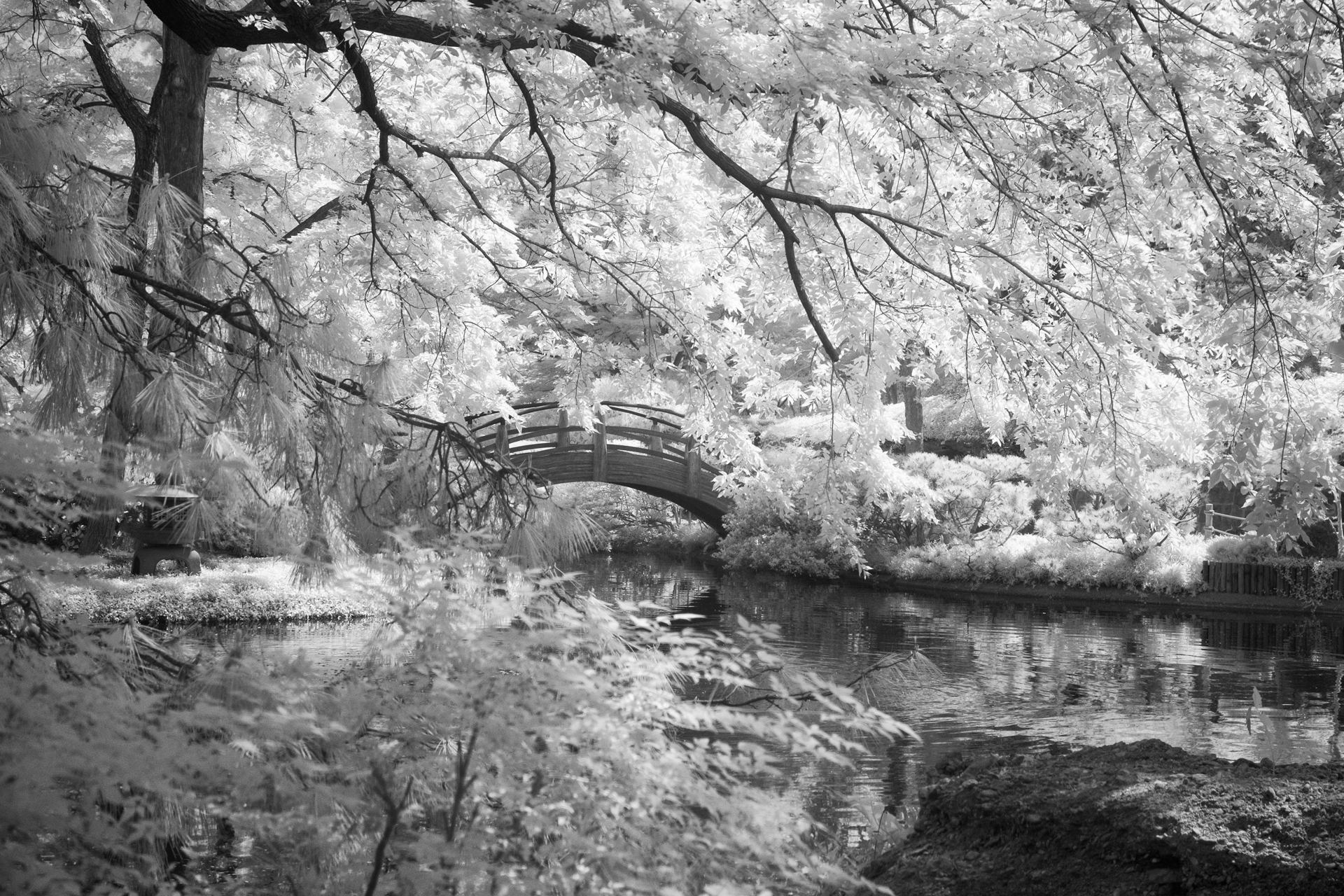
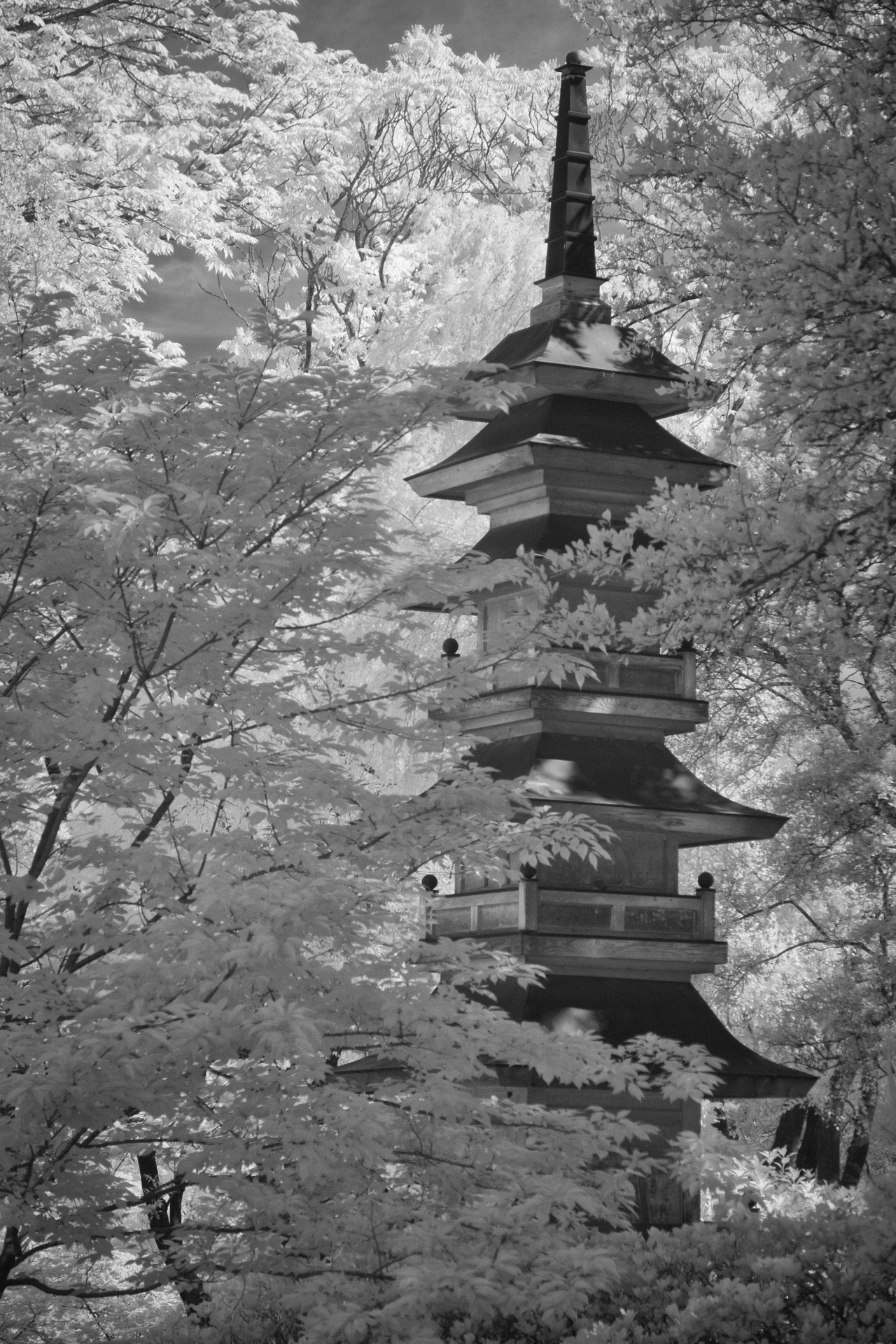
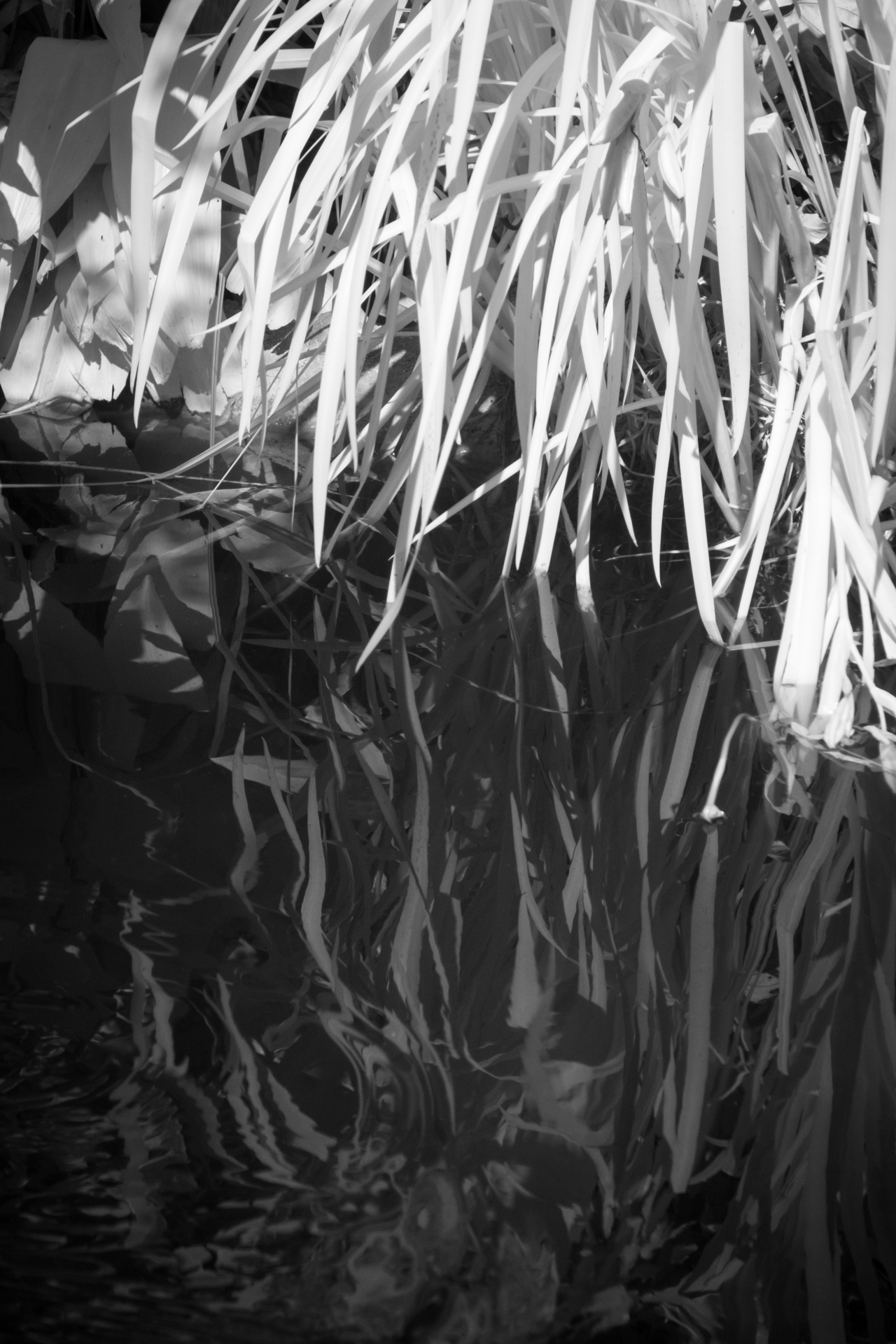
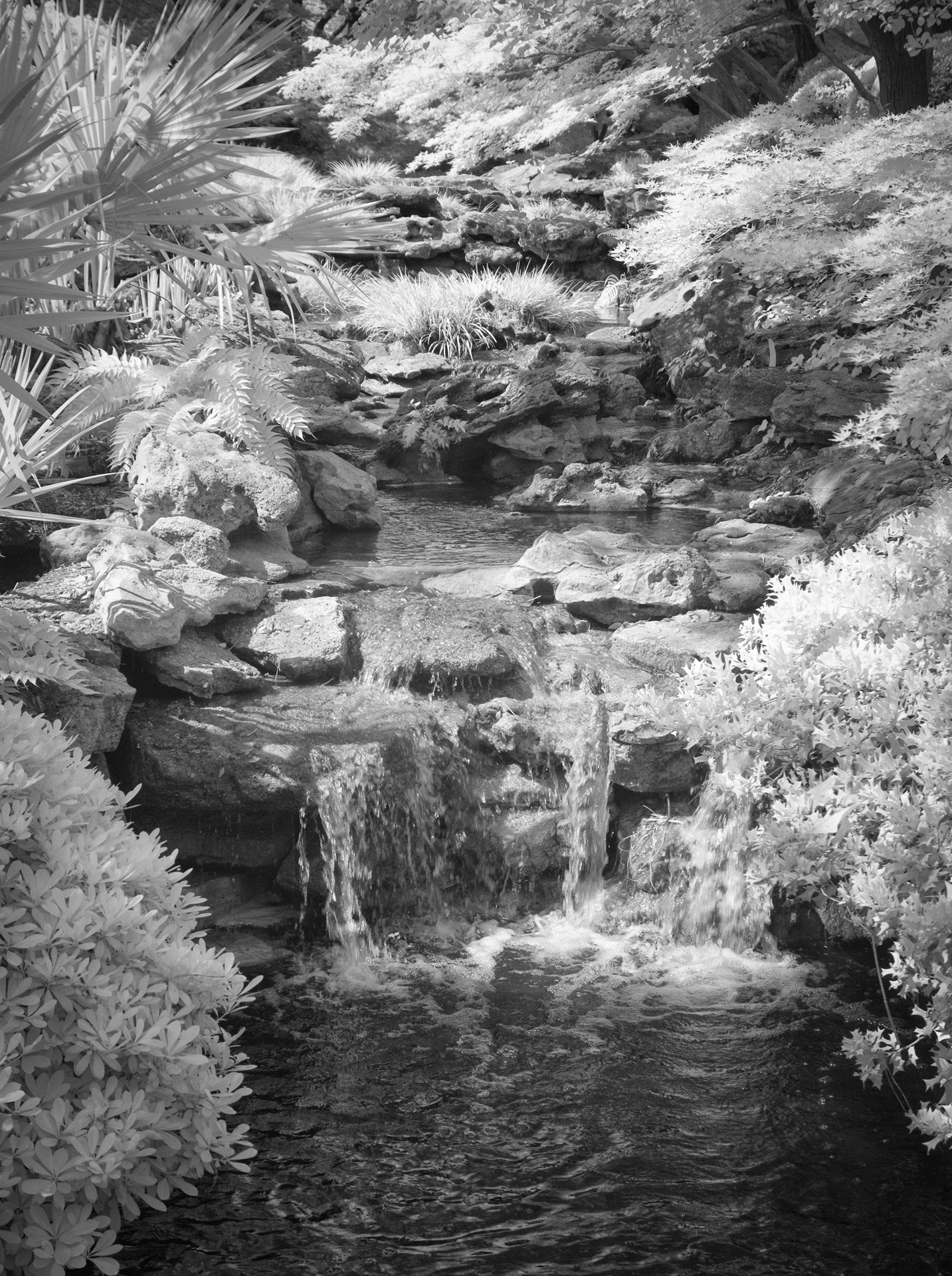
I sought to capture this contemplative nature in my photography. With a converted camera that records infrared light, not only can you image in broad daylight, but plants take on a mystical quality, as they are rendered white.

DSCF1234-Edit

DSCF1237-Edit

DSCF1231-Edit

DSCF1232-Edit

DSCF0499-Edit

DSCF0513-Edit

DSCF0509

DSCF1226-Edit

DSCF1227-Edit

DSCF1238-Edit

DSCF0488-Edit-2

DSCF0532-Edit

DSCF1235-Edit

DSCF1233-EditDSCF0538

In the Still Spaces

via Facebook – Log In or Sign Up

Softly slumbering,

I dream of silent spaces

Echoes long before

***

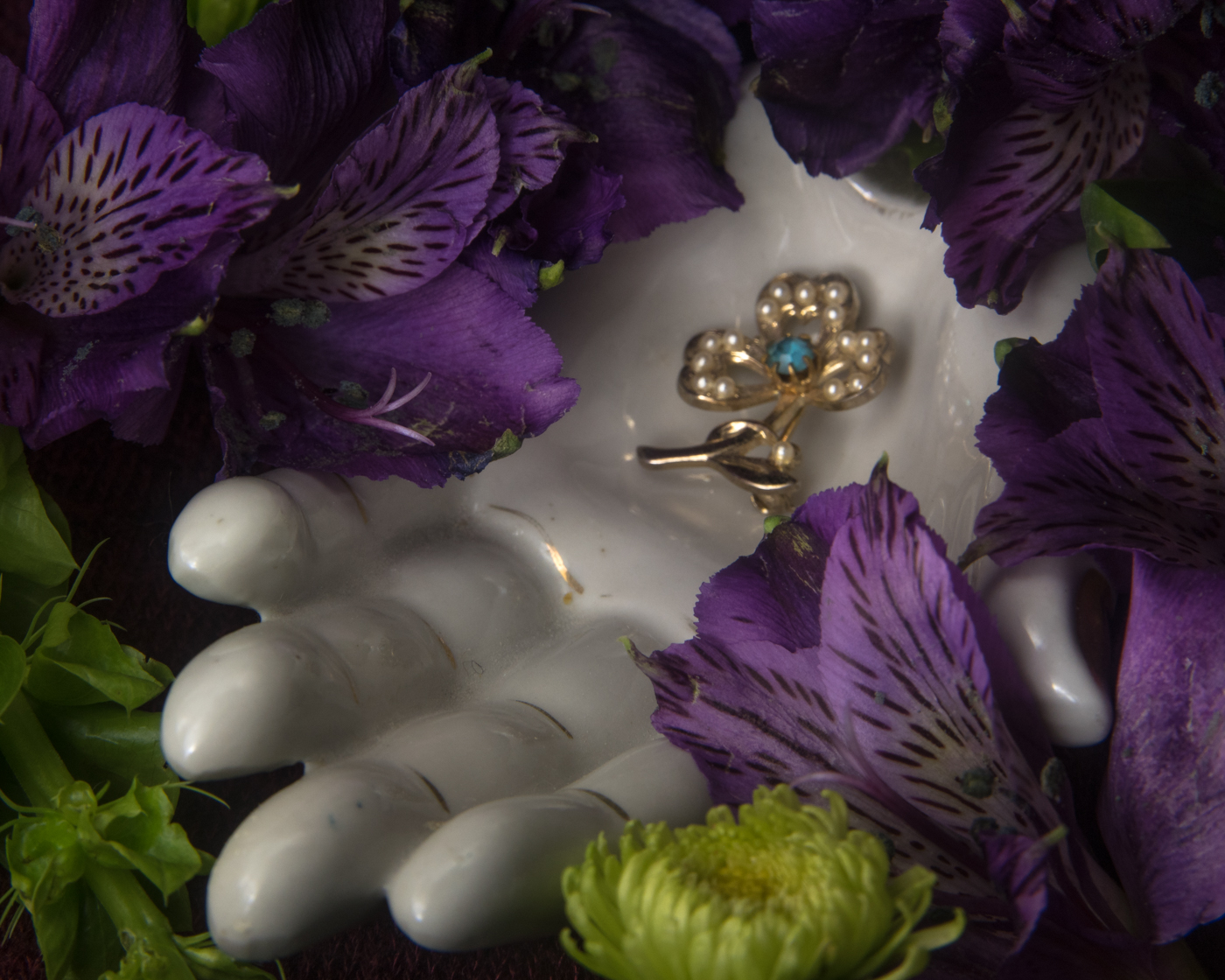
I have a bit of an “object affection”: a certain affinity for things because they represent something sentimental, or sometimes, something practical. If I’m lucky, they’re a bit of both. Take for instance the twin-lens reflex camera sitting on my shelf in “the cat room” (aka my office). It’s a neat item I found at an antique store that represents my interest in photography. At the same time (as far as I can tell), it appears to be fully functional. Then there’s the kitschy cat lamp sitting beside the office futon. It appeals to my crazy cat lady sensibilities, and behold! It glows! One of my favorite objects is an ashtray shaped like a gloved hand. Although I don’t smoke, the hand can hold jewelry or become a convenient artistic prop for things like still life._CAP6024

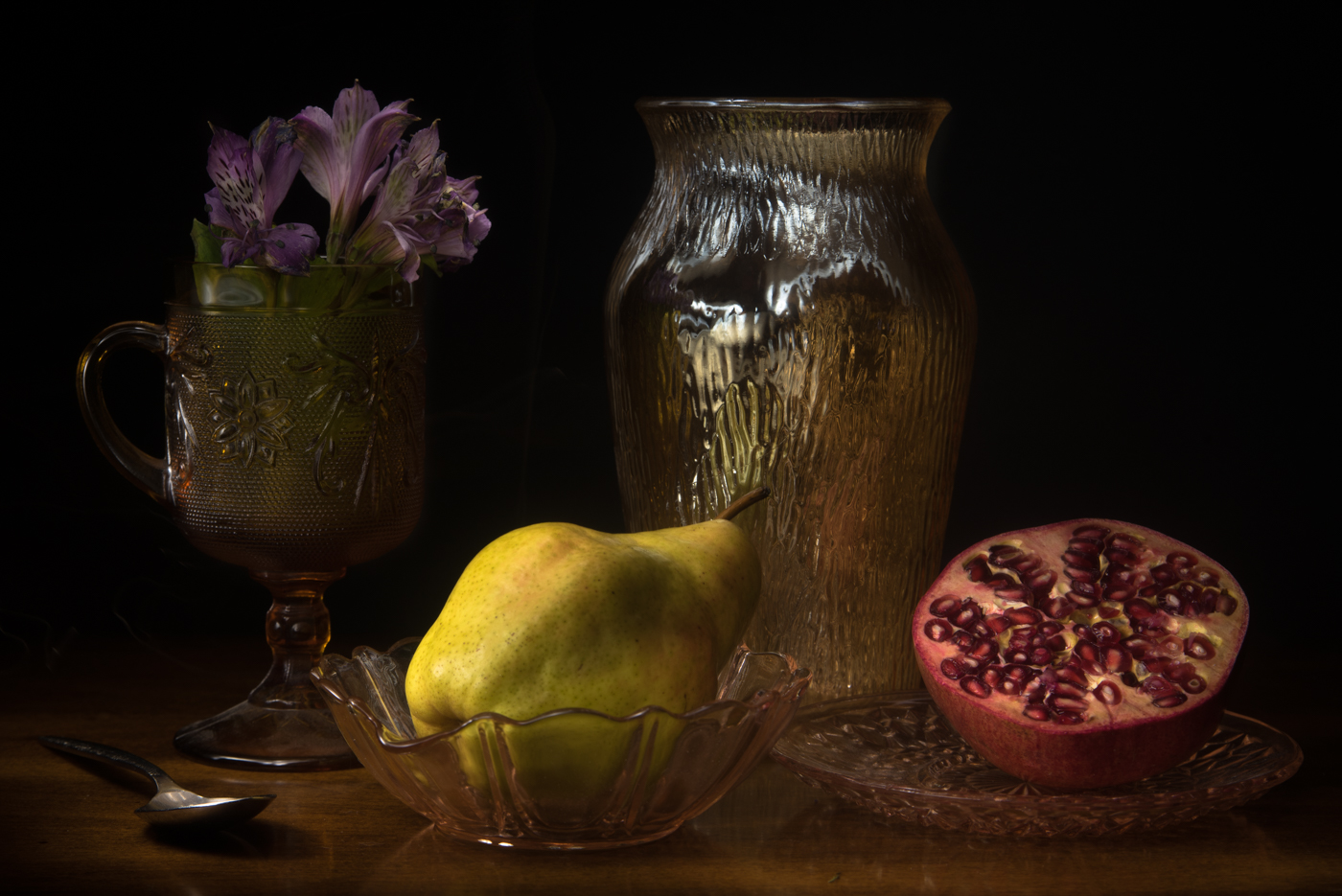
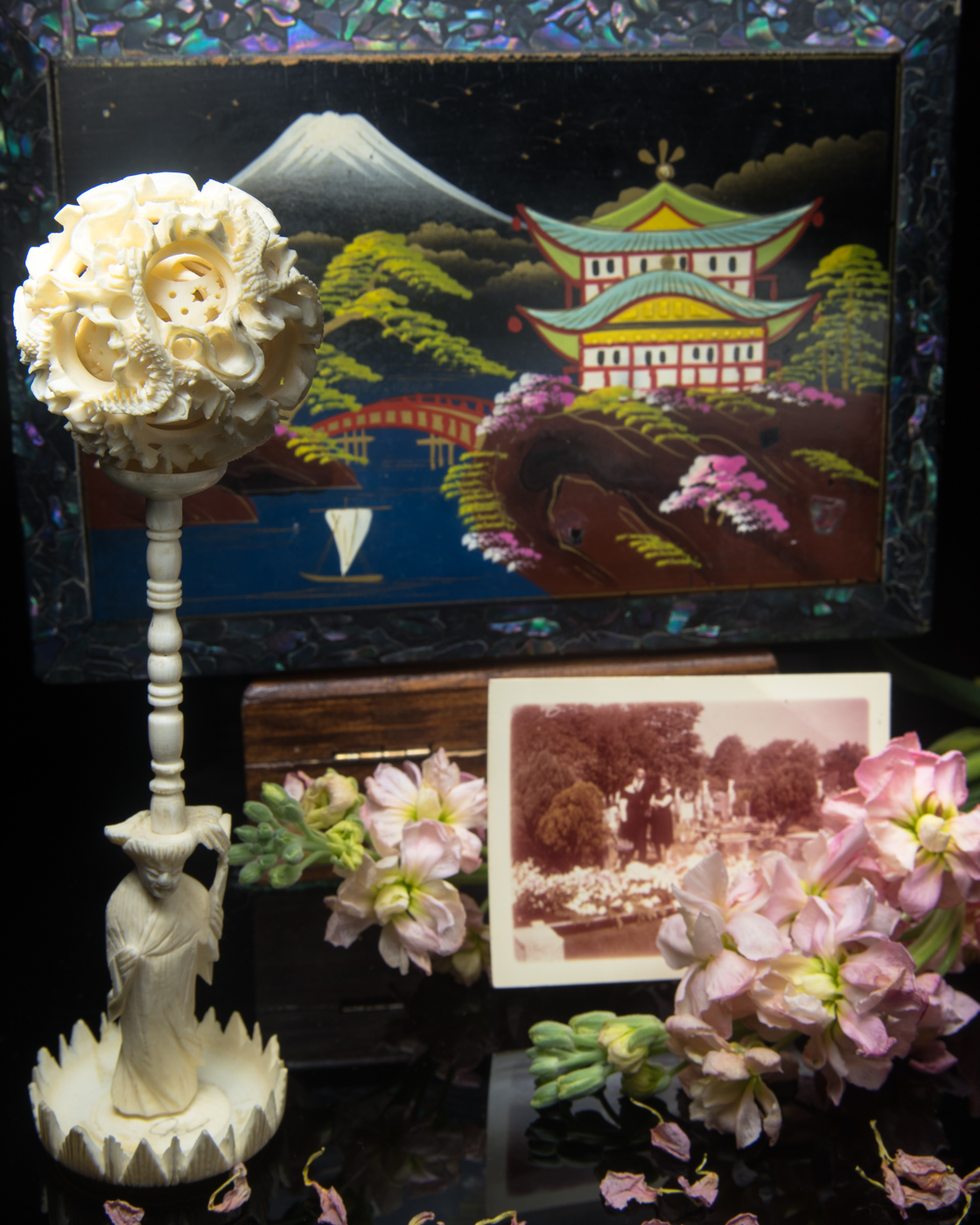
Recently I asked my mother if she had any interesting objects that I could borrow to practice still life photography. When all was said and done, I had at least four boxes of dolls, jewelry, depression glassware, and little objets d’art loaded into the back of my car. _CAP5824-1Although some of these objects were found at stores or in antique shops, many of them  held sentimental value. I came to realize, as I was arranging and rearranging them, that really, they were a piece of my family’s history. More specifically, they were a reflection of the women in my family and their own object affections, which mirrored things they were interested in, placed they’d been, or things that they did.

I also realized that I was not interested in photographing these nostalgic pieces in a high-key fashion in a light tent, but preferred to employ shadow and light to evoke a somber mood. Therefore, these images are made with a technique called light painting. It basically involves a long exposure, in the dark, and the lighting is provided by a diffused flashlight. It can be a lot of fun but also requires a lot of patience. So this is an ongoing project; I expect I’ll be at it for a few more months yet.

***

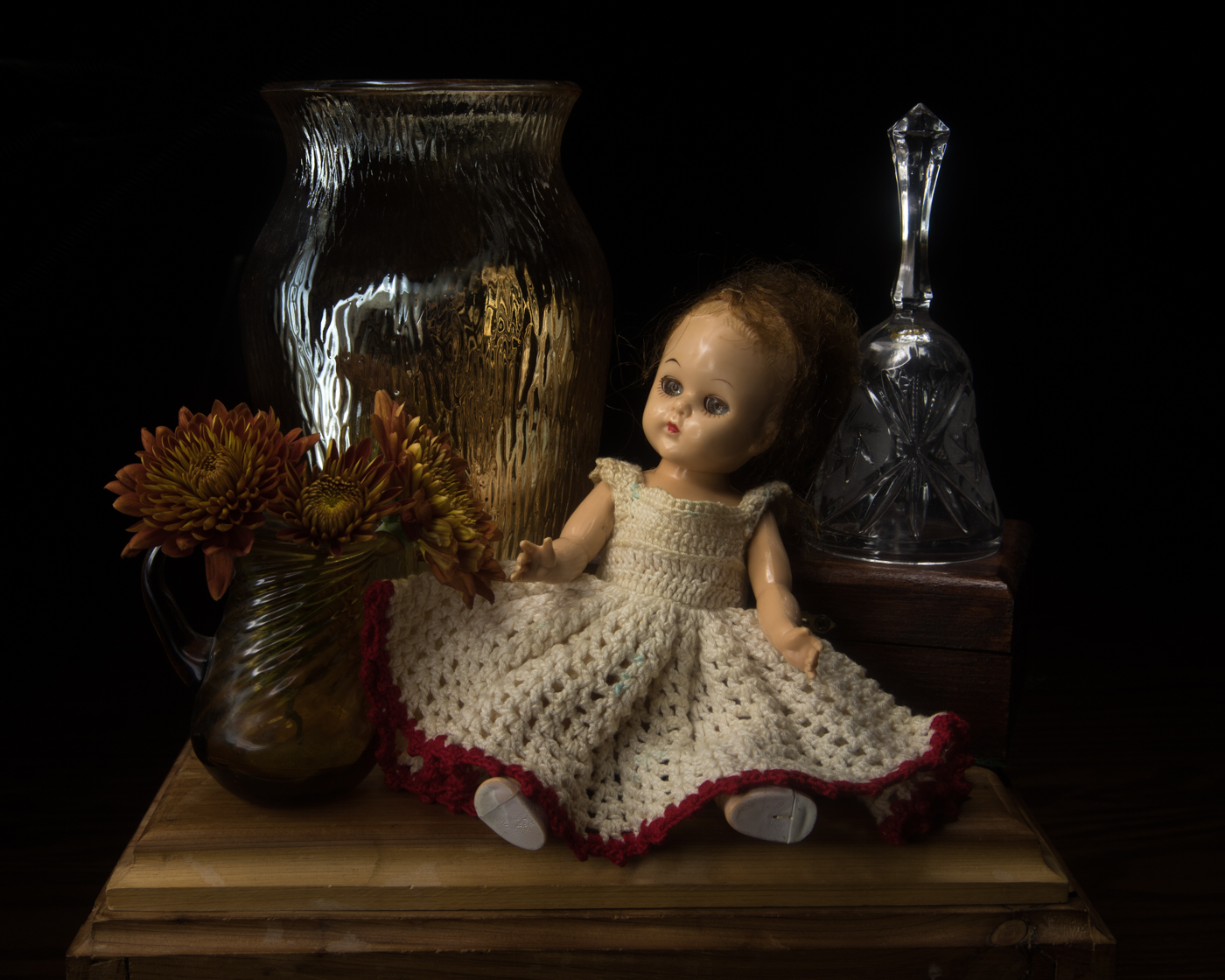
“Polly”

_CAP5772-HDR-1

When I was a child, I used to refer to this doll as “Polly.” She belonged to my mother as a child, and I have no idea what she was named then. The dress she is wearing was knitted by my grandmother, who knitted all kinds of clothes for the dolls. She also embroidered tablecloths, pillowcases and handkerchiefs.

_CAP6143

“Costume jewelry”

_CAP6114

I used to love looking at my grandmother’s costume jewelry. She had quite a collection. Lots of shiny, colorful beads, which she would pair with a nice dress when she went out. I always thought my grandmother bought it from Avon, but apparently my grandfather would give her this jewelry as presents on special occasions since she loved it so much.

“Formosa”

_CAP6135My grandfather was stationed in Taiwan, and his family came with him. While they were there, my great grandmother passed away. The small picture is a scene from her funeral.

“Cross”

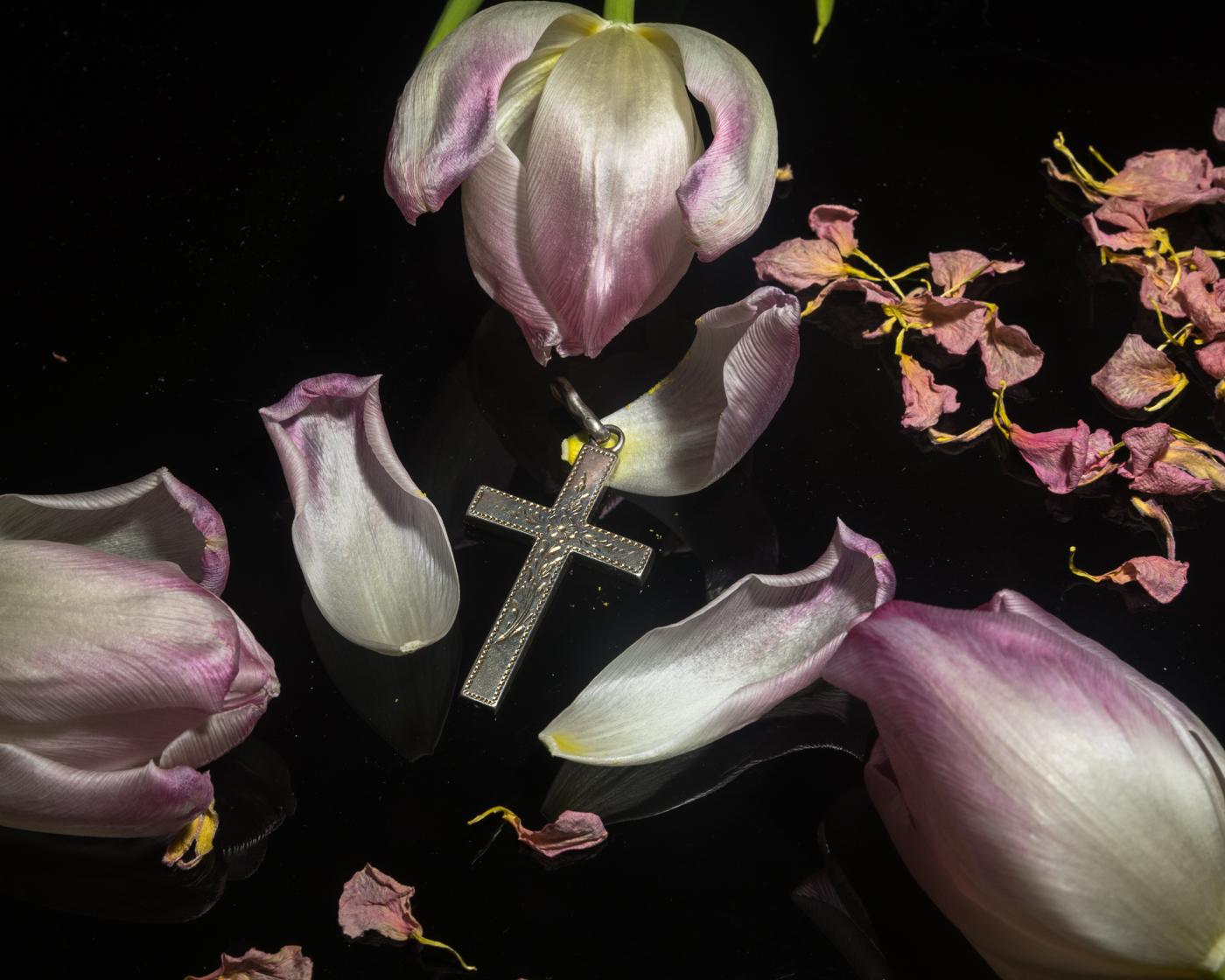
My great-grandmother Rasmussen’s cross was passed down to me from my Aunt Alice. Someday I will pass it on to her granddaughter, Rosie.

_CAP6160

“Oma”

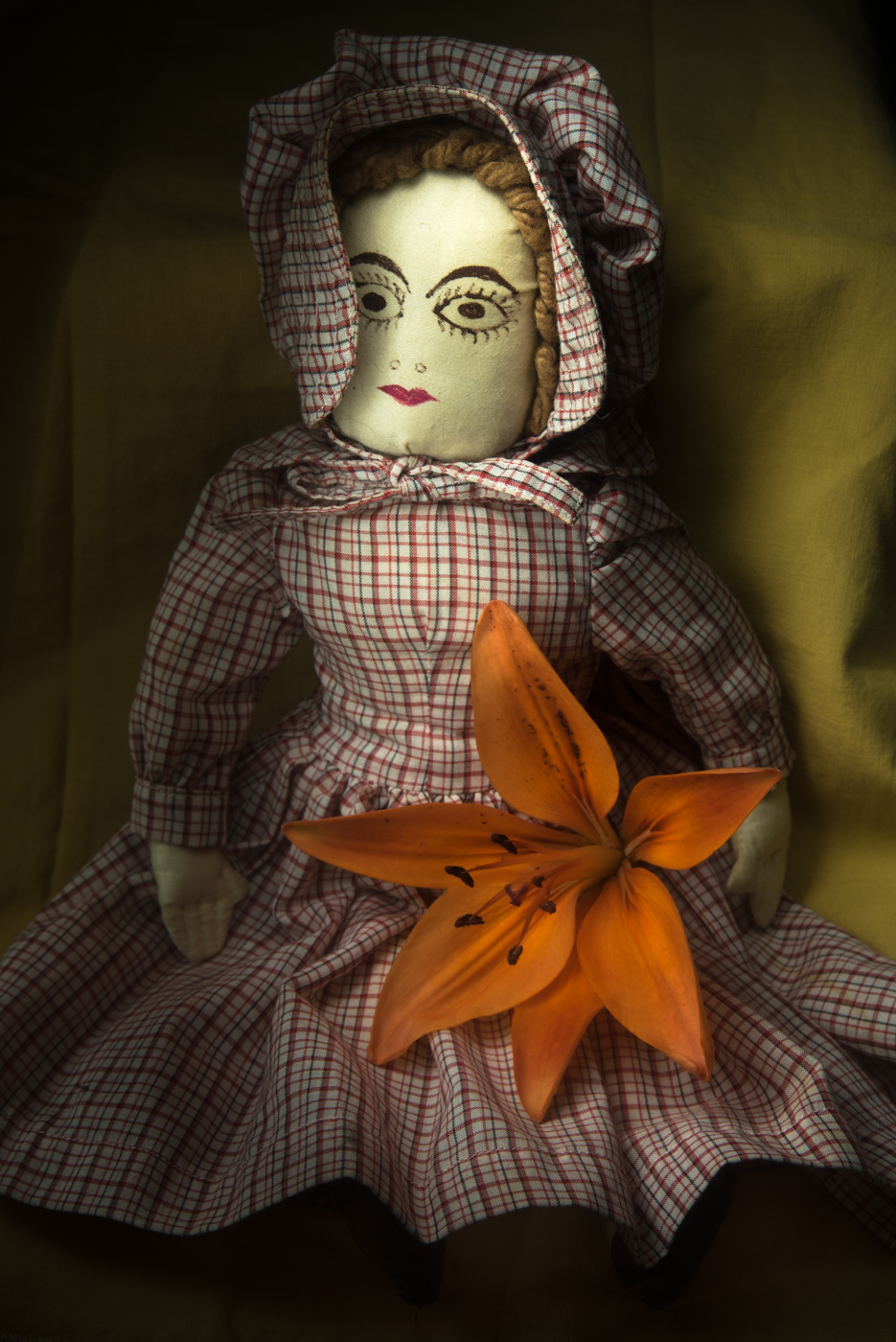
I met my paternal great-grandmother when I was very young. This was the only name I knew her by. It is German for “grandma.” Oma lived in a small house with a wooden floor. I seem to recall it looking like a tin shack on the outside…or maybe it just had a tin roof. She was also an accomplished sewer: she would make patchwork quilts. She also hand-sewed this doll:

_CAP5796-3

“Time”

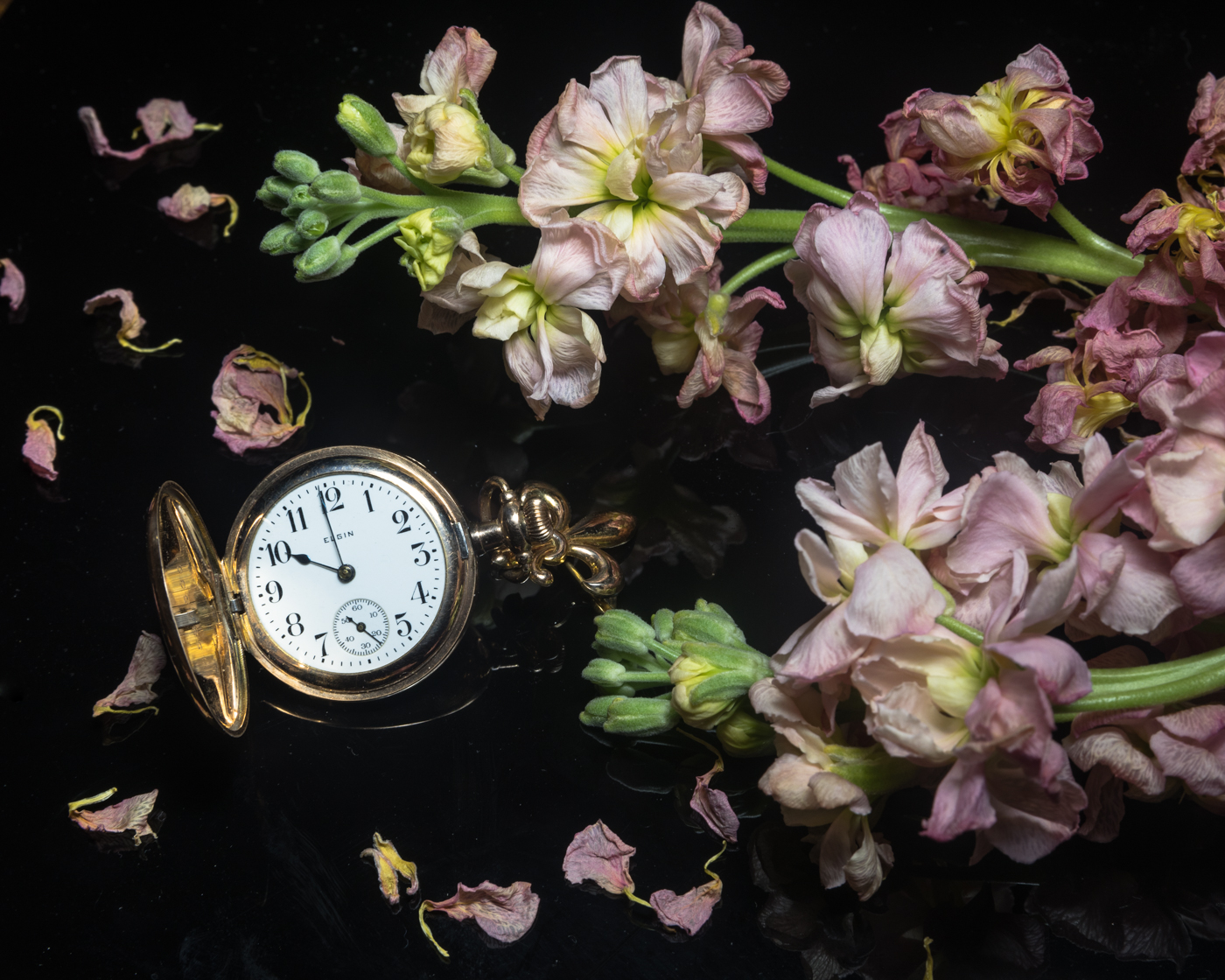
There’s a lot of interesting history with the women on my father’s side of the family. One of my great (great) grandmothers, Sarah, was kind of a rebel. She was apparently kicked out of the church for dancing. So she started her own church in her living room! My other great grandmother timed trains in an age when women didn’t do that sort of thing. This was her pocket watch:

_CAP6152

You may have noticed that flowers are prominent in these images. Not only are they an additional touch of the feminine, but my grandparents on both sides of the family, as well as my parents, were avid gardeners. My father’s parents had a greenhouse and vegetable plot. We would eat fresh spinach from their garden at the table. My maternal grandmother was a city girl, growing up in Brooklyn NY. She gardened mainly in pots in her backyard. I remember she gave me pink polka dot plants, long before they were sold in garden shops as a variety called “splash.”

“Flora”

_CAP5954-1

I think I have inherited a certain love of beauty, especially in flowers, although my thumb for gardening is conspicuously absent. I certainly love to photograph them, as well as precious objects in the still, quiet spaces.


Meet Me in St. Louis

“Meet me in St. Louis, Louis/meet me at the fair,
Don’t tell me the lights are shining/Any place but there”
~ Meet Me in St. Louis, Judy Garland

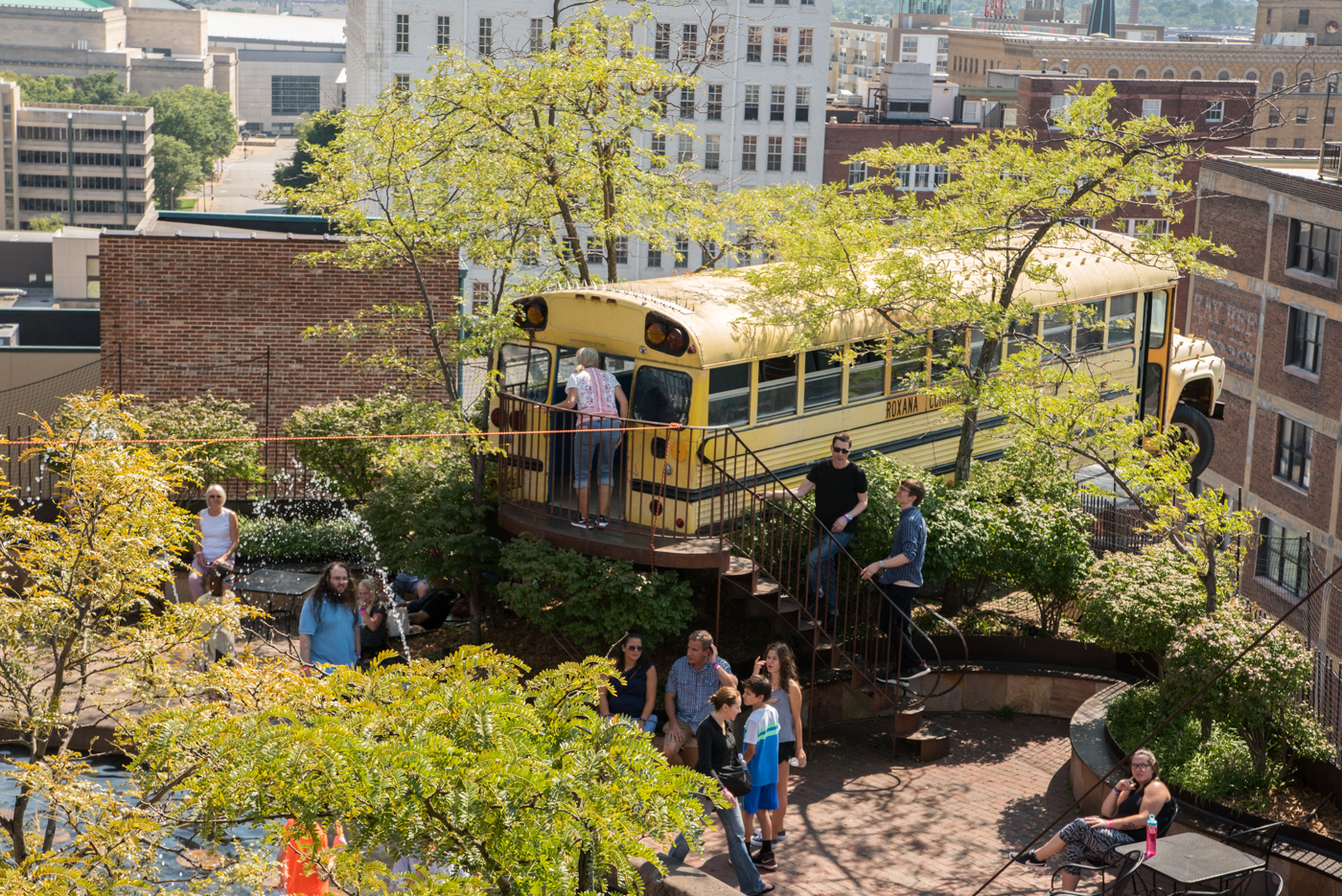
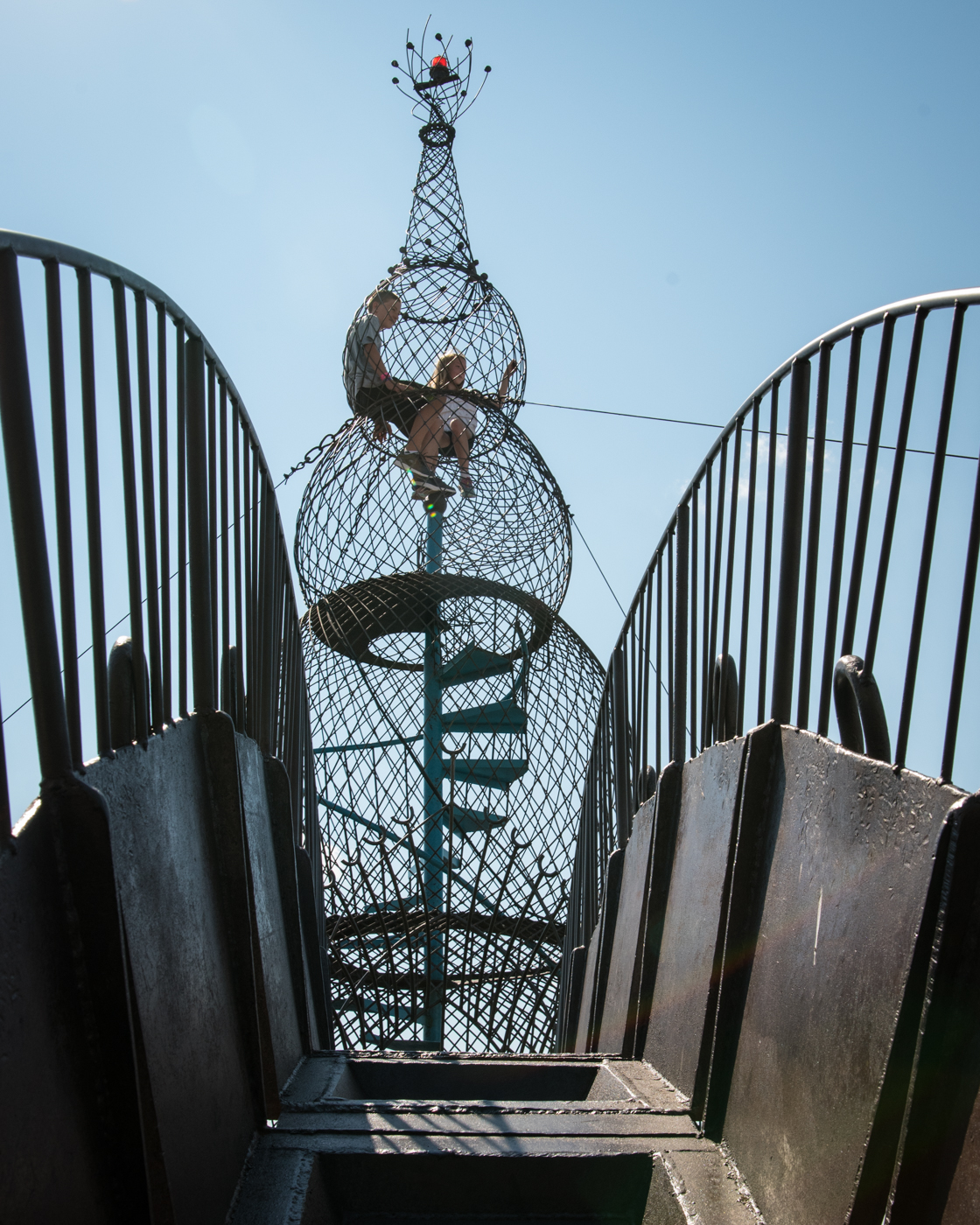
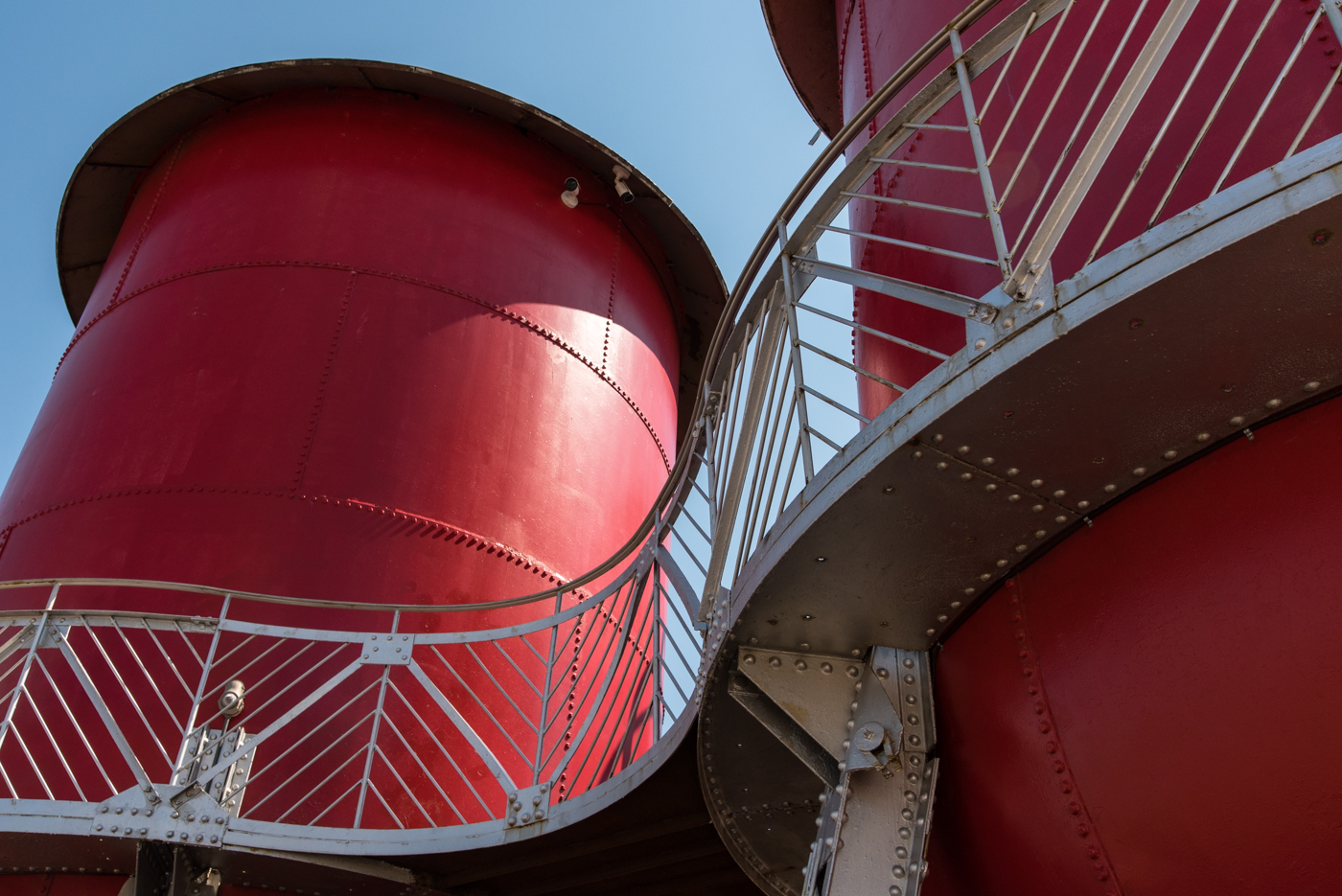
My husband and I recently went on an anniversary trip to St. Louis, Missouri. Naturally, I dragged my camera with me, especially since it was in the zone of totality for the 2017 solar eclipse. We arrived a few days early and explored some of the more notable tourist spots. Among them was City Museum, an evolving indoor-outdoor artwork-in-progress. We first visited the exhibit on the roof, along with many children and their parents. If you’ve never seen the installation of a school bus or a small airplane on a rooftop before, City Museum is the place to find it, along with fountains, slides, towers to climb, and even a functioning ferris wheel.

CAP_5139-1

CAP_5138-1

CAP_5128-1

CAP_5141-1

CAP_5120-1

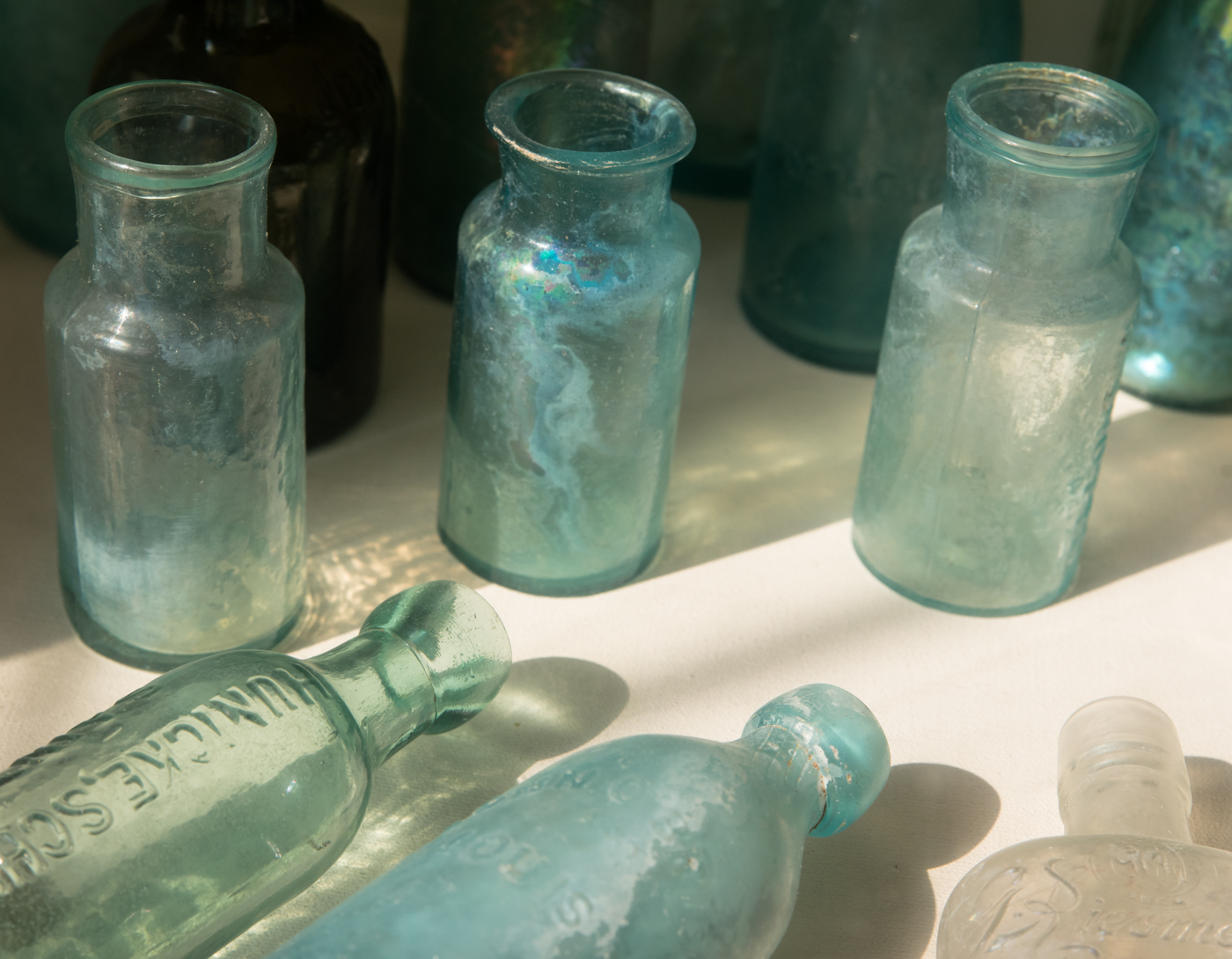
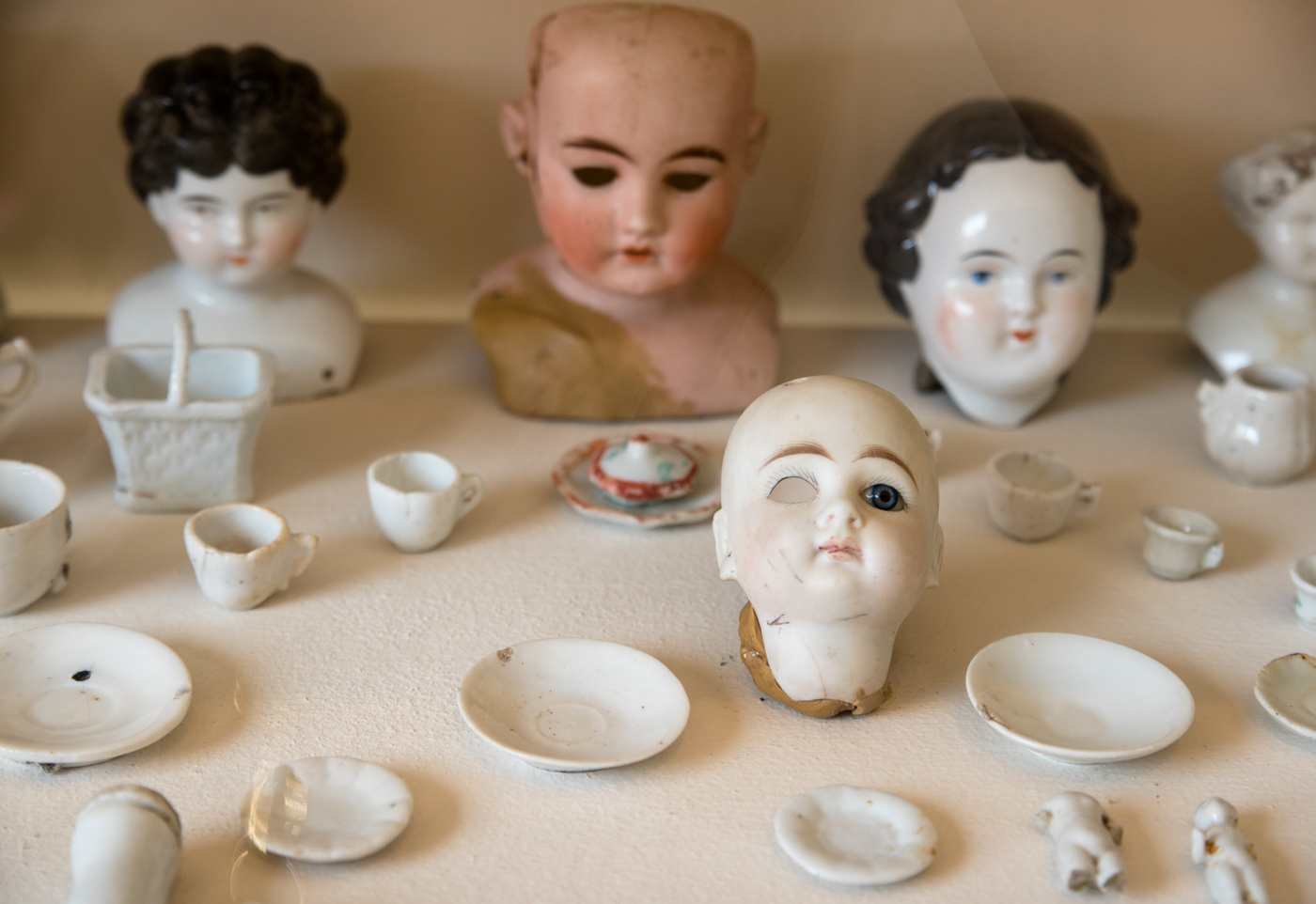
Inside, City Museum is full of kid-sized crawl spaces, a huge playroom for toddlers, a room with a large insect collection, and display cabinets full of all sorts of interesting objects like bits and pieces of china dolls, glowing glass bottles, small spitoons, and other assorted knick knacks. Look around you and you may notice stairways adorned with crayola colored tile and seashell-decorated columns.

CAP_5145-1

CAP_5146-1

After the hustle and bustle of City Museum during the daytime, we decided to pay a visit to the famous Gateway Arch in the late afternoon. Turns out the city is doing some construction at the site, but a quick detour around a nearby church brings tourists right up next to the arch and the Mississippi river. Apparently you can grab a helicopter tour of the area if you are so inclined, and there is a tram ride to the top of the arch as well.

CAP_5148-1

The Gateway Arch commemorates St. Louis’s identity as the gateway to the west.

CAP_5158-1


The next morning, we visited the Missouri Botanical Garden, which consists of a large system of walking trails and smaller gardens (such as the Japanese gardens and the Victorian gardens) nestled inside it.

CAP_5185-1

CAP_5195-1

CAP_5215-4

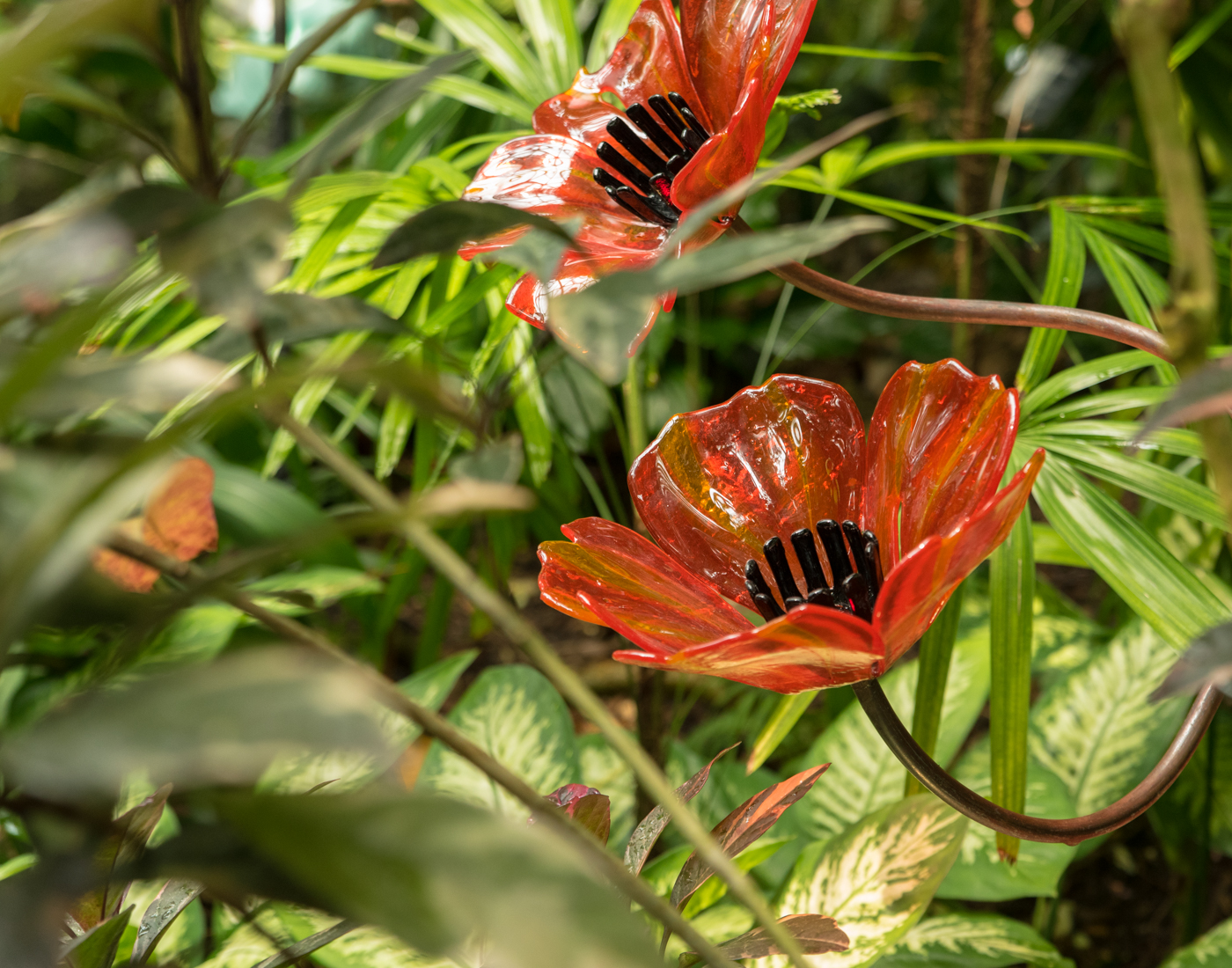
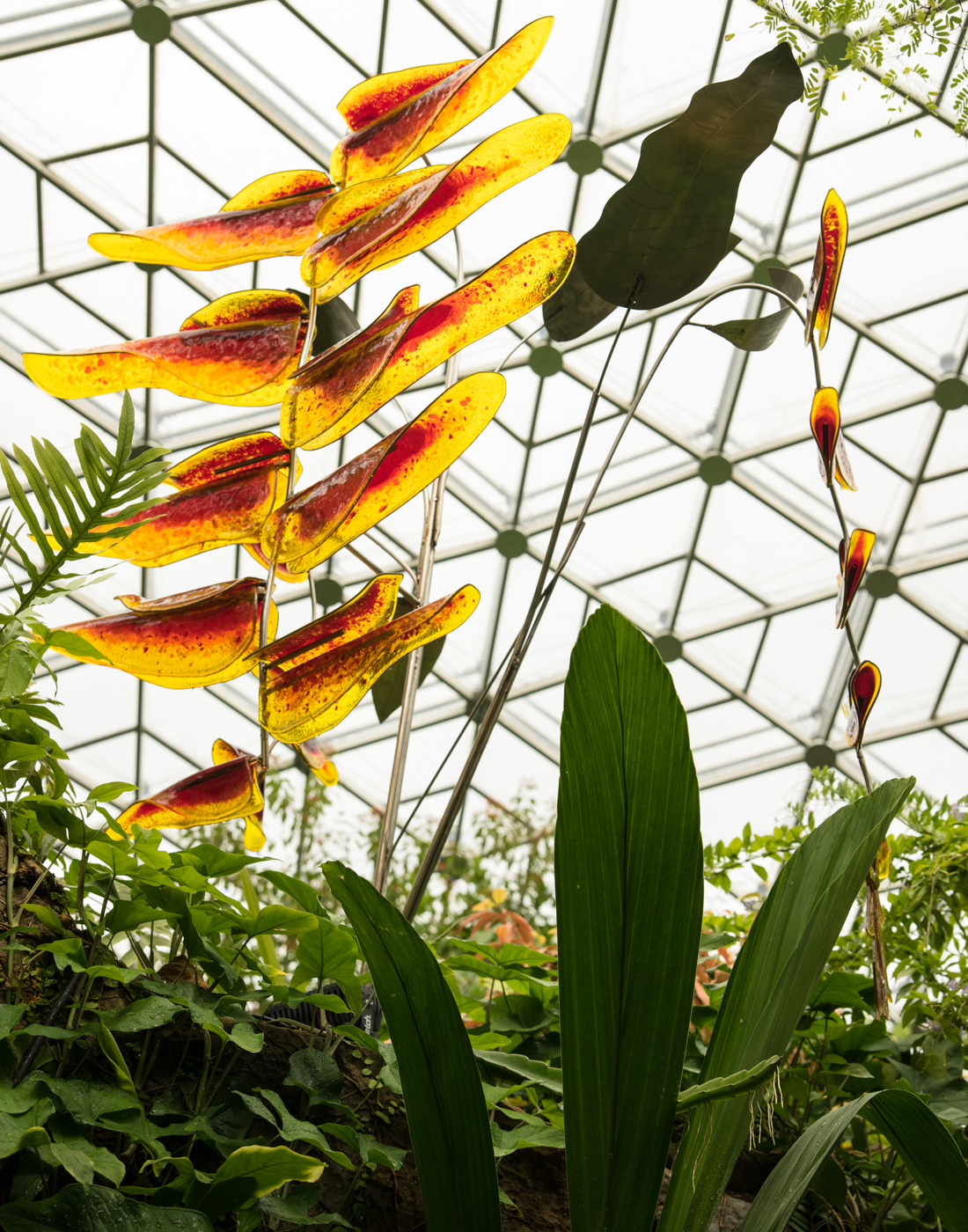
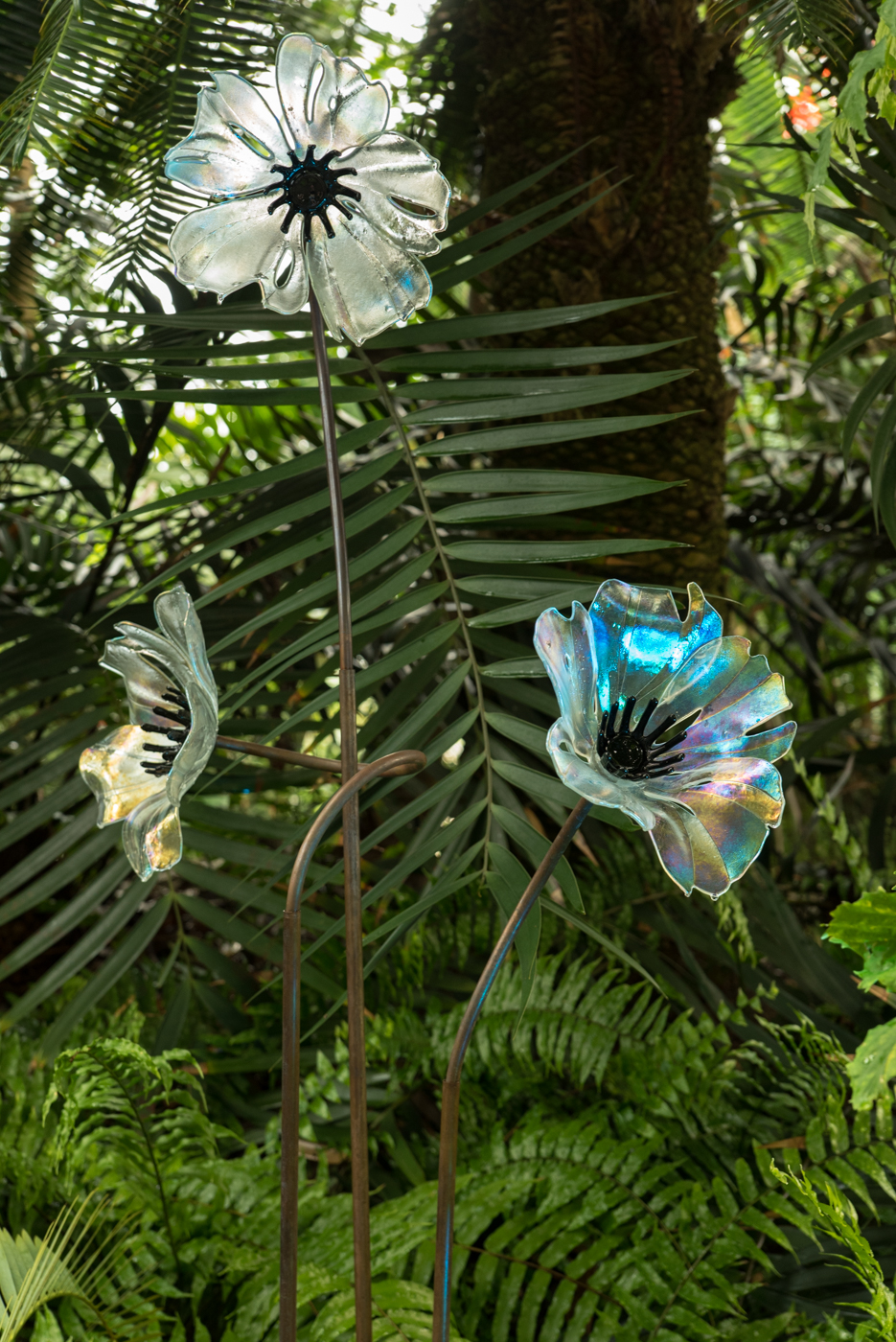
That weekend the botanical gardens had extended its special attraction, “Garden of Glass,” glass sculpture by Craig Mitchell Smith, which was featured in the Climatron.

CAP_5187-1

CAP_5229-1

CAP_5230-2CAP_5234-3.jpg

After a lovely weekend of exploring St. Louis, we were fired up and ready to go eclipse-watching! The locals noted that a lot of people were coming into town that weekend and things were a bit busier than usual. We headed out early Monday morning for St. Clair, a town SW of St. Louis, where the solar eclipse would be in totality for at least two minutes. At the outskirts of town, we stopped at a rest stop and noticed that it was a pretty good place to observe the sun. Apparently many other people thought so, too, and soon the driveway was barricaded!

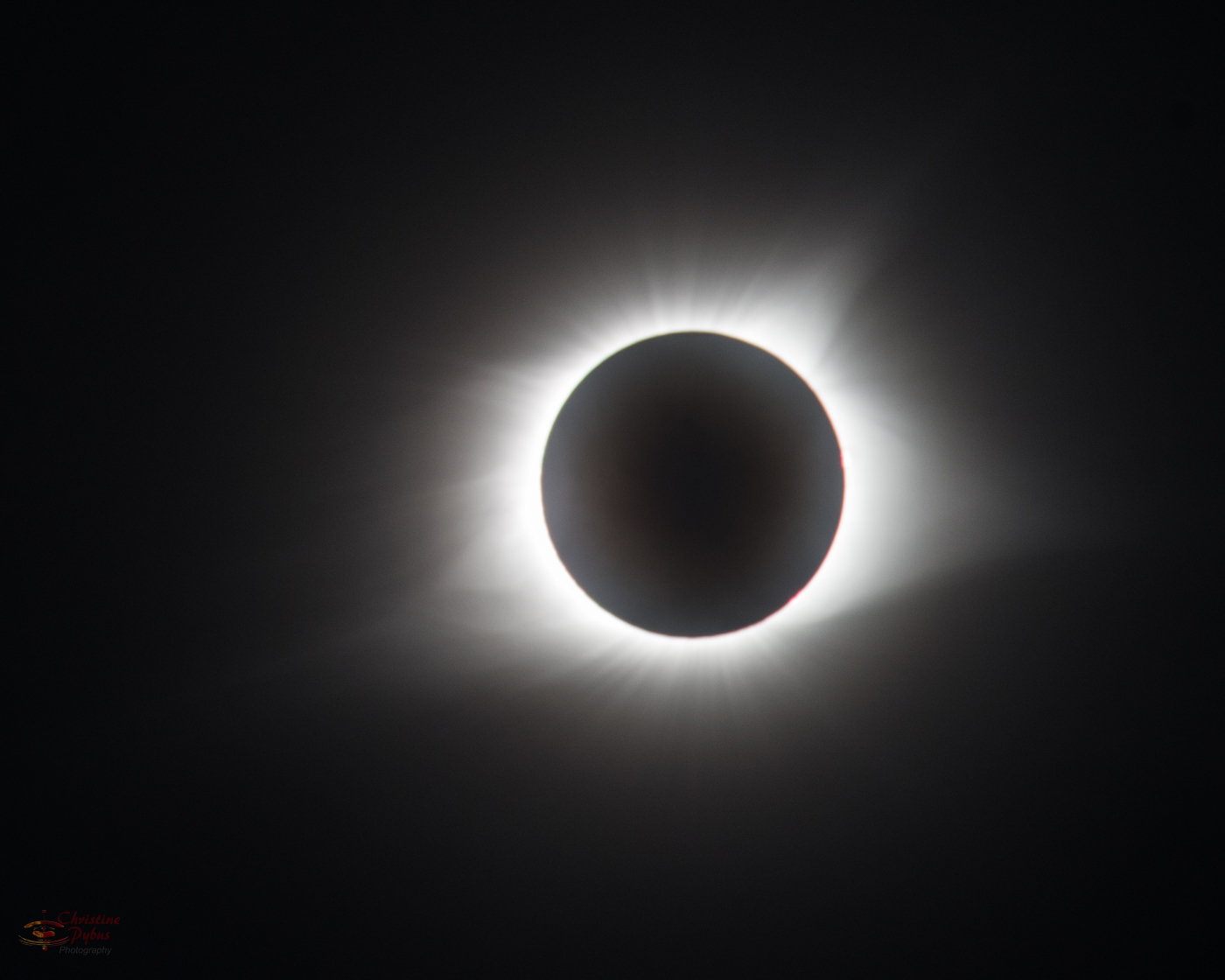
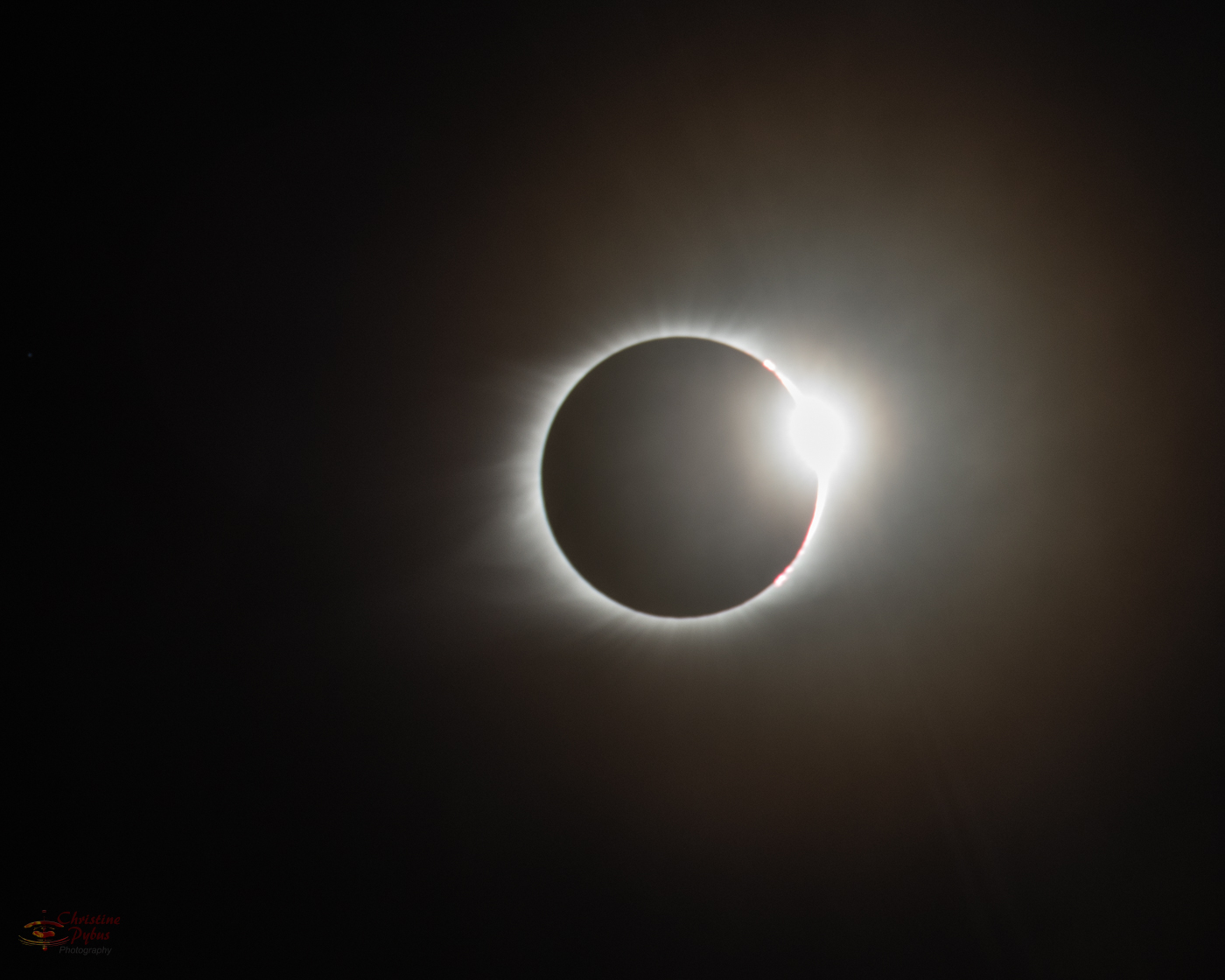
Now, the last time I experienced a total eclipse was 1979, and I was in school at the time. This time, however, I was out with my camera determined to record the event. Next to our car was an amateur astronomer, Curtis, and his wife Maryann. Curtis had two telescopes set up with filters, and in them you could see things like flares on the sun. I was actually surprised at how few people put on viewing glasses and watched as the moon crossed the sun. Mainly everyone was interested in the total eclipse and cheered as it happened. The light slowly began to fade, and you could see Venus and stars in the sky. It was eerie, like twilight light in a planetarium. Frankly, I think the sun’s corona peeping around the moon’s disk was one of the most beautiful things I have ever seen.

_CAP5375-1

I fired off a volley of bracketed shots but took the time to look around me and to hear a confused dog bark. Then, all too soon, it was time to put my filter back on the camera as the moon slid away from the sun. Fortunately, I caught the “diamond ring” in the nick of time.

_CAP5396-1

It’s certainly an experience I won’t forget any time soon! I plan to be ready to try the landscape version of these images in 2024 when the total eclipse comes to the Dallas-Fort Worth area.


A Day in the Life of….a drop of pond water

If you’ve read previous versions of my blog, especially the about page, then you already know that I am a molecular biologist (and also a total nerd). Rogue-ing and photography aside, I have another hobby that I occasionally enjoy, and that is do-it-yourself home microscopy. It’s not really hard to get started: Beginner’s microscopes abound at places like Fry’s, or Barnes and Noble (during the holiday season). My scope is an Omax from http://www.microscopenet.com/.  I have also purchased glass slides and coverslips, a few eyedroppers from the local pharmacy, and clean jam jars with lids to collect specimens.

CAP_4954-1.jpg

Mary models with my microscopy supplies


This story starts out with a trip to the local pond.

CAP_4957-1.jpg

Although the bubbling, cleaner-looking water seems like a tempting place to start, I have the most luck finding microscopic critters sampling the mucky water near the bank of the pond.

CAP_4959-1.jpg

Back at home, I carefully place a drop of water on the slide and cover with a coverslip, lowering it from a 45-degree angle to the water. I’m not afraid to include tiny particles of dirt or algae, especially when using depression slides.

CAP_4964-1.jpg

First I start with the lowest-power objective (typically the 4x) and focus on the specimen. (This can take some practice). The first thing I typically see at this point is blue-green algae, which looks like long filaments.

CAP_4955-1.jpg

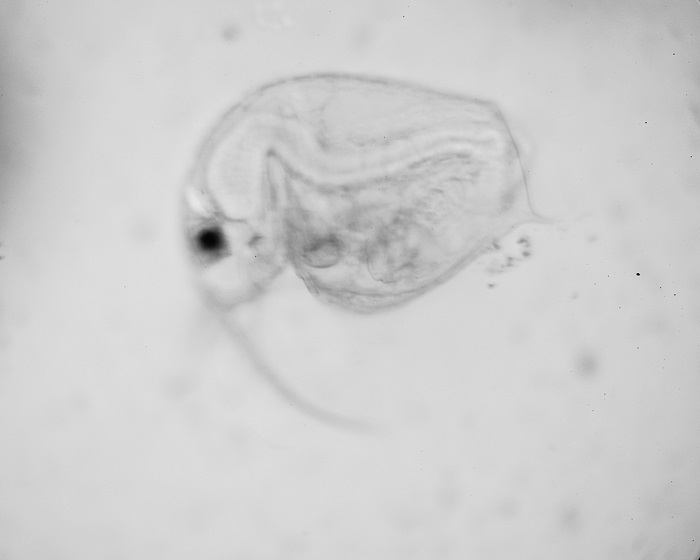
But then, something magical happens: I see movement! Some of the multicellular creatures I encounter are easily visible at this magnification.

CAP_4979-6

a fresh water crustacean


CAP_4971-2

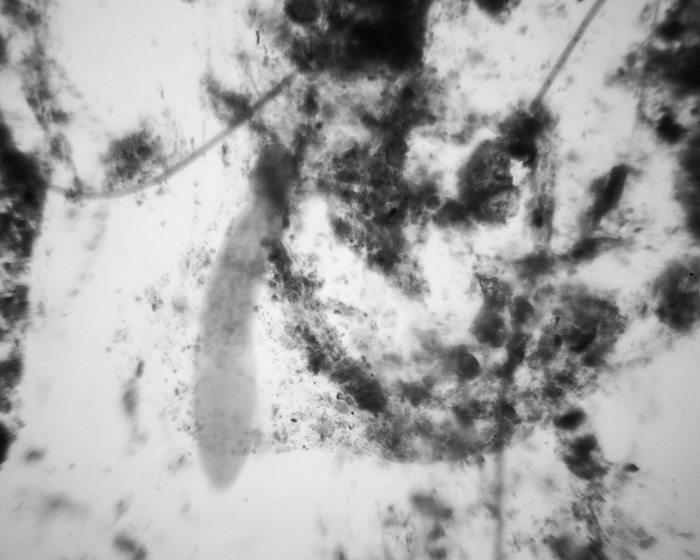
a nematode (worm) gliding amongst the debris


CAP_4987-8

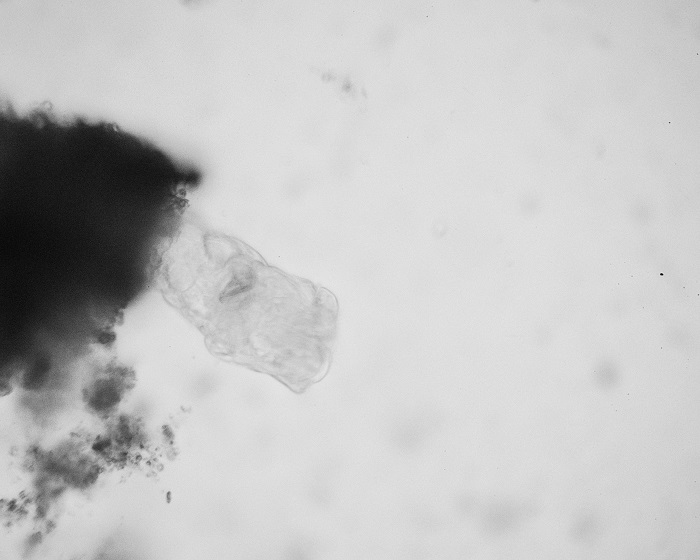
This multi-cellular critter hiding in a piece of dirt would stretch out with its ciliated crown in search of food

Rotating the nosepiece of the microscope, I position the higher magnification objectives in place, which reveal even more detail in the drop of water. The bumpy landscape of debris and algae gives way to rapidly swimming protozoa (single cells), slow-moving gastrotrichs and whirring rotifers with their crown of cilia.

CAP_4966-1

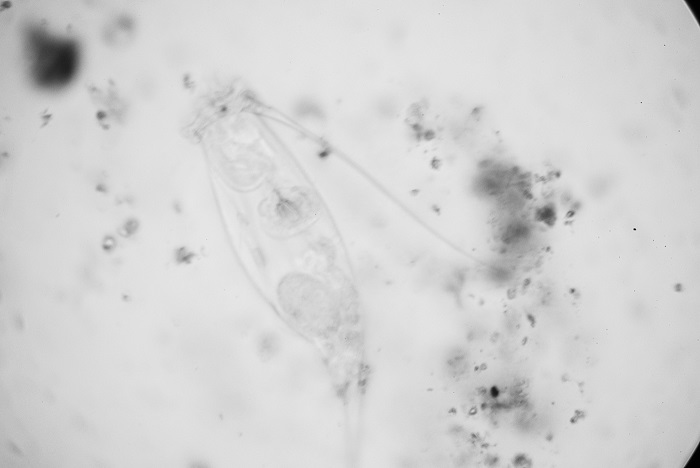
I suspect this is a type of rotifer


CAP_4975-4

CAP_4991-10.jpg

There’s plenty more to discover in a drop of water. The composition seems to change with the seasons. With each slide, I find a new discovery. As it stands, I’m still waiting to find that elusive tardigrave (water bear), although I did once run across an amoeba from the bottom of a flower stem!

My husband and I made a music video of our home microscopy fun a few years ago. You can see it here at https://youtu.be/ZyMn67h37WE

Descent

[Part two of “Disintegration”]

[Note: This is not a happy edition of my blog. It is much more personal and has a lot to do with the past. Having said that, I will remind you that today, all is well].


“Tried to save a place from the cuts and the scratches
Tried to overcome the complications and the catches
Nothing ever grows and the sun doesn’t shine all day
Tried to save myself but myself keeps slipping away”

Nine Inch Nails “Into the Void”


Prologue

You can’t erase the past, and really, what would happen if you tried to change it? You would not be who you are today. I think because of my experiences with bipolar depression I have become a little more compassionate, a tad wiser, and a little less quick to judge. On the other hand, even with the specter of mental illness misdirecting your thinking, you do have to own up to things. I have made many mistakes. Some of them were huge and fueled by pain, desperation, and cognitive distortion. This doesn’t change the fact that I was the one making those decisions. Today, I try to live a much better life…

***

When the mania emerged, I discovered I had several unwelcome companions: anger, racing thoughts, a touch of paranoia, grandiose thinking and euphoria were a few of them.  Burning white-hot, I stowed the anger like a stone in the pit of my stomach; the negative thoughts calcified one on top of another until I could no longer contain them. I felt as though, if contested, I could beat up three big, burly men. Accompanying this overwhelming feeling was an excessive amount of energy which I needed to channel somewhere. With a hard, determined look on my face, I would plunge into my work. Sometimes I would stay up at night burning the proverbial candle at both ends.  Additionally, my mind bombarded itself ferociously with questions, ideas, rumination, and worries. It wasn’t so much that these thoughts occurred rapidly, it was more like they were overlapping and constant. I just wanted them to stop.

Although it may seem as though all I did was feel bad, there were times when I felt really good, extraordinarily so. I would talk glibly, laugh and joke, act goofy, and generally be un-me. My ideas were amazing! Why hasn’t anyone thought of this? I could accomplish so much! I’m totally gonna be a rock star, yeah! And so forth. The mental filter was conspicuously lacking. Sometimes this came out in the things I said which hurt people around me. Afterwards, I would crash, and all the hallmarks of depression returned.

falling-on-glass

My sleep was completely dysregulated: I could snooze for 13 hours a day and still feel utterly exhausted. Outwardly, I would manage to pull together some semblance of a functional human being and do things like scrub the dishes, clean the house, visit with various acquaintances, and go to work. This doesn’t mean the marrow of the matter was completely hidden; it was seeping through the cracks. Turning inward, I would retreat to a quiet spot and numbly ruminate while cutting at my fingers. At some point I would notice they were bleeding painfully and would cry over having done this to myself1.

Remember at the end of Part One where I told you I heard something that wasn’t there? This problem worsened as time went on. I began hearing people saying negative things about me down the hall from the lab. Wondering who they were, I would look out of the doorway and check, but often no one was there. Apparently, from what I have read, others afflicted with this problem do the exact same thing. Eventually, you figure out that what you are hearing is not real, and further, that it has a certain quality to it that is not present when you are actually hearing something. How does this happen? Although I don’t have a scientific answer on hand, I suspect it has to do with the levels of dopamine in your brain. It seems like bipolar hallucinations are an upwelling of what lies in your subconscious. In other words, if you have a low self-esteem and worry about what people think of you, your brain will generate that in some sort of “verbal tinnitus.” Unfortunately, confessing this tends to earn you a label of “crazy.” But…if you are aware of what is happening, can you truly be insane? Also, consider that this phenomenon apparently occurs in healthy individuals2, although the hallucinations in those particular cases are positive in nature. To a person with bipolar disorder, the symptoms I previously mentioned are pretty distressing.

the-scream-2

The turning point came when a different psychiatrist promptly diagnosed me with Bipolar Disorder Type I. On some level, I was very relieved to find an explanation for my unusual thinking and behavior. On the other hand, I had a tendency to repeat the mantra “I’m broken.” Contrary to public perception medications don’t work overnight. Sometimes you have to find the right combination that yields the most benefit, and this can change over time. In addition, you really do have to find your way back to normal; it can take quite a while. There are many good habits you need to acquire in order to be healthy. Ten years down the road, though, life for me is looking pretty good.  Do you know the quotation that says, “The strongest steel is tempered by the hottest fire?” I think that applies to living with bipolar. It is excruciating while you are in the throes of it, but remission does give you some perspective. It is my hope that this blog post has enlightened some, encouraged others, and mostly let sufferers of mental illness know that they are not alone.

self-portrait-ir

1Reference http://www.mayoclinic.org/diseases-conditions/self-injury/home/ovc-20165425

2Reference http://news.bbc.co.uk/2/hi/health/5346930.stm

Disintegration

[Note 1: This is a more intimate blog and may be disturbing to some people. If you are looking for something happy, pass on by.]

[Note 2: All photographs taken @1995-1997]

“For you it was giving up, for me was starting again
You crave the change I have became
Time and place make the mind clean to more
For you it was dark but for me it was just before dawn”

~ the Fixx, Just Before Dawn

This morning at work, while rummaging around the various snacks and treats on the breakroom table, I found the remnants of a fortune cookie. The fortune said, “Before you can see the light, you have to deal with the darkness.” As a person diagnosed around ten years ago with bipolar disorder, no truer words have been spoken. I’ve actually been meaning to discuss this topic for a while, in the hope that it can shed some light on the true nature of the illness and not on the Hollywood version or the highly stigmatized witch hunt-style news narrative. Nevertheless, if you have ever lived with bipolar disorder, you know how difficult it can be to talk about aspects you’d just rather sweep under the carpet, especially on the road to recovery.

For many people, symptoms of bipolar can emerge in their teenage years, but the illness itself is often not diagnosed until many years later. I think this was the case for me. I was a very moody teenager, although this is not uncommon for that age group. Despite the fact that I was an honors student who graduated cum laude, by the time I settled into college courses, my GPA was all over the place. Concentration and my ability to remain focused while studying became major issues. I was constantly tired. So I went to a general practitioner, who asked some questions and finally said, “You’re taking 17 hours of science? No wonder you’re so tired.” He gave me a vitamin B12 injection and sent me on my way. Now I have to admit, I never felt as good as the next 30 minutes of my life, but afterwards the symptoms returned. By my second year of college, I was so anxiety-ridden that I ended up with a nasty case of gastritis (stomach inflammation), and the pain was unremitting. Additionally, a strong sadness was there, as it had been for many years, accompanied by a very battered self-esteem and a feeling of utter worthlessness. Sometimes though, you just feel completely numb. Empty. Hopeless.
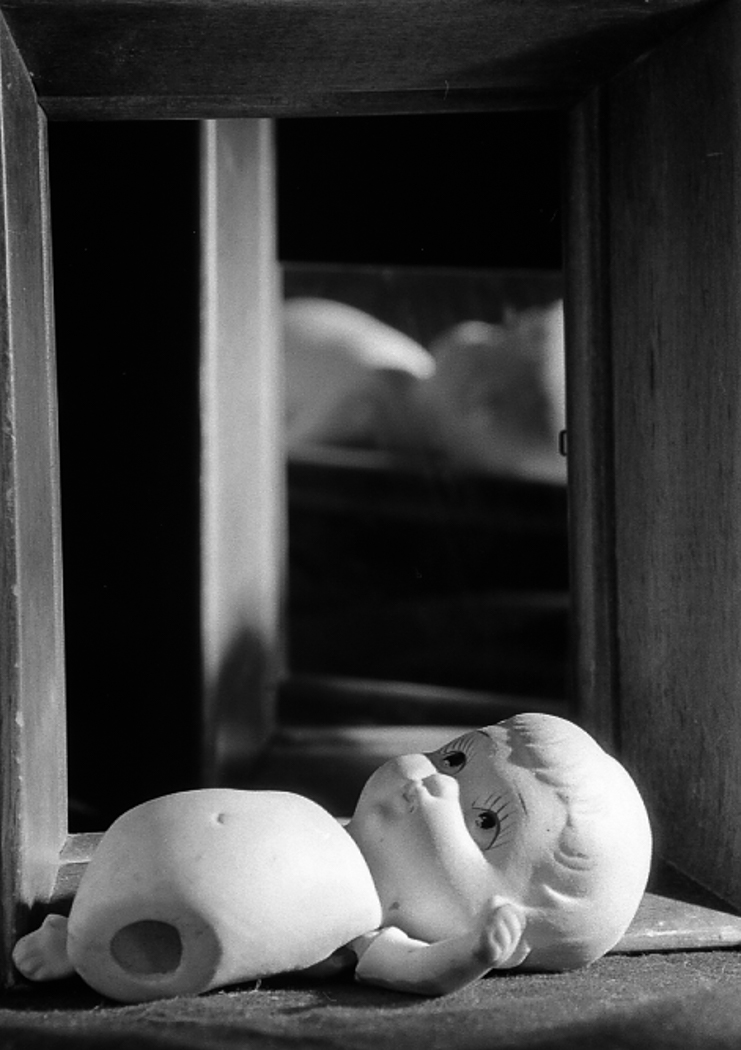
caa026

As the years went by, this web of anguish progressively worsened. I remember driving home at night and feeling a certain fear that danger was lurking around every corner. I could be present in a crowded building but remain totally alone. It was difficult to even articulate what I was thinking. By this time, my first real relationship was in trouble, for many reasons. Although I think my significant other was sympathetic to my distress, his answer was to pray about it. But even prayers in a quiet room seemed to reach…nothing. Deep down, I knew something was very wrong.
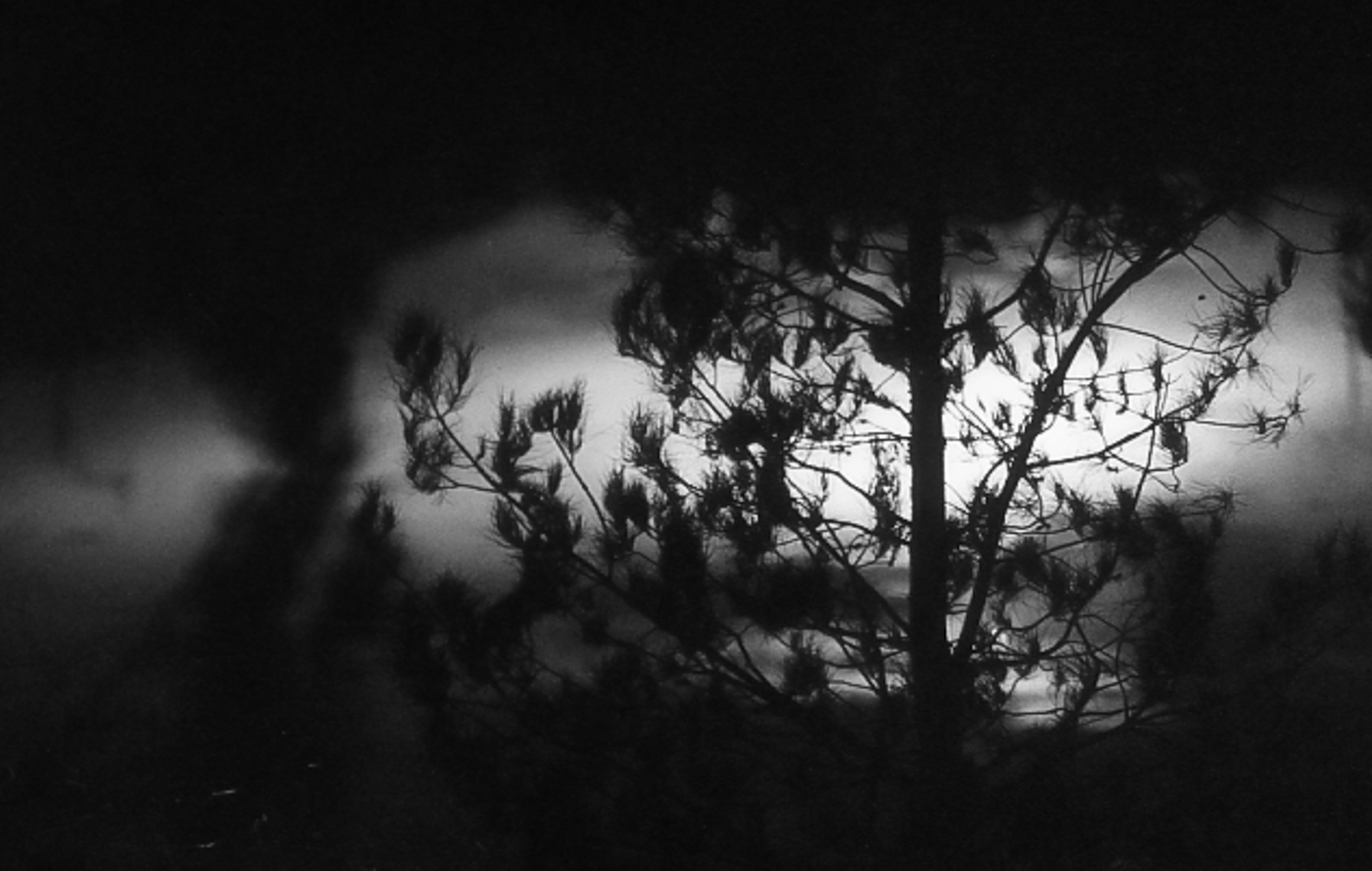
CAA018.jpg

There have been many times where I have envisioned what life would be like if I actually weren’t living it. I have known people who have attempted suicide, and I do not judge them for it. I can’t. Until you have lived with this pain, you will not understand what it is to desperately want to escape it; even if it hurts the people you love the most. Fortunately (and unfortunately) for me, I am a total coward and could not go through with anything other than a million wishes.
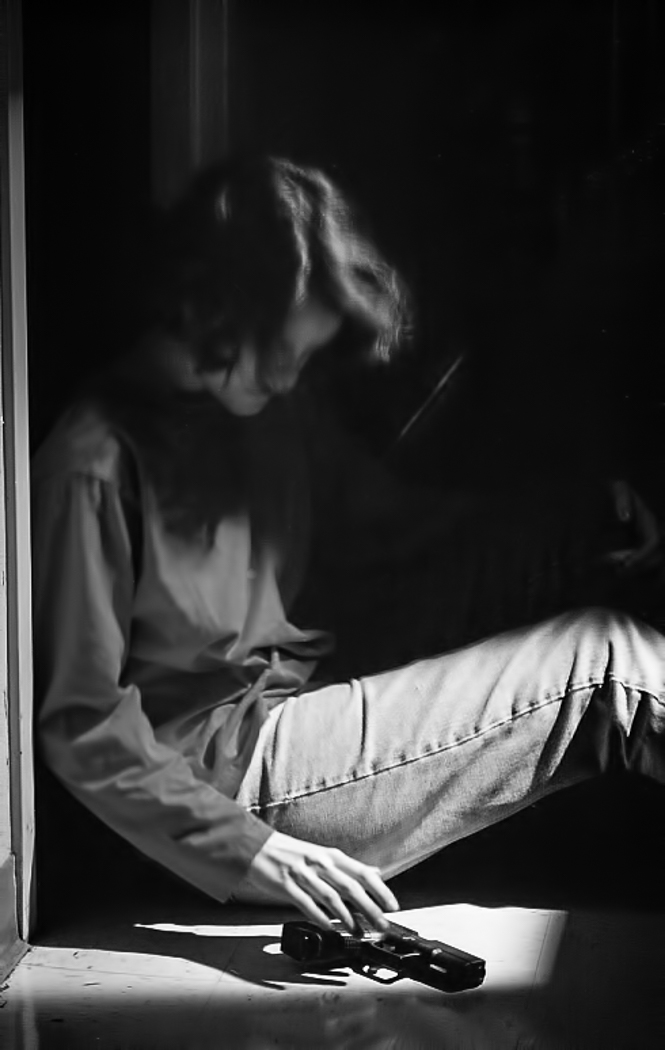
caa005-edit

Then one day, I went for my annual exam. The doctor asked how I was, and what did I blurt out? “Fine.”  (Well, in my defense, it’s such a culturally-ingrained response, you don’t even think about why you said it in the first place). “That’s good,” he said, “I’ve heard nothing but bad news all day.” By the end of the visit, however, I was in tears, and the insightful doctor had prescribed antidepressants and therapy. For a while, I could finally be happy. It is hard to remember what taking an anti-depressant for the first time feels like, but basically your mood slowly improves over a period of weeks. I caught myself talking, laughing, and spontaneously smiling. It’s not something I’d normally do, having a generally quiet, serious nature. The world seemed like a pleasanter place, and the door was open.
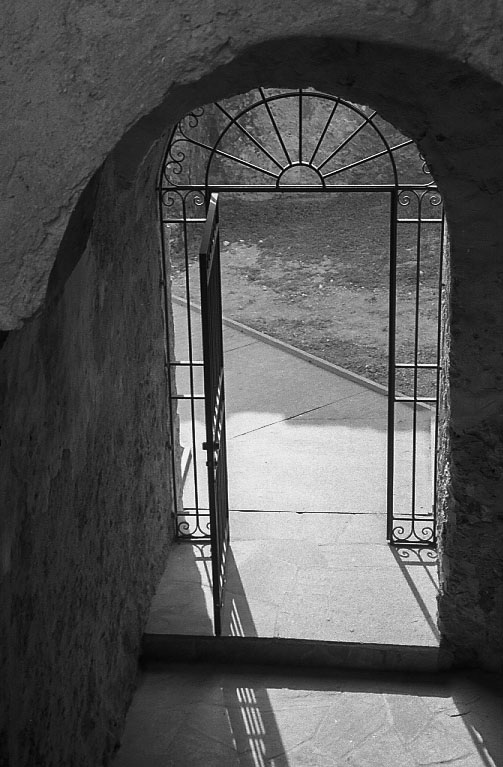
caa022b

(To be honest, at this point I worry that all I have just given you is a laundry list of symptoms, with no emotional undercurrent. For this I apologize; being more analytical is in my nature, and ironically, emotiveness is a little foreign to me. So you can imagine what it must be like for a generally pragmatic person to be flooded with so many negative feelings).

Several years later in grad school the specter of depression returned to its haunt. Despite taking anti-depressants again, the symptoms slowly worsened. The constant stress wasn’t helping, and the intensifying fatigue was causing trouble. In addition to persistent physical pain, I was increasingly angry. I guess I figured that after graduation, when the pressure from school abated, things would improve. But…over the next few years, the old miseries and their ensuing fallout returned. This time, I reached out to psychiatrists, therapists, and my spouse. Each medication seemed to have its spectrum of undesirable side-effects. I was deathly tired and refused to get up in the morning. It took every ounce of energy just to get dressed and go to work. Food was utterly unappetizing. I didn’t even feel like brushing my teeth. My husband, who was fed up with my behavior, seemed to think I was a fix-it-up project. You know what? You can’t make a person be happy. They have to find that within themselves, and when they are in the throes of mental illness, it is nearly impossible to do so. There seemed to be no future, and I cried constantly.
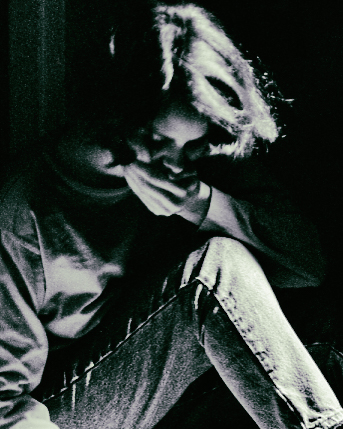
caa007-edit

Then things got worse. It all started when I was prescribed Wellbutrin, and then Effexor. I was in the lab, quietly minding my own business, fixing a water bath. Suddenly, I heard a loud,”MmmmmMMMMMHHHH!!!” in my ear. The sound was positively human. Startled, I flinched and asked my coworker, “Did you hear that?” Of course, he hadn’t.

That incident marked the doorway to the descent into a spiral of encroaching madness.

(end of part one)
When the Lights Go Down

“Could you take my picture
‘Cause I won’t remember”

~ Filter “Take A Picture”

I’ve been kindly asked by Gene Berkenbile, professional photographer and administrator of the Facebook group Photography- The Making of Great Photographers, to write a little bit about concert photography since it is one of the genres of photography that I enjoy doing. I honestly never thought I would get into this particular genre, but I married an amateur musician who plays guitar in a couple of bands. He plays, I shoot. It’s something we can do together. So here is my beginner’s primer for taking images of a live local band.

One thing you might notice about live local band photography is that the gig you’re shooting often takes place in a dark and crowded setting. The lighting can be anything from harsh spotlights, to changing colorful lights, to incandescent strings of light bulbs. Factor in the fact that no flash photography is typically allowed (or welcome, as musicians don’t tend to like light popping in their face while playing). Combine this further with the realization that there is a lot of movement on stage: singers gesturing and moving around, guitarists wildly strumming, drummers keeping the beat. It’s like low-key portrait photography complete with moving subjects!

DSC_3366

Danny Carroll, Wendy Reynolds and Kevin Reynolds of Motel California, Poor David’s Pub, Dallas, Texas

So what do you do to take control of the situation photographically? Remember all those lectures about the exposure triangle and how ISO, shutter speed, and aperture all interrelate? That comes in handy here. Whatever camera you are using, you will probably need to set a high ISO to increase sensitivity to light. That of course, comes with a cost, as images taken with a higher ISO are normally noisier (more pixelated), especially in cameras with smaller sensors. Nevertheless, a certain amount of graininess in these kinds of pictures is to be expected, noise reduction software is abundant (you can even reduce it in Lightroom), and it isn’t as noticeable in small web-sized images. Basically, I start with an ISO of 1600 and adjust as needed depending upon the lighting situation. I have gone as high at 6400 in really low light. Another useful setting to have is a large aperture. Concert photographers tend to invest in what is termed “fast glass,” not because the speed of the lens is fast but because the aperture can be opened to f/1.4 or f/2.8, letting in more light.

DSC_3315

Dave Adams of Motel California, Poor David’s Pub

Finally, you have to consider what kind of shutter speed is useful to the image you are trying to convey. For a sharp still image of a moving subject, at bare-minimum 1/125 second is a go-to setting. However, it may be that you want to convey a certain sense of motion, whether it involves the guitarist’s hand or the drummer’s sticks. For this, practice the same shutter drag technique that you would use for a waterfall and lower your shutter speed. Now, to adjust all of these settings properly, you will need to meter the scene accurately. Some concert photographers recommend using evaluative metering, and some use spot metering. I would argue that your type metering depends on what scene you are photographing. For example, if I’m shooting a close-up of a musician in a spotlight playing his guitar, I will use spot metering, but if I’m shooting the whole band, evaluative metering comes in handy.

DSC_3335

Kurt Cottey, Motel California, Poor David’s Pub

Aside from the exposure triangle, there are a few other caveats of band photography you may observe.  If you’re in a crowded room, don’t block everyone’s view of the band for too long. Get your shots and get moving. This has the added bonus of giving you different angles to choose from. You could also prop yourself against something like a wall or pillar to help stabilize your shot, and it keeps you a little more hidden. Another issue is that places like small indoor and outdoor venues are going to have small stages. Band equipment may be crowded everywhere, and there may be clutter (read: items distracting the viewer from your killer shot) behind it on the walls. One way to get around this obstacle is to use a shallow depth of field with a longer lens. You can take head and shoulders portraits of the band members or of their instruments. Lastly, you will come to understand what I mean when I say “the dreaded red light.”  This is the light (and some other color schemes as well) which tends to ruin shots, making them oversaturated, glaring red. Some photographers deal with this by converting the image to black and white. Others prefer to make color temperature and hue/saturation adjustments in post-processing software.

DSC_8790

Dave Shaver of Cecil’s Truck, Frisco Bar and Grill, Frisco, Texas

I hope this blog has been informative, but I am by no means an expert on the subject. For further reading (and viewing), I highly recommend Matthias Hombauer’s How To Become A Rockstar Photographer web series (http://www.howtobecomearockstarphotographer.com/) and Phil Steele’s event photography training course (http://www.steeletraining.com/event.htm).

Cheers, and Rock On!

cpshutterbug

Winter Desert

Sierra Nevadas.JPG

“And the story it told of a river that flowed
Made me sad to think it was dead” – America “Horse with no Name”

So I’m having a serious dry spell. And this, despite the fact that I managed to photograph Motel California (an Eagles tribute band) at a benefit on Sunday and that I managed to take around 300 images to cull for a studio still life project for camera club. I don’t suppose I’m the only one though. Everyone seems to wind down around the winter holiday season while they preoccupy themselves with family and festivities and rev back up again in the spring. The springtime, though, seems so long in coming and instead we’re, as the Facebook meme puts it, stuck in a big ball of cold grey suck.


Now if my current state of mind was a place, I’d say it was the desert. Sort of like a vast, blank vista with the occasional oasis of an idea. What do you think of when you see a desert? Is it a barren landscape like I am now picturing it, dry, with no scenery but scrub and brush and a lot of heat? Or, do you see something beautiful, harsh yet fragile, full of things seen and unseen. Sometimes I think, in terms of creativity, the desert is the place where a person who is stuck for a solution to a particular problem retires from that line of thought and pursues something else for a while. The distraction enables you to take a fresh look at the task at hand and arrive at the place for fertile thought, yielding the solution you seek. In this desert, things that are hidden are exposed and laid bare, pondered on in the glare of the illuminating sun, refined by the scouring of the blowing sands of shifting thoughts, until at last the long journey is done.

Death Valley2

In the past, I have been in the desert both figuratively and literally. After the long, hard road in the glare and heat, I emerged as a different sort of person, still me, but with certain aspects of my personality a bit more refined. Now, I’m not so sure I need any more refinement as much as I need a bit more confidence. I have to remind myself that 1) the road to success is fraught with a lot of failure, and 2) nothing risked, nothing gained. Herein lies part of my problem: I’m stuck in a thought loop where I tell myself that I will not accomplish what I set out to do. And so the avoidance begins followed by the opposite reaction, which is to force myself to do the things I need to do.

seven sisters1

I’ve been saturating my brain lately with what feels like every photography article, book, video course, and class under the sun, but maybe what I really need to do is just go look at art and above all, PRACTICE. Hopefully the storytelling group starts up again soon, but even if it doesn’t, I intend to photograph and write. We’ve all been in a sort of winter desert. Soon, I hope, an early spring.

flowers

Note: most of these images were taken with a point-and-shoot

In a Dark Room

-A Photographic Storytelling Blog-

When the darkness takes you
With her hand across your face
Don’t give in too quickly
Find the thing she’s erased

Find the line, find the shape
Through the grain
Find the outline, things will
Tell you their name – Suzanne Vega, Night Vision


What do you think of when you encounter the dark? Is it fear of the unknown? A sense of isolation and loneliness? An apprehensive feeling? Many cultural metaphors exist to describe what humans experience emotionally when encountering the darkness. In many religions, dark versus light symbolizes the struggle between good versus evil. In characterizing criminal behavior, the darkness is a place where devilish deeds go undetected. In psychology, your dark side, or shadow, is the hidden part of your personality associated with less desirable traits. Also, a depressed or brooding mood is associated with darkness.

DSC_0055

In education, lack of knowledge is characterized as “being in the dark.” Darkness also takes place during the time in which we are typically asleep and dreaming, oblivious to our surroundings.

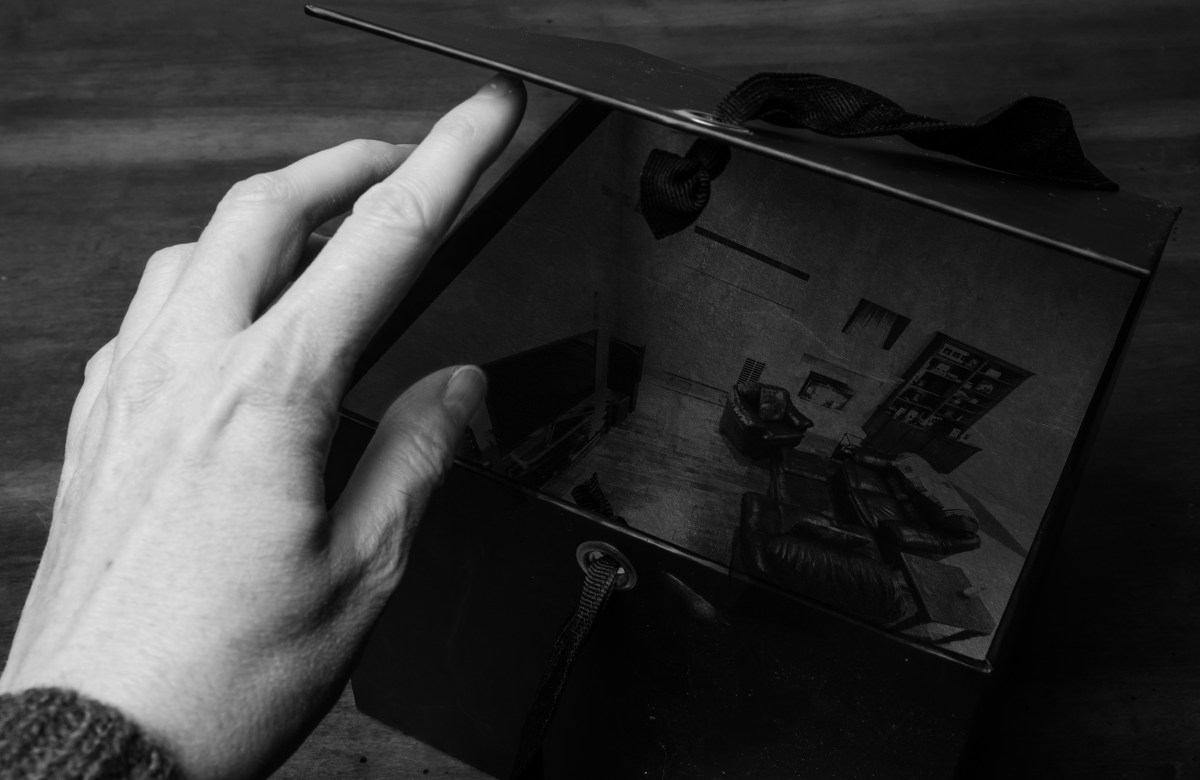
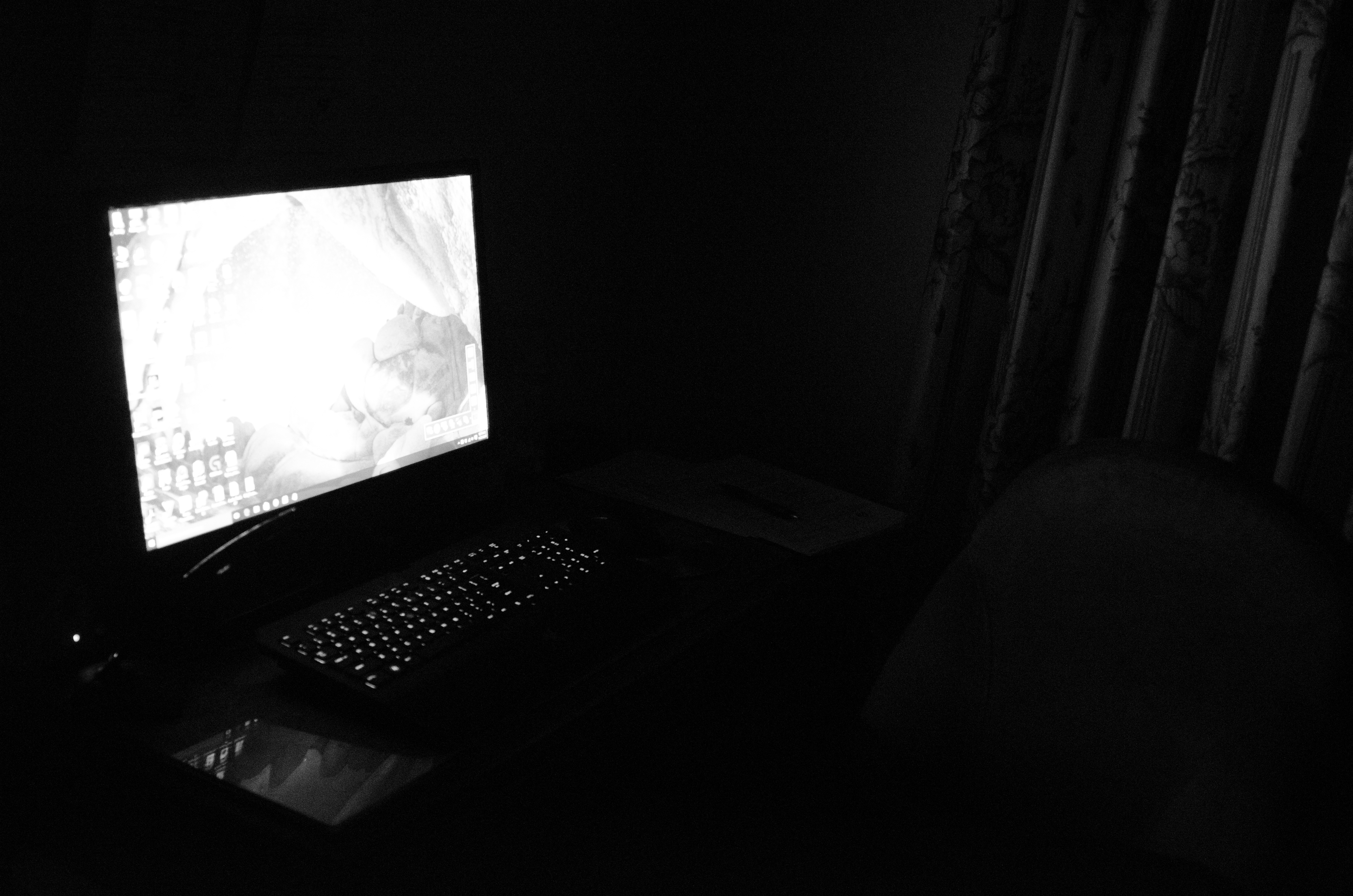
If you’ve ever found yourself in a state of insomnia, you may have had the opportunity to experience a different aspect of the dark: the opportunity for productivity, peacefulness, and reflection. I’m currently in one of those wakeful states and writing this blog at three in the morning. As I am enveloped in the quiet stillness of this dark room, save for a bright computer screen, I am reflecting on the day’s events and on the unfolding future.

DSC_0211.jpg

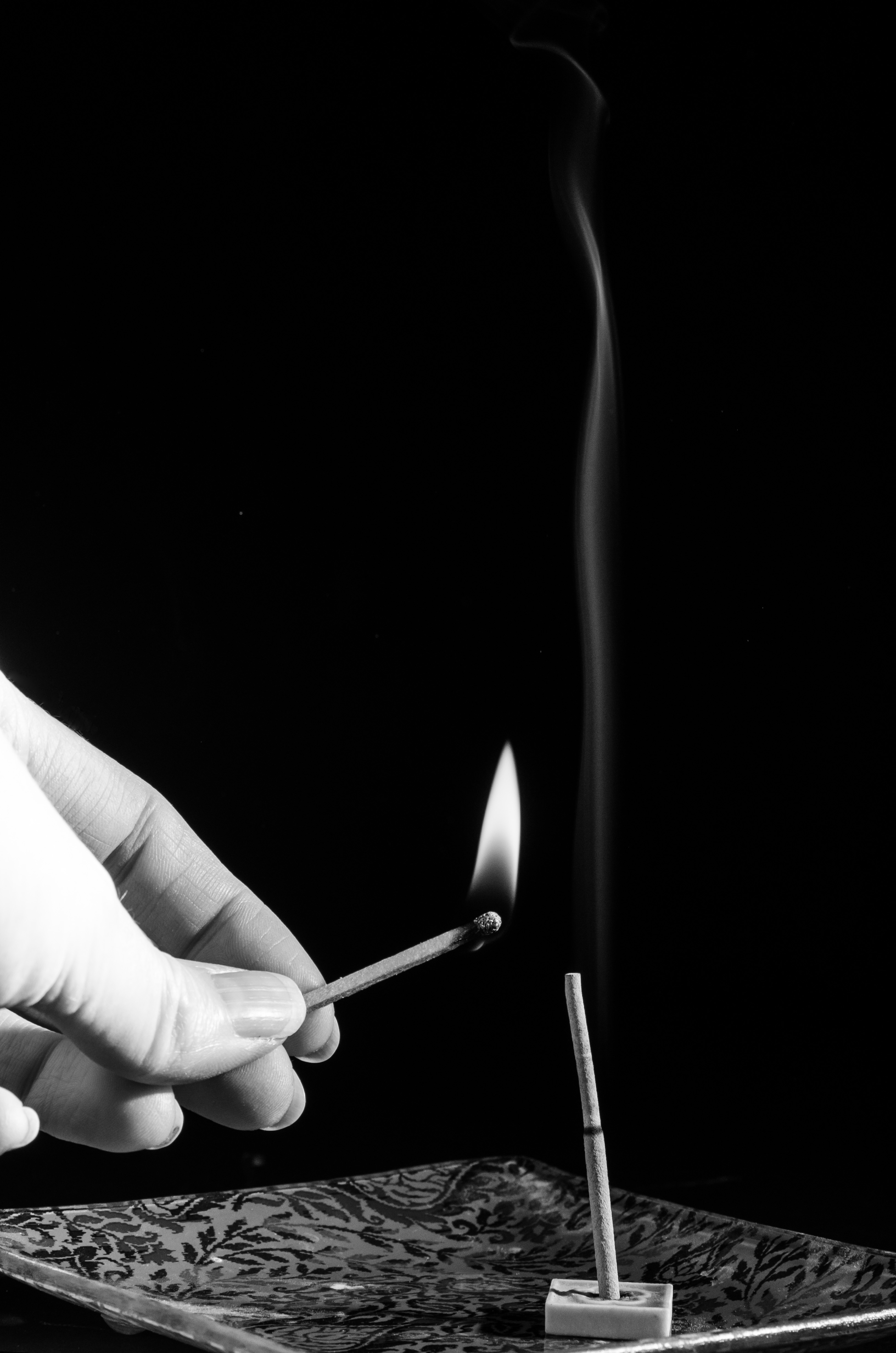
Often I light some incense, and the soft purring cat on the lap is not far behind.

DSC_9125.jpg

Outside I can hear the falling rain. It’s an ideal time for a good book, a brainstorming session, or perhaps even quietly playing some music.

DSC_0011.jpg

DSC_9176

I used to be afraid of the dark. There were evenings when on my drive home, the interplay of all the light and shadow gave me a strong sense of foreboding. Since all the bushes and trees surrounding the sidewalk where I lived were cloaked in darkness, I would run quickly to my apartment, shut the door and turn on the lights. If I tried to sleep, simple shadows on the wall would instill a sense of dread. Consequently, the bedroom door was always open a crack.

DSC_0201.jpg

Now, over ten years later, I am still cautious but I don’t dread the night. And when I find myself in a dark room, I find an occasion to imagine, to create…and to simply be.

DSC_9157

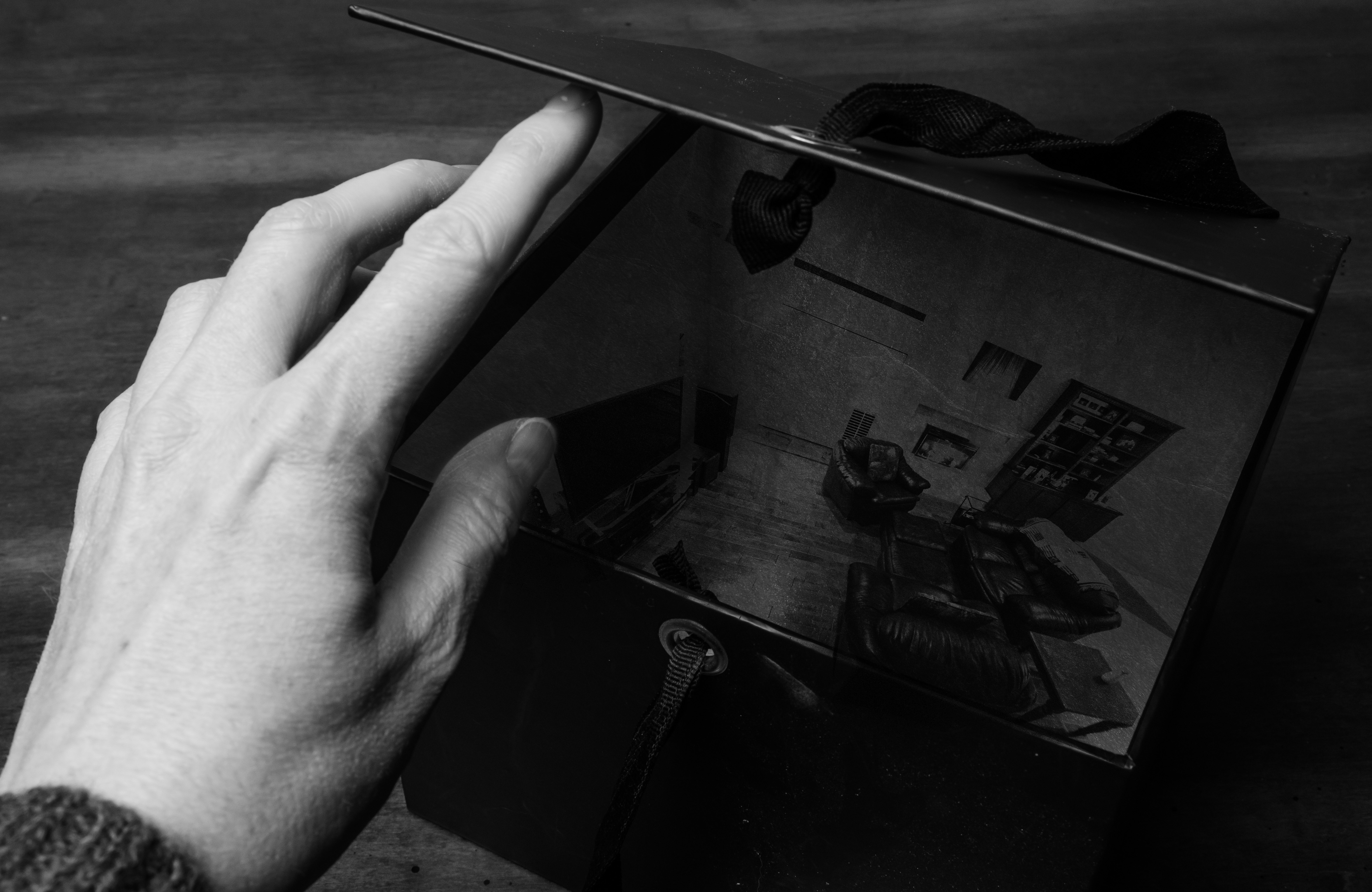
room in box