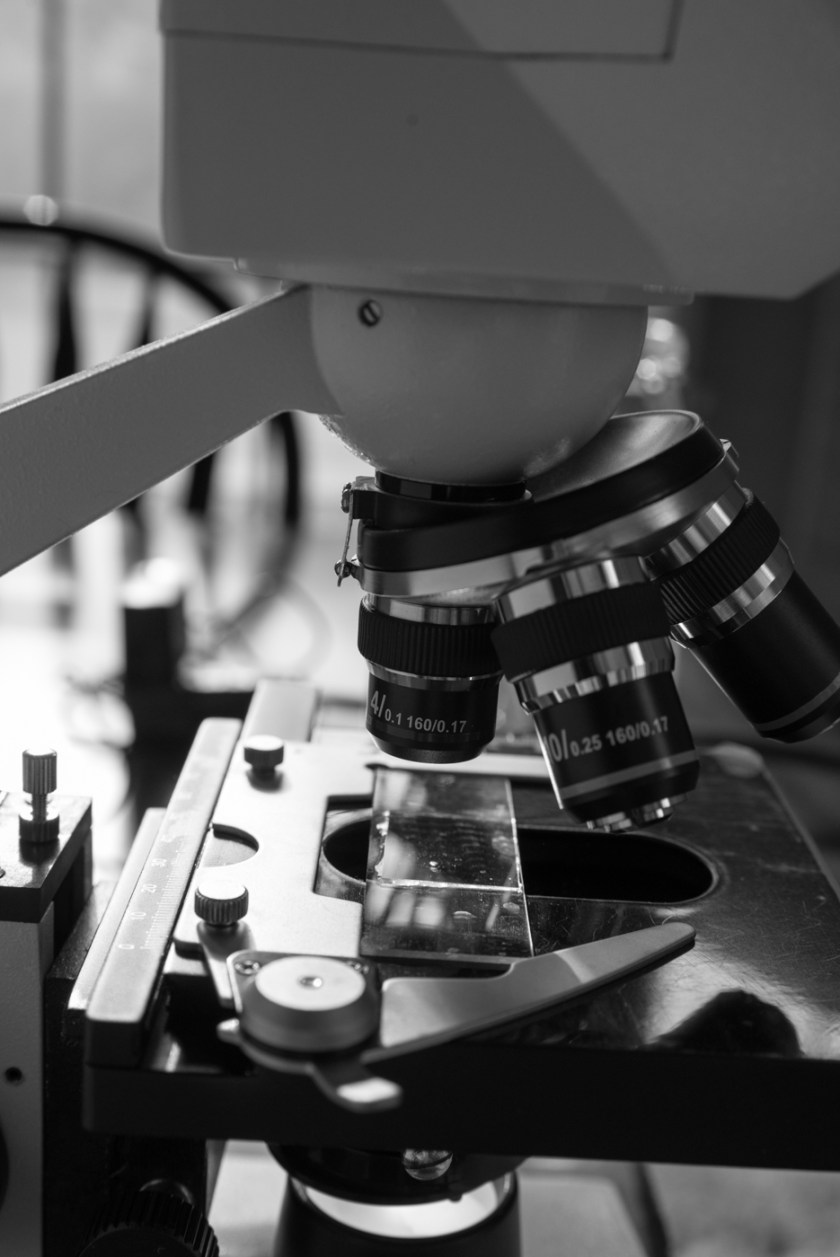
If you’ve read previous versions of my blog, especially the about page, then you already know that I am a molecular biologist (and also a total nerd). Rogue-ing and photography aside, I have another hobby that I occasionally enjoy, and that is do-it-yourself home microscopy. It’s not really hard to get started: Beginner’s microscopes abound at places like Fry’s, or Barnes and Noble (during the holiday season). My scope is an Omax from http://www.microscopenet.com/. I have also purchased glass slides and coverslips, a few eyedroppers from the local pharmacy, and clean jam jars with lids to collect specimens.
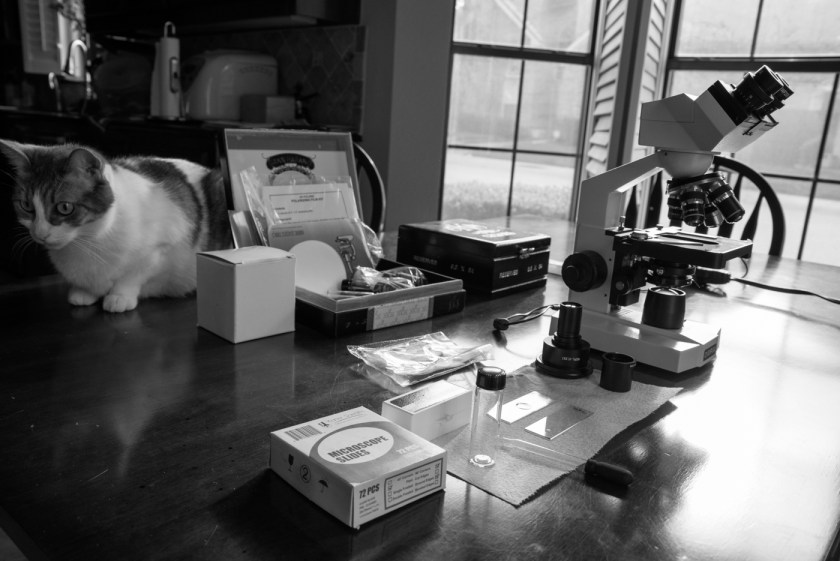
Mary models with my microscopy supplies
This story starts out with a trip to the local pond.
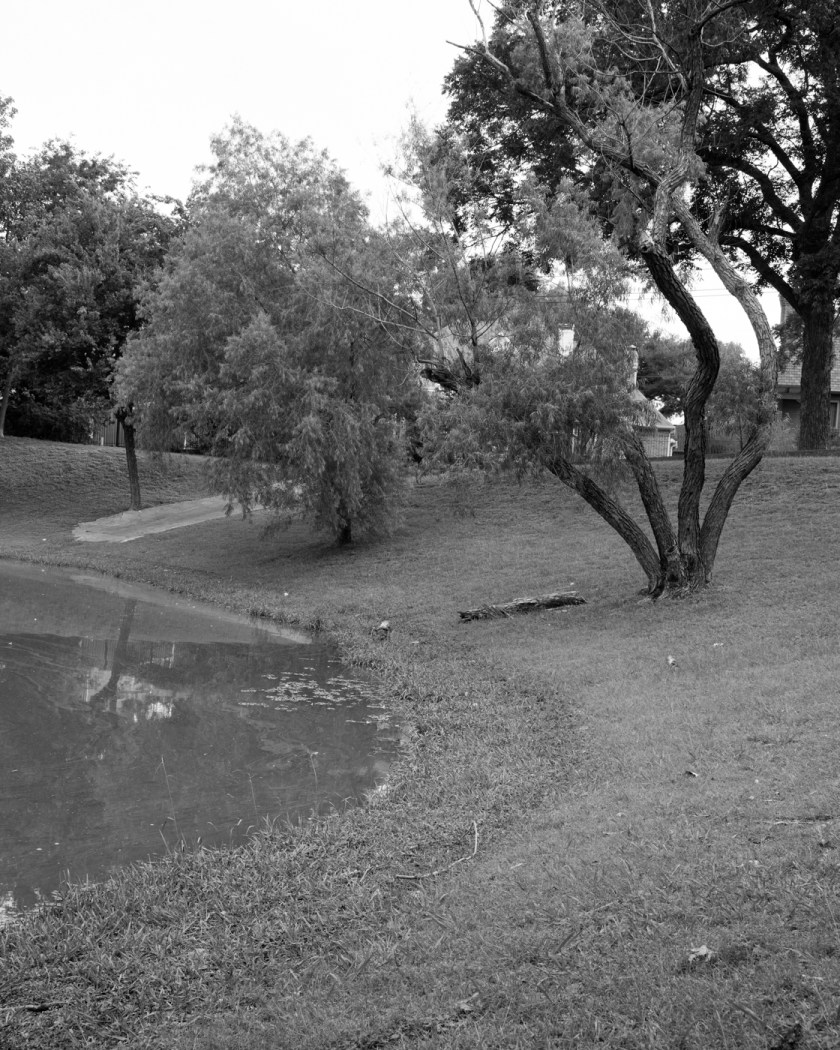
Although the bubbling, cleaner-looking water seems like a tempting place to start, I have the most luck finding microscopic critters sampling the mucky water near the bank of the pond.
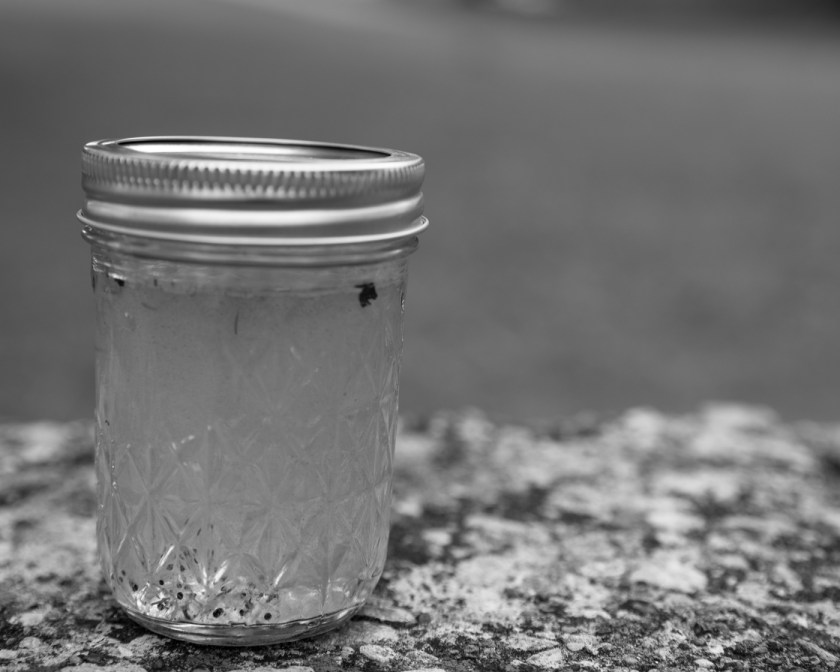
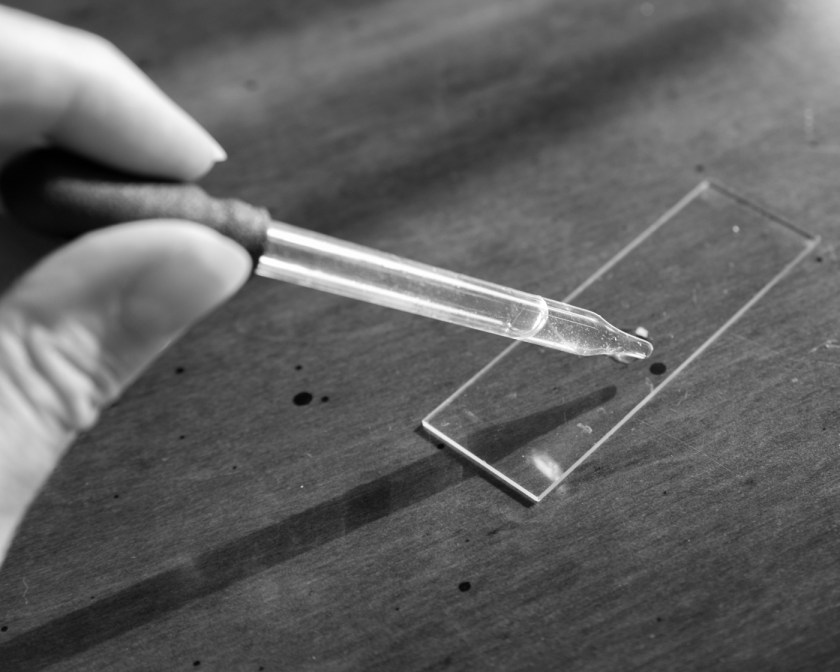
Back at home, I carefully place a drop of water on the slide and cover with a coverslip, lowering it from a 45-degree angle to the water. I’m not afraid to include tiny particles of dirt or algae, especially when using depression slides.
First I start with the lowest-power objective (typically the 4x) and focus on the specimen. (This can take some practice). The first thing I typically see at this point is blue-green algae, which looks like long filaments.
But then, something magical happens: I see movement! Some of the multicellular creatures I encounter are easily visible at this magnification.
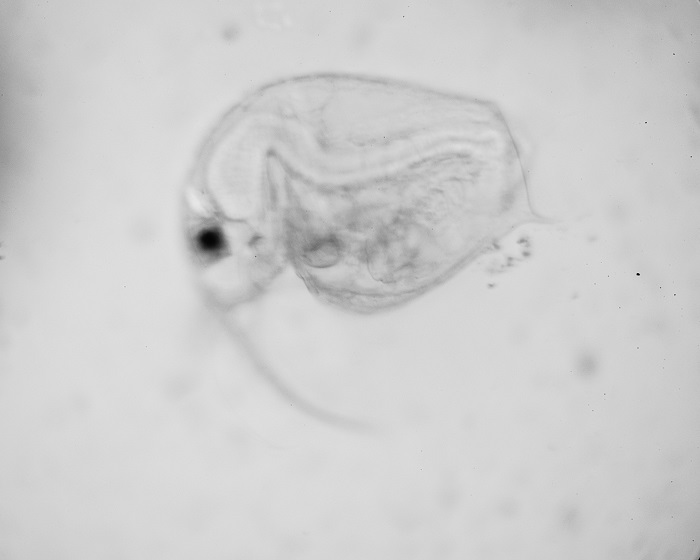
a fresh water crustacean

a nematode (worm) gliding amongst the debris

This multi-cellular critter hiding in a piece of dirt would stretch out with its ciliated crown in search of food
Rotating the nosepiece of the microscope, I position the higher magnification objectives in place, which reveal even more detail in the drop of water. The bumpy landscape of debris and algae gives way to rapidly swimming protozoa (single cells), slow-moving gastrotrichs and whirring rotifers with their crown of cilia.
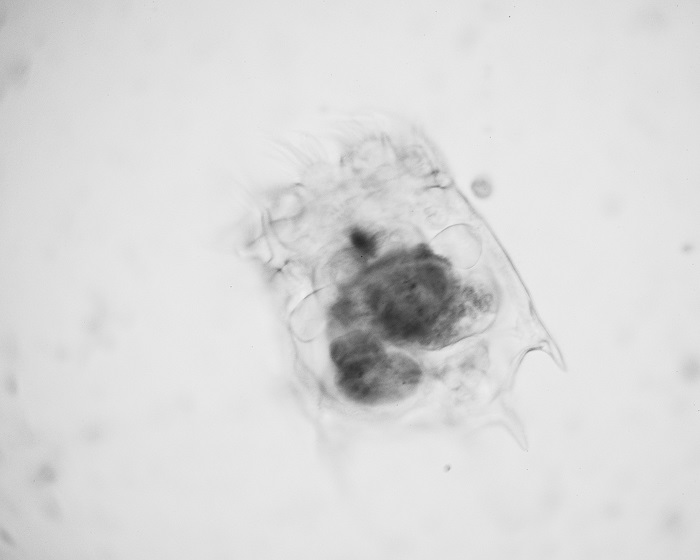
I suspect this is a type of rotifer
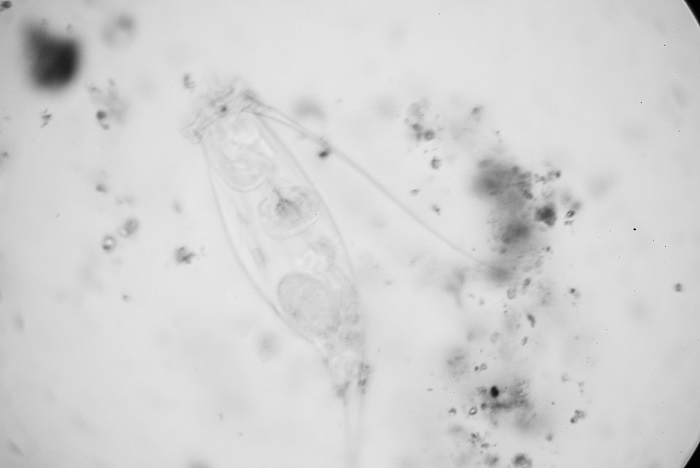
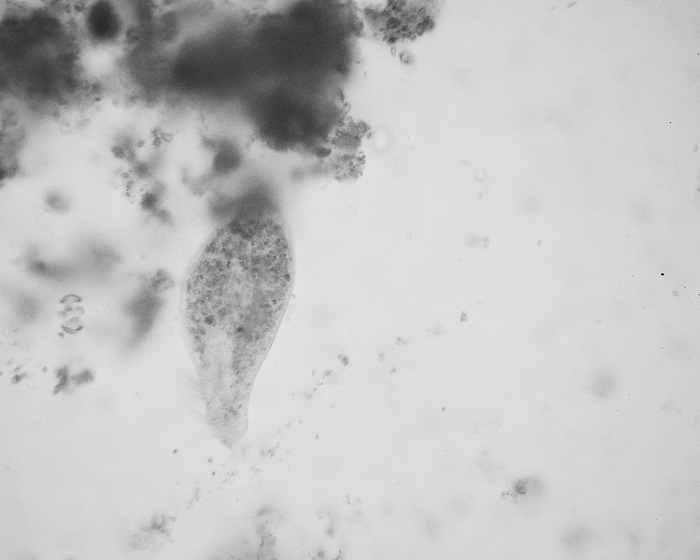
There’s plenty more to discover in a drop of water. The composition seems to change with the seasons. With each slide, I find a new discovery. As it stands, I’m still waiting to find that elusive tardigrave (water bear), although I did once run across an amoeba from the bottom of a flower stem!
My husband and I made a music video of our home microscopy fun a few years ago. You can see it here at https://youtu.be/ZyMn67h37WE

 Slice of Life
Very interesting.
LikeLike